

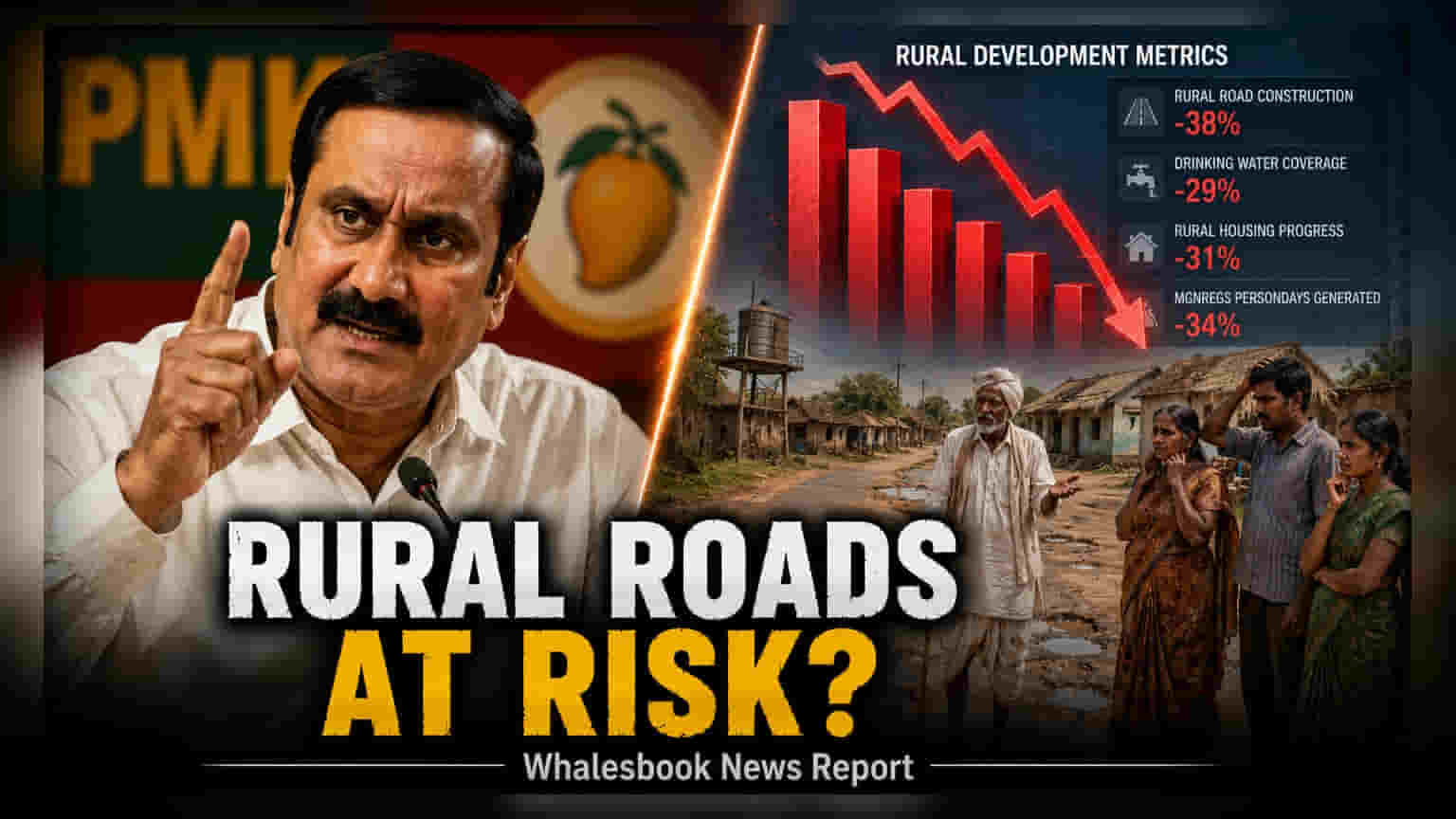
PMK president Anbumani Ramadoss has criticized the Tamil Nadu government for appointing Indian Forest Service officers as project directors for District Rural Development Agencies. He warned that shifting officers without specific experience in rural governance to these roles could slow down essential public infrastructure and welfare projects.
PMK president Anbumani Ramadoss has publicly opposed the Tamil Nadu government’s recent decision to appoint Indian Forest Service (IFS) officers to lead District Rural Development Agencies (DRDAs). The criticism follows recent government orders in districts such as Theni and Kanyakumari, where IFS officers were placed in these administrative positions.
The core of the objection lies in the difference between specialized administrative roles. The Rural Development and Panchayat Raj Department is responsible for managing critical daily infrastructure and welfare initiatives, including rural road construction, water supply projects, housing schemes, and the Mahatma Gandhi National Rural Employment Guarantee Scheme. Ramadoss argued that IFS officers, whose primary training is focused on forest and wildlife management, may lack the specific operational experience required to effectively handle the complexities of grassroots rural governance.
Beyond the issue of domain expertise, the PMK leader highlighted concerns regarding the internal career progression of the Rural Development Department. He noted that the department has a well-defined structure for internal promotions, where officials gradually work their way up to leadership positions like the DRDA project director. Ramadoss suggested that bypassing this established system to bring in officers from other services could demotivate the existing staff and potentially cause friction within the department.
For the public and administrative observers, the risk centers on the execution of government services. If leadership positions are held by officers unfamiliar with rural administrative procedures, it could lead to delays in implementing public works or managing welfare funds. Ramadoss warned that these appointments could disrupt the efficiency of the department, which relies on consistent and experienced management to deliver services to residents.
The next step for stakeholders to monitor is how the state government addresses these objections. The situation may lead to further debate on administrative policy and whether the government decides to adjust these postings to ensure that the leadership of rural development agencies aligns with the expertise of the existing cadre.