

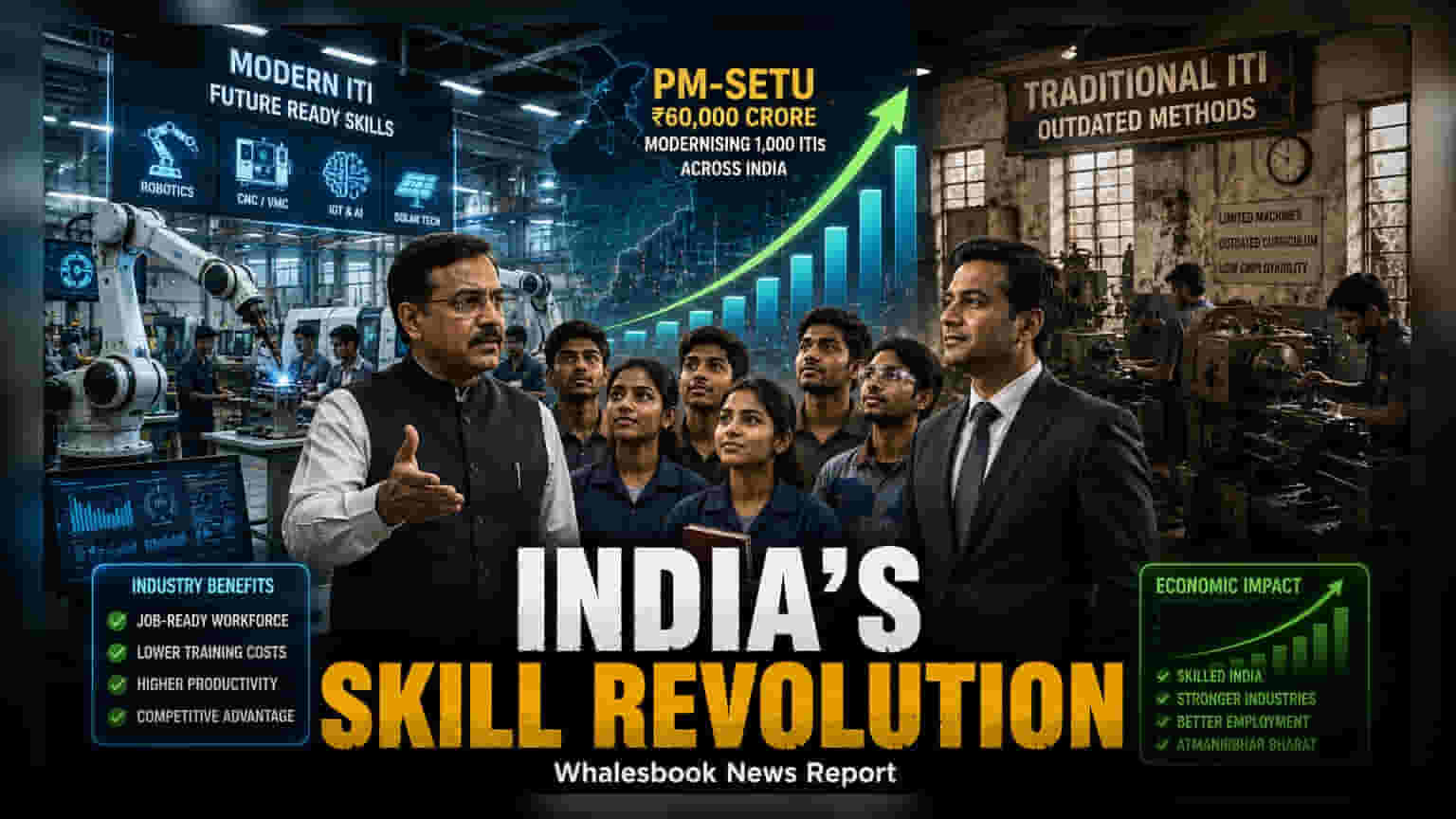
India’s PM-Setu initiative is upgrading 1,000 ITIs with a ₹60,000 crore budget to align vocational training with modern industrial needs. By offering private partners a 51% controlling stake in training clusters, the scheme aims to reduce corporate hiring costs and improve workforce productivity. This shift is notable for manufacturing, steel, and healthcare firms looking to build long-term talent pipelines.
The Government of India is executing the Pradhan Mantri Skilling and Employability Transformation through Upgraded ITI (PM-Setu) initiative, a ₹60,000 crore program designed to modernize 1,000 Industrial Training Institutes (ITIs) across the country. Launched to bridge the gap between vocational education and the requirements of modern, technology-driven sectors, the program is moving away from traditional classroom models toward industry-led centers of excellence.
The Industry-Led Model
The most significant structural change in PM-Setu is the governance model. Instead of the government acting as the sole administrator, the program utilizes a Special Purpose Vehicle (SPV) structure for each cluster of ITIs. In these SPVs, private industry partners hold a 51% controlling stake, while the government retains the remaining 49%. This control allows corporations to directly influence the curriculum, upgrade machinery to match current industry standards, and define the training modules.
For investors, the core value proposition lies in operational efficiency. Companies in capital-intensive sectors—such as steel, mining, healthcare, and advanced manufacturing—often face high costs associated with training new recruits to operate complex machinery or adhere to specific quality protocols. By co-designing the training program, companies can source job-ready apprentices, effectively reducing their induction periods and recruitment costs.
Early Adopters and Sector Impact
Several major corporations have already aligned themselves with this initiative. For instance, ArcelorMittal Nippon Steel India is implementing Industry 4.0 standards within its training clusters in Andhra Pradesh and Gujarat. Similarly, Apollo MedSkills is working on a healthcare-focused ITI in Telangana, and Jindal is establishing training ecosystems for the mining and steel sectors in Odisha. These moves suggest that leading firms are viewing these partnerships as a way to secure a dedicated and skilled talent pool, which is essential for scaling operations.
Execution and Financial Monitorables
While the program offers clear benefits to participating companies, it faces typical large-scale project risks. The success of PM-Setu will depend on the effective coordination of funding between the central government, state governments, and private industry partners. Delays in funding or coordination issues between these stakeholders could impact the timeline for upgrading these 1,000 facilities.
Furthermore, because the program relies on industry participation to achieve its full potential, investors should monitor the scale of adoption. If more companies join, the impact on labor productivity in these specific regions could be significant. However, the ultimate test remains the transition from training to active employment—whether the graduates from these upgraded ITIs are absorbed by the industry at the scale anticipated.
Moving forward, shareholders may track management commentary from participating companies regarding these partnerships, specifically looking for updates on reduced training overheads or improvements in workforce efficiency. The pace at which the hub-and-spoke model is rolled out across the country will be the next key milestone for the program.