

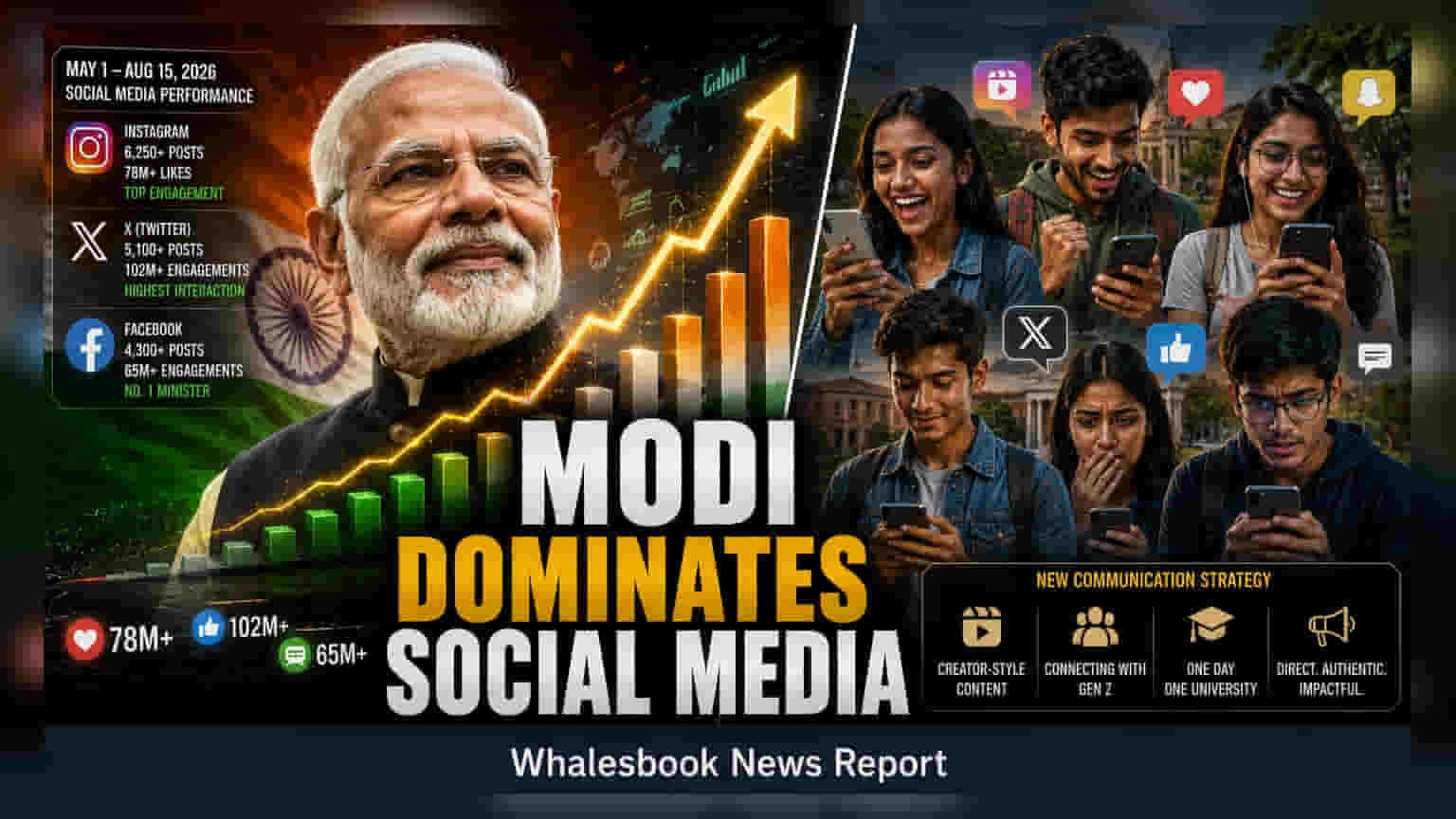
Prime Minister Narendra Modi has secured the top rank in a government assessment of ministerial social media activity. The administration is now pushing Union ministers to adopt more informal, creator-style content to better connect with younger demographics following recent student protests.
The Government of India has completed a performance review of the social media presence of its ministers. Prime Minister Narendra Modi ranked at the top for activity and engagement during the period of May 1 to August 15, 2026. This evaluation, which analyzed metrics like daily posts, likes, and follower interaction across Instagram, X, and Facebook, comes as the central administration is significantly reworking its communication strategy.
The Prime Minister has reportedly directed Union ministers to move away from rigid, formal updates. The new focus is shifting toward "creator-style" content, such as short videos and Reels, that feels more authentic and spontaneous. This directive aims to bridge the communication gap with Gen Z and younger citizens, a demographic that is increasingly active on visual platforms like Instagram and Snapchat.
This strategic pivot follows a period of heightened student activity in the country, with recent protests over exam irregularities drawing attention to the concerns of the youth. By adopting a more direct and interactive digital presence, the government aims to address these concerns and improve public engagement. Part of this broader outreach strategy includes the upcoming "One Day, One University" initiative, where cabinet ministers are expected to personally visit university campuses to interact with students.
While the government works to modernize its digital outreach, the challenge for the administration lies in maintaining a balance. Ministers must navigate the thin line between being relatable and retaining the professional decorum of their official positions. As the government increases its reliance on social media to set the narrative, the effectiveness of this strategy will depend on whether this new, informal tone resonates with the digital-native generation or is viewed merely as a temporary communication tactic.