

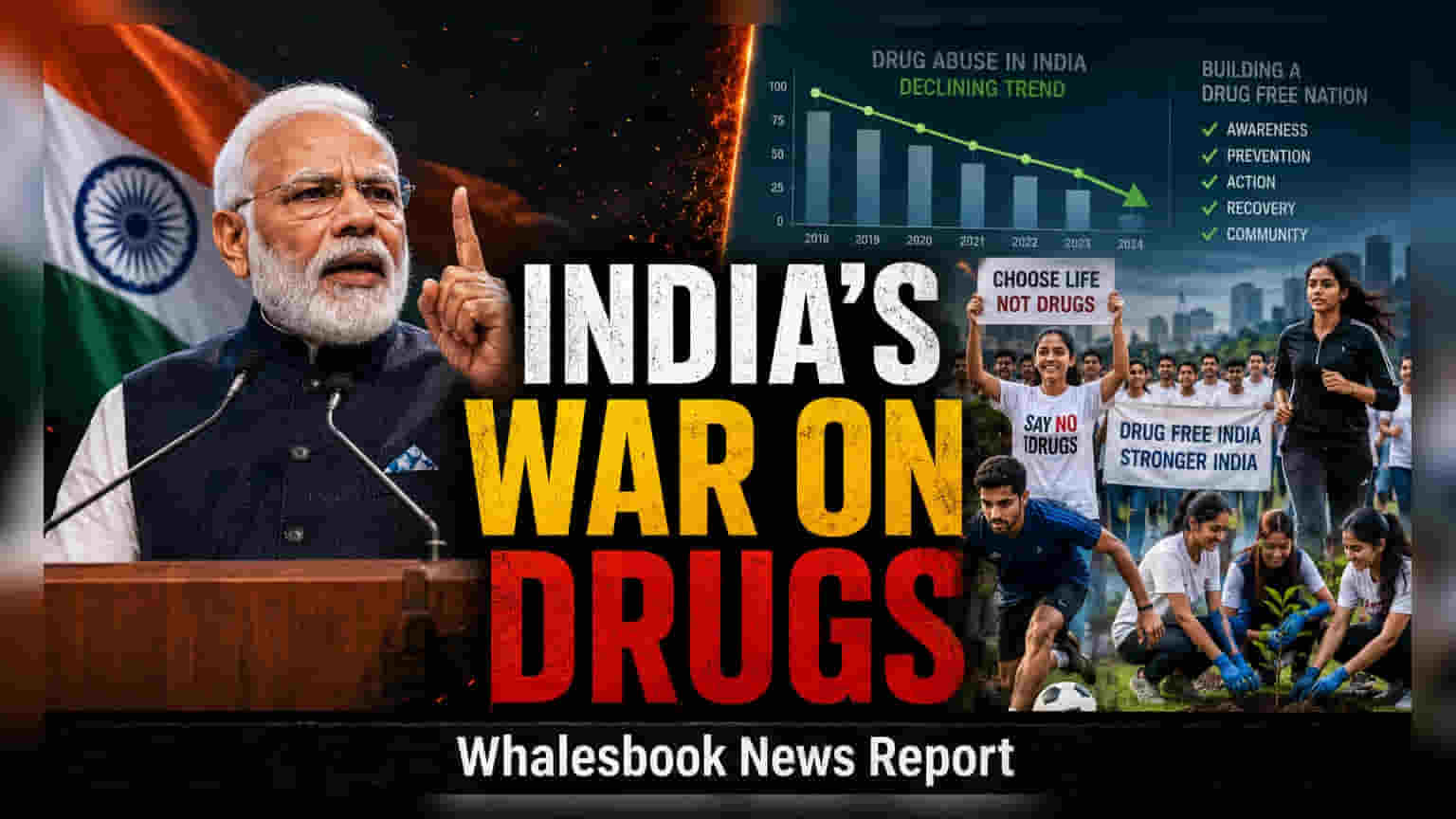
Prime Minister Narendra Modi has reaffirmed the 'Nasha Mukt Yuva for Viksit Bharat Sankalp Abhiyan,' a 100-week nationwide campaign to address substance abuse among youth. This social initiative aims to strengthen the nation's human capital as part of the long-term 'Viksit Bharat 2047' vision. The campaign focuses on community-driven awareness and public participation to build a healthier, more productive future generation.
Prime Minister Narendra Modi has called for a nationwide, 100-week mission to eradicate substance abuse, focusing on securing the health and future of India's youth. During his 80th Independence Day address from the Red Fort, the Prime Minister highlighted the 'Nasha Mukt Yuva for Viksit Bharat Sankalp Abhiyan' as a critical pillar for the country's long-term economic and social stability.
The campaign, which officially commenced on August 2, 2026, is structured to run for 100 weeks. Its primary goal is to foster a drug-free environment through mass public participation, known as 'Jan Bhagidari.' By engaging families, non-governmental organizations, social groups, and spiritual leaders, the government intends to create a grassroots movement against substance abuse.
From a macro-economic perspective, the health and productivity of the youth population are fundamental drivers of India's long-term growth story. The government’s emphasis on this issue is linked to the broader 'Viksit Bharat 2047' vision, which aims to transform India into a developed nation. Strengthening human capital is widely viewed by economic observers as an essential prerequisite for sustaining high economic growth and global competitiveness in the coming decades.
The initiative utilizes the 'MY Bharat' digital platform to streamline coordination and outreach. Every Sunday, the campaign will host a series of activities, including sports events, walkathons, meditation sessions, and cultural forums, specifically designed to steer young people toward healthy habits and community engagement.
For those following India's macro-economic development, the progress of such social governance initiatives serves as a key indicator of the government's approach to human resource development. While this is not a corporate event with direct stock market implications, the success of large-scale social welfare campaigns is often tracked for its potential to improve long-term workforce productivity and social stability.
Investors and observers typically look for sustained execution of such national missions, as they influence the demographic dividend that is central to India's development trajectory. The next important steps for this initiative will include the ongoing weekly awareness programs and the effectiveness of the community-led participation model across different states.