

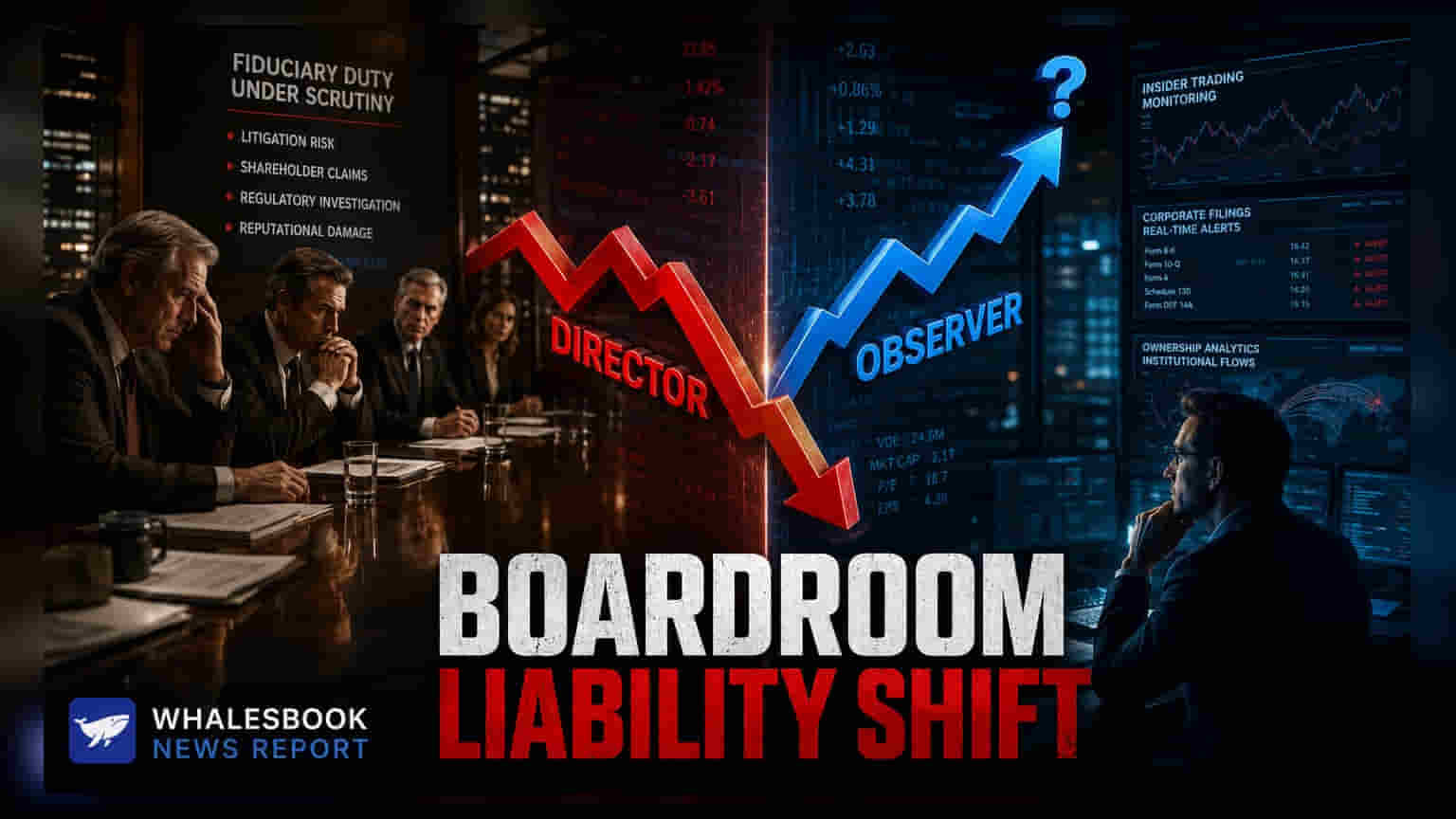
Private equity and venture capital firms are increasingly opting for board observer roles to gain business insights while avoiding legal director liabilities. However, Indian law may still hold these observers accountable as 'shadow directors' if they exert direct control over corporate decisions.
What Happened
Corporate governance trends in India are shifting, particularly within private equity and venture capital circles. Many investors are choosing to appoint 'board observers' instead of taking formal director seats on the boards of their portfolio companies. The observer role allows these representatives to attend board meetings, review company documents, and participate in discussions without being formal members of the board. This structure is gaining popularity as a way for investors to keep a close watch on their capital without assuming the full legal weight that comes with being a company director.
Why The Observer Role Is Growing
Being a director comes with significant responsibilities under the Companies Act, 2013, including fiduciary duties—the legal obligation to act in the best interest of the company rather than just the investor. Directors can be held liable for corporate failures, compliance breaches, or financial mismanagement. By opting for an observer role, investors seek a middle ground. They retain visibility and a voice in the boardroom, often backed by legal contracts that provide access to sensitive financial and operational data, without the heavy burden of being legally accountable for every board decision. This allows them to influence outcomes without the formal 'director' title.
The 'Shadow Director' Risk
While the observer role offers protection on paper, it does not provide a guaranteed shield against legal action. Indian corporate law includes the concept of a 'shadow director.' Under Section 2(59) of the Companies Act, 2013, an 'officer' or director can include a person in accordance with whose instructions the board of directors is accustomed to act.
If an observer’s influence becomes too strong—meaning the board effectively follows their directions on key matters—they can be legally classified as a shadow director. This means that, in the eyes of the law, their actual conduct matters more than their formal title. If they are found to be running the company's affairs from the shadows, they can be held liable for defaults, penalties, or financial misconduct, just as if they held an official board seat.
When Influence Becomes Liability
The line between offering advice and exercising control is often thin. Regulators and courts look at the substance of the relationship rather than the form. If an observer has veto powers over critical business decisions, or if management consistently consults them and adopts their suggestions before board meetings, the protection provided by the 'observer' label begins to weaken. When a dispute arises, authorities may examine minutes of meetings, emails, and the history of board decisions to determine who was really pulling the strings. This risk is highest in companies where investors have negotiated heavy control rights, such as mandatory approvals for routine operational decisions.
How Investors Should Read This
For shareholders and other stakeholders, this trend suggests that governance structures in private companies may not be as simple as they appear. An observer role can sometimes hide the true extent of investor control. Investors monitoring such companies should focus on the quality of documentation and the clarity of the roles defined in shareholders' agreements. The key monitorable is not just who sits on the board, but how much influence non-board members actually exert over the company's daily direction. Proper legal documentation and clear board processes are essential to ensure that an observer remains an advisor, not a de facto manager who could eventually become legally liable.