

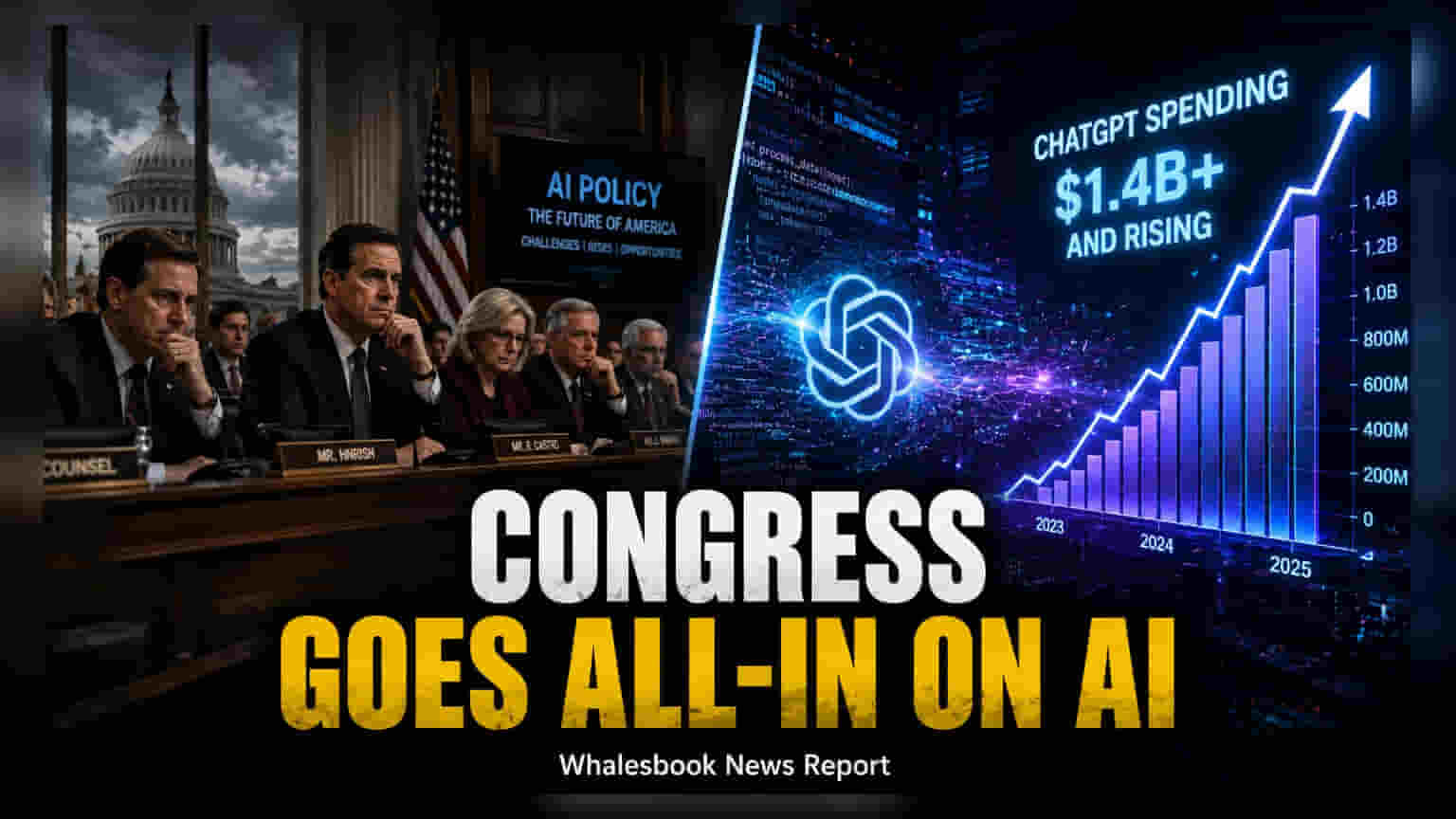
US House offices spent over $113,000 on AI tools in the year ending March 31, with OpenAI's ChatGPT receiving 90% of the total investment. Democratic offices led the adoption, spending three times more on these technologies than their Republican counterparts to assist with legislative tasks and communication.
A recent analysis of House disbursement records reveals that OpenAI's ChatGPT has become the primary artificial intelligence tool for US Congressional offices. During the fiscal year ending March 31, House committees and offices directed approximately 90% of their AI-related spending toward OpenAI, establishing the platform as the dominant choice for legislative staff.
Breakdown of AI Expenditures
The total recorded spending on specific AI platforms reached at least $113,740 for the period. OpenAI’s ChatGPT captured the majority of this investment, securing roughly $100,580 across 798 individual transactions. In contrast, Anthropic’s Claude AI chatbot received $13,160 through 37 transactions. It is important to note that these figures only reflect direct payments for AI tools and do not account for free services or AI features bundled into larger software subscriptions, such as those provided by Microsoft or Google.
Party-Based Adoption Trends
There is a notable difference in how political parties are utilizing these financial resources for AI. Democratic offices reported expenditures of $54,165, which is three times the $15,782 spent by Republican offices. This suggests that while AI integration is occurring across the legislative branch, the speed and scale of adoption vary significantly between the two parties. The remaining expenditure is attributed to various non-partisan committees and administrative offices.
Operational Integration in Government
Congressional staffers are currently using these AI tools to manage increasing workloads. Common applications identified include drafting internal policy memos, summarizing complex legislative proposals, and managing high volumes of constituent correspondence. Staffers also utilize the technology to prepare hearing materials, organize policy research, and assist in creating social media content.
For investors and observers of the technology sector, the primary monitorable remains the evolution of these procurement patterns as government entities establish formal guidelines for AI safety and data privacy. As regulatory frameworks around AI usage in government continue to develop, future spending may shift based on security compliance, enterprise-wide licensing deals, or the entry of new competitors into the public sector market.