

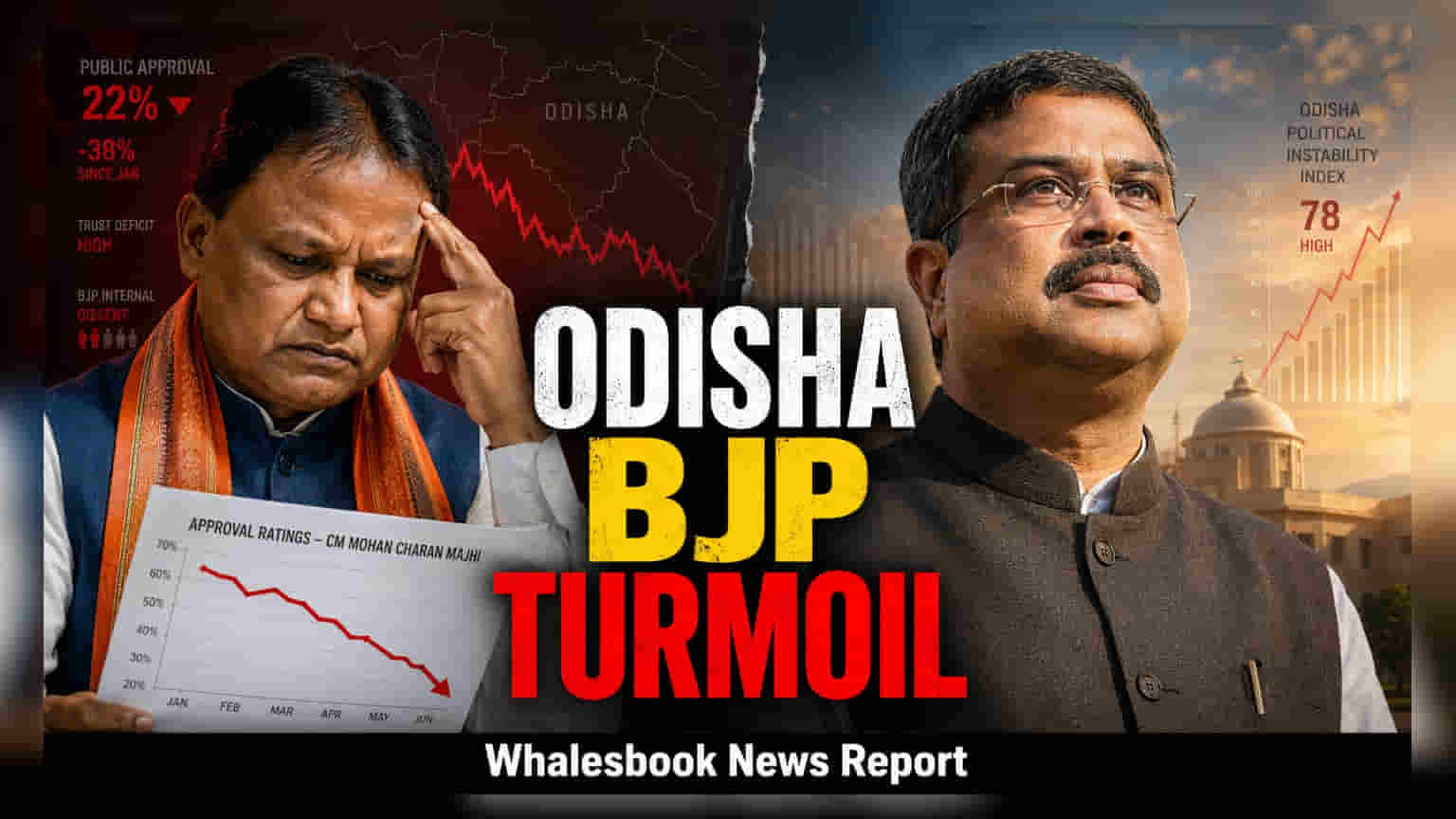
Union Minister Dharmendra Pradhan's resignation from his central post has sparked political uncertainty in Odisha. The development has led to questions regarding the future stability of Chief Minister Mohan Charan Majhi’s administration, as many state legislators are considered loyal to Pradhan.
Detailed Coverage
The resignation of Union Minister Dharmendra Pradhan has introduced significant political volatility in Odisha, impacting the Bharatiya Janata Party (BJP) government led by Chief Minister Mohan Charan Majhi. Pradhan, who played a central role in the party's recent electoral success in the state, is now expected to shift his focus toward Odisha’s local political arena, a move that is being closely watched by political analysts and party members alike.
Leadership Stability and Internal Dynamics
Chief Minister Mohan Charan Majhi’s administration, which recently took charge after ending the 24-year governance of the Biju Janata Dal (BJD), is facing internal scrutiny. A substantial number of BJP legislators in the state assembly are widely seen as loyal to Pradhan. This alignment has generated persistent speculation regarding the long-term stability of the current leadership, particularly as the administration navigates early challenges. While senior party officials have downplayed the situation and avoided public comment on leadership changes, the internal dynamics remain a key factor for observers of Odisha's governance.
Broader Political Context and Regional Scrutiny
The political climate extends beyond Odisha as regional leaders face various pressures. In Assam, state minister Keshab Mahanta of the Asom Gana Parishad (AGP)—a coalition partner of the BJP—is currently under public and political pressure. This follows the emergence of videos showing his daughter participating in protests related to the NEET examination paper leak. Within the AGP, there are internal concerns that this controversy could be leveraged by factions within the alliance to push for a cabinet reshuffle, potentially aimed at securing a ministerial position for a BJP candidate.
Strategic Communication and Public Image
Amid these varied political challenges, the BJP is focusing heavily on reinforcing its national image. Party leadership has actively worked to counter negative narratives following localized protests, particularly those targeting Prime Minister Narendra Modi. To strengthen its direct communication with voters, the party has intensified its digital presence. Recent data on engagement metrics, as highlighted by party functionaries, suggests a continued focus on leveraging social media platforms to maintain public support and bypass traditional political friction points. Investors and observers interested in regional political stability will continue to track whether these leadership shifts lead to policy changes or further administrative realignments in the coming months.