

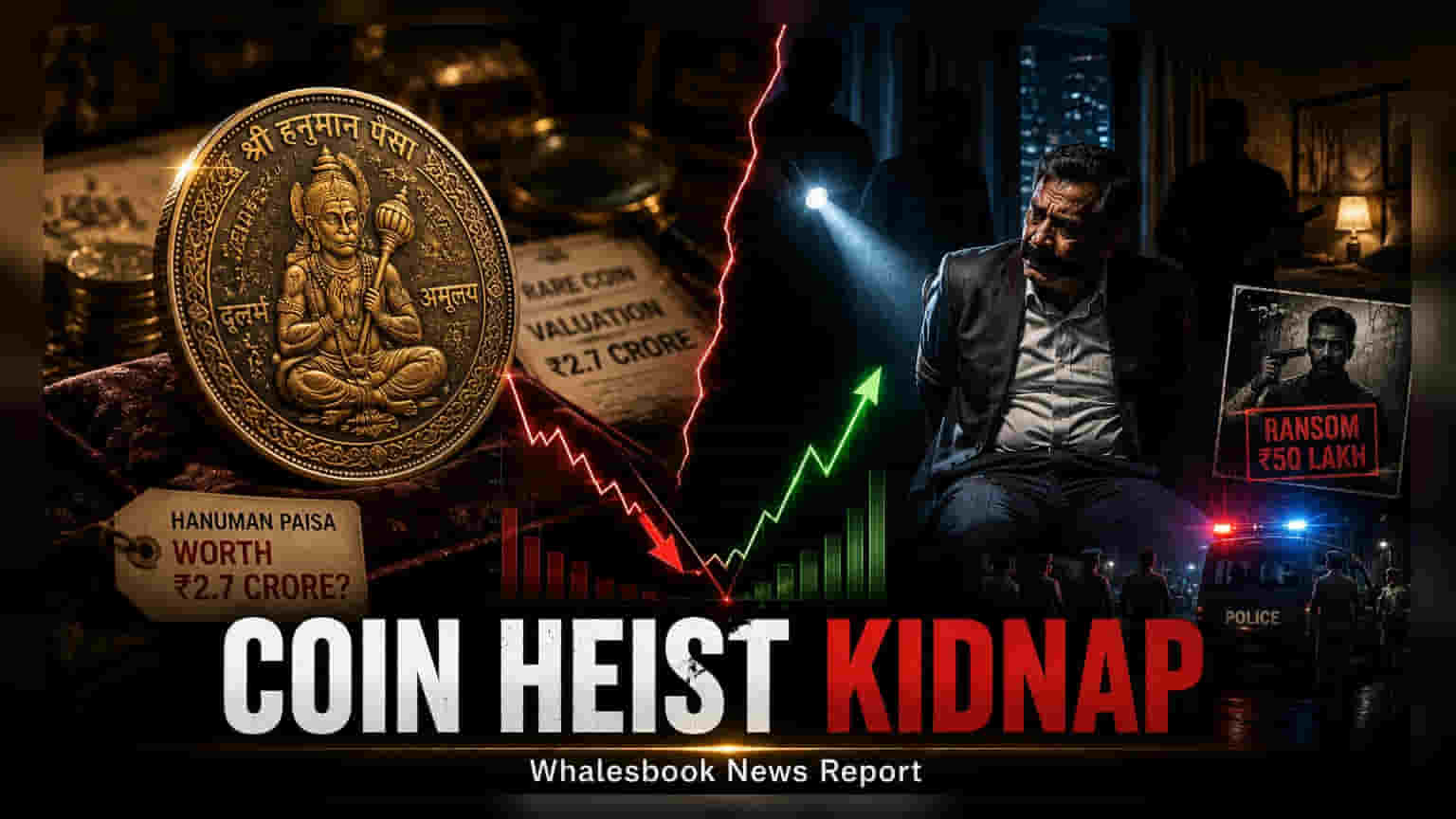
A 62-year-old businessman in Odisha was kidnapped and held for extortion over a disputed Rs 2.7 crore deal involving an antique 'Hanuman' coin. Four people, including a police sub-inspector, were arrested by police. This case serves as a warning about the prevalence of fraud involving unregulated 'antique' assets.
A troubling case of kidnapping and extortion has emerged in Odisha’s Bolangir district, centering on a disputed transaction involving a purported rare antique coin. The incident, which led to the arrest of four individuals, highlights the serious risks associated with dealing in unregulated assets where authentication and financial oversight are absent.
The 62-year-old victim, a local businessman, was allegedly abducted at gunpoint on August 14 and taken to Bhubaneswar. The perpetrators held him captive, assaulted him, and coerced him into recording a video while posing with a firearm, which they then used as a tool for blackmail. The abductors reportedly demanded a ransom of Rs 50 lakh, claiming it was tied to a previous, contested financial deal.
At the heart of the dispute is an alleged transaction from 2020 involving a so-called 'Hanuman Paisa,' an antique coin that the prime accused claims was purchased for Rs 2.7 crore. The accused alleged that the coin was never delivered and the funds were not returned. However, law enforcement officials have noted that there is no documentary evidence to support the existence or the valuation of such a transaction, suggesting the entire premise may be part of an elaborate scam.
The investigation into the incident has raised concerns regarding institutional integrity, as the individuals arrested include a police sub-inspector from the Khandagiri police station and a journalist. Reports indicate that the officer allegedly used her position to threaten the victim with fabricated criminal charges if the ransom was not paid. The victim was rescued on August 15 after family members filed a missing person report, allowing police to track the suspects using vehicle movement and surveillance footage.
For readers, this incident serves as a stark reminder of the dangers inherent in private, unregulated investment deals. The 'antique coin' racket is a known form of fraud in India, where perpetrators lure victims by promising astronomical returns or claiming the possession of rare artifacts with supernatural properties. These schemes often involve high-value, unverified assets that are impossible to value accurately and lack any regulatory protection.
Investors and business individuals should treat any deal involving unregistered, antique, or 'rare' items with extreme caution. Genuine antique trading is highly specialized, regulated, and requires rigorous authentication from recognized bodies. When such transactions take place in private settings without legal contracts or verifiable documentation, they frequently result in financial loss or, as seen in this case, personal safety risks. Authorities are continuing their investigation into the broader activities of the accused group to determine if other individuals have been targeted by similar extortion methods.