

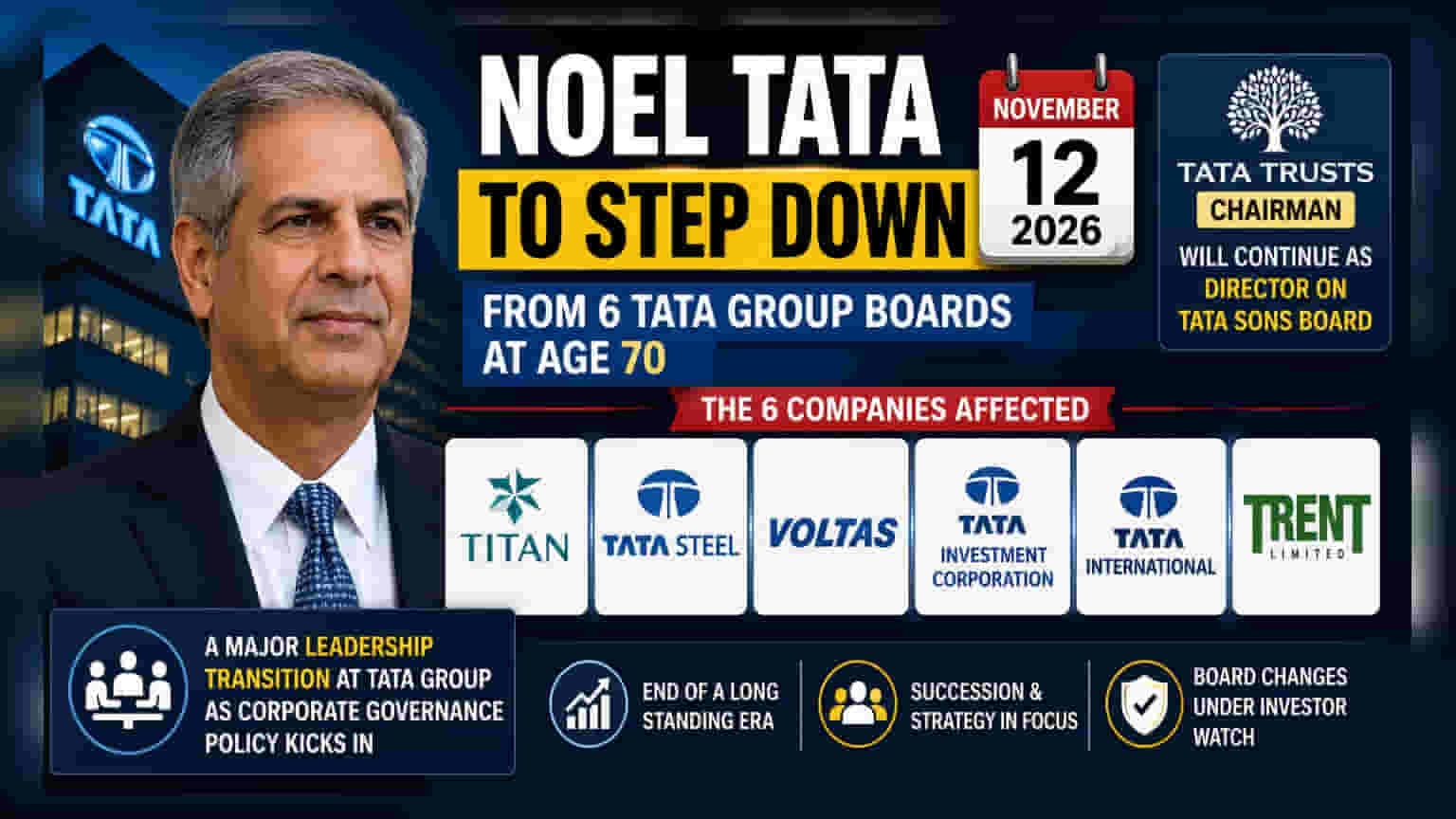
Noel Tata will step down from the boards of six major Tata Group companies this November as he turns 70, adhering to the conglomerate's retirement policy for non-executive directors. He will retain his position on the board of Tata Sons, where the age limit does not apply to Tata Trusts nominees.
What Happened
Noel Tata has announced that he will step down from the boards of six major Tata Group companies on November 12, 2026, upon reaching the age of 70. This decision aligns with the Tata Group’s established corporate governance policy, which mandates the retirement of non-executive directors at this age. The companies affected by this transition include Titan, Tata Steel, Voltas, Tata Investment Corporation, Tata International, and Trent.
While he will retire from these specific boards, Noel Tata will continue to serve as a director on the board of Tata Sons. The age-based retirement cap does not apply to directors nominated by Tata Trusts, the charitable foundations that hold a controlling stake in the group’s holding company. Noel Tata currently chairs Tata Trusts.
Why This Matters For Investors
The exit of a key board member from multiple high-profile companies signals a significant leadership transition. For investors, this reshuffle is a monitorable event because Noel Tata has been an influential voice across the group’s consumer, retail, and industrial businesses. His departure marks the end of a long-standing association with these firms, most notably Trent, which grew substantially during his tenure.
Changes in board composition can sometimes influence strategic priorities or governance approaches within large conglomerates. While these transitions are a standard part of corporate governance, they often trigger questions regarding succession planning and the future direction of the entities involved.
Impact Across Tata Companies
Noel Tata’s involvement has been central to the growth of several group companies. Trent, in particular, saw significant expansion under his guidance, evolving into one of India’s largest retail networks. The transition at the board level comes as the group navigates complex market environments and internal discussions regarding leadership and long-term strategy.
Investors may note that board changes of this scale are usually accompanied by the induction of new directors or re-allocation of responsibilities among existing ones. The market will watch for announcements regarding board replacements and whether there will be any shifts in the strategic roadmap of these companies, particularly those currently undergoing major expansion projects or dealing with changing consumer demand.
Governance And Boardroom Context
The decision to step down reinforces the group's adherence to its stated governance guidelines. Tata Group has traditionally enforced age limits for directors to facilitate periodic leadership renewal. However, the distinction between operating company boards and the Tata Sons board highlights the unique structure of the conglomerate, where Tata Trusts maintains a direct oversight role.
Recent discussions in the media have pointed to internal reviews and governance considerations within the broader group structure. For shareholders, the key monitorable remains whether this leadership transition proceeds smoothly and how it influences the continuity of ongoing business initiatives across the retail, industrial, and investment sectors.