

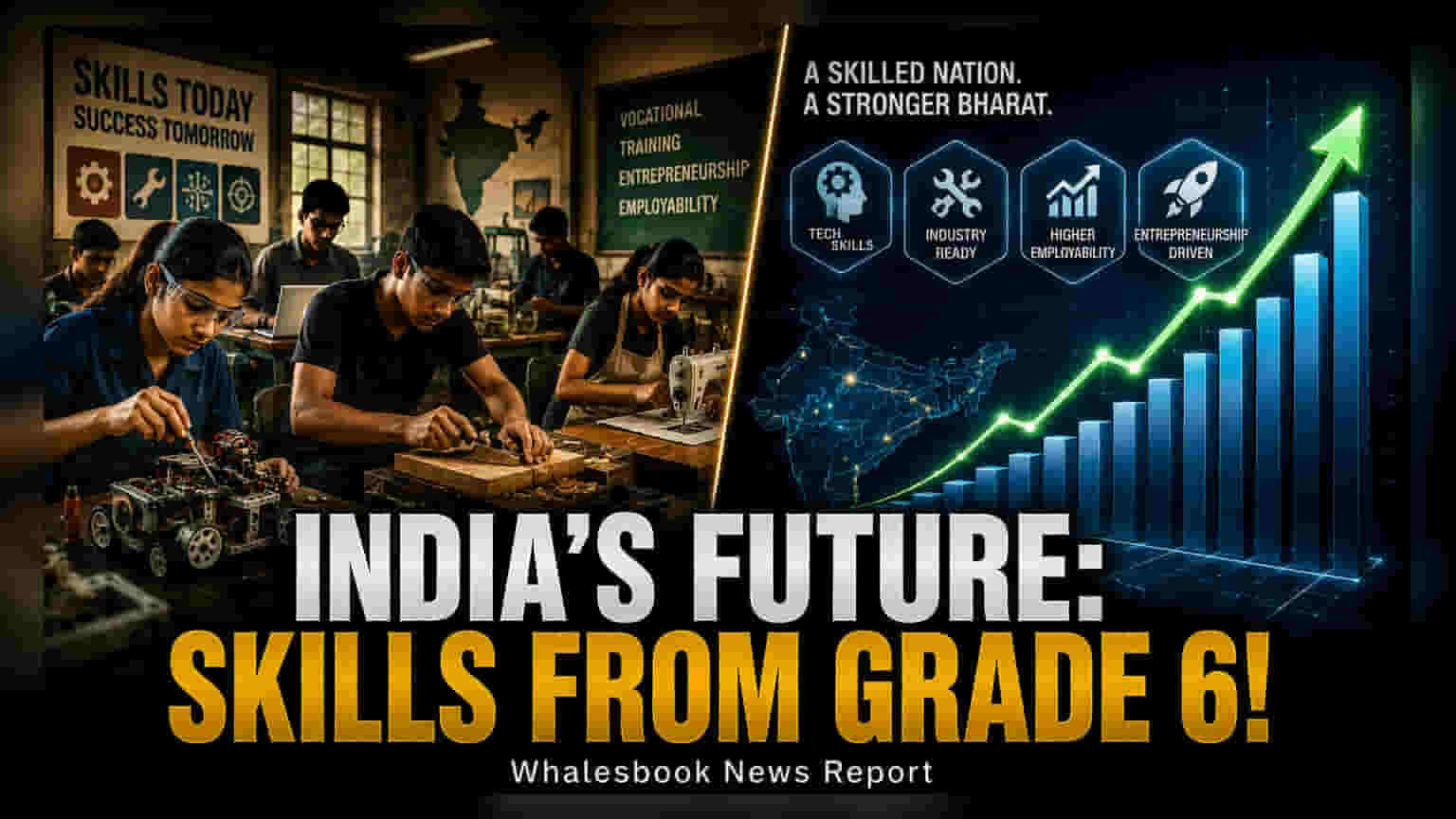
Niti Aayog’s new 'Reimagining Skilling' report proposes mandatory employability skills from Grade 6 and vocational tracks from Grade 9. The move aims to address India's skill gap and improve future employment. While this creates potential for private sector involvement through partnerships, investors should watch for execution risks, as only a small fraction of schools currently offer such programs.
Niti Aayog has released a new report, 'Reimagining Skilling for Viksit Bharat@2047,' which proposes a major shift in India's education system. The policy think tank recommends integrating General Employability and Entrepreneurship Skills (GEES) starting from Grade 6, and introducing structured vocational tracks from Grade 9 onwards. This recommendation is part of a broader push to align the education framework with the needs of the modern job market.
Potential for Private Sector Participation
A key aspect of the report for the market is the focus on Public-Private Partnerships (PPP) and the expansion of Apprenticeship Embedded Degree/Diploma Programmes (AEDP). Niti Aayog has highlighted that current education outcomes are often weak due to outdated curricula and a lack of job-linked learning. By encouraging a shift from general degrees to applied specializations, the government aims to create a larger space for industry-led vocational training. This could open doors for private skilling providers, EdTech companies, and private universities to partner with educational institutions to provide specialized, industry-relevant curriculum.
Implementation and Execution Risks
While the plan aims to improve future employability, scaling it presents significant challenges. The report itself notes that fewer than one in 12 secondary schools in India currently offer vocational subjects. This indicates a massive gap in infrastructure, trained faculty, and resources. For the initiative to succeed, there is a requirement for significant capital spending on training infrastructure, which may involve both government funding and private sector investment.
Another challenge is the traditional academic focus of the current board examination system. Niti Aayog has proposed that vocational subjects be given equal weightage in Grades 10 and 12 exams. Success here depends on how quickly and effectively this revision is adopted across various state and national boards, and whether societal perception of vocational tracks shifts to view them as equal to traditional academic degrees.
What Investors Should Monitor
For investors observing the education and skilling sector, the main monitorables will be the actual rollout of these guidelines. Key factors to track include government tender announcements for vocational training projects, changes in state-level school curricula, and budget allocations aimed at scaling infrastructure for the new vocational tracks. The long-term impact on the sector will depend on how efficiently public-private models are implemented and whether these programs lead to measurable improvements in student employability.