

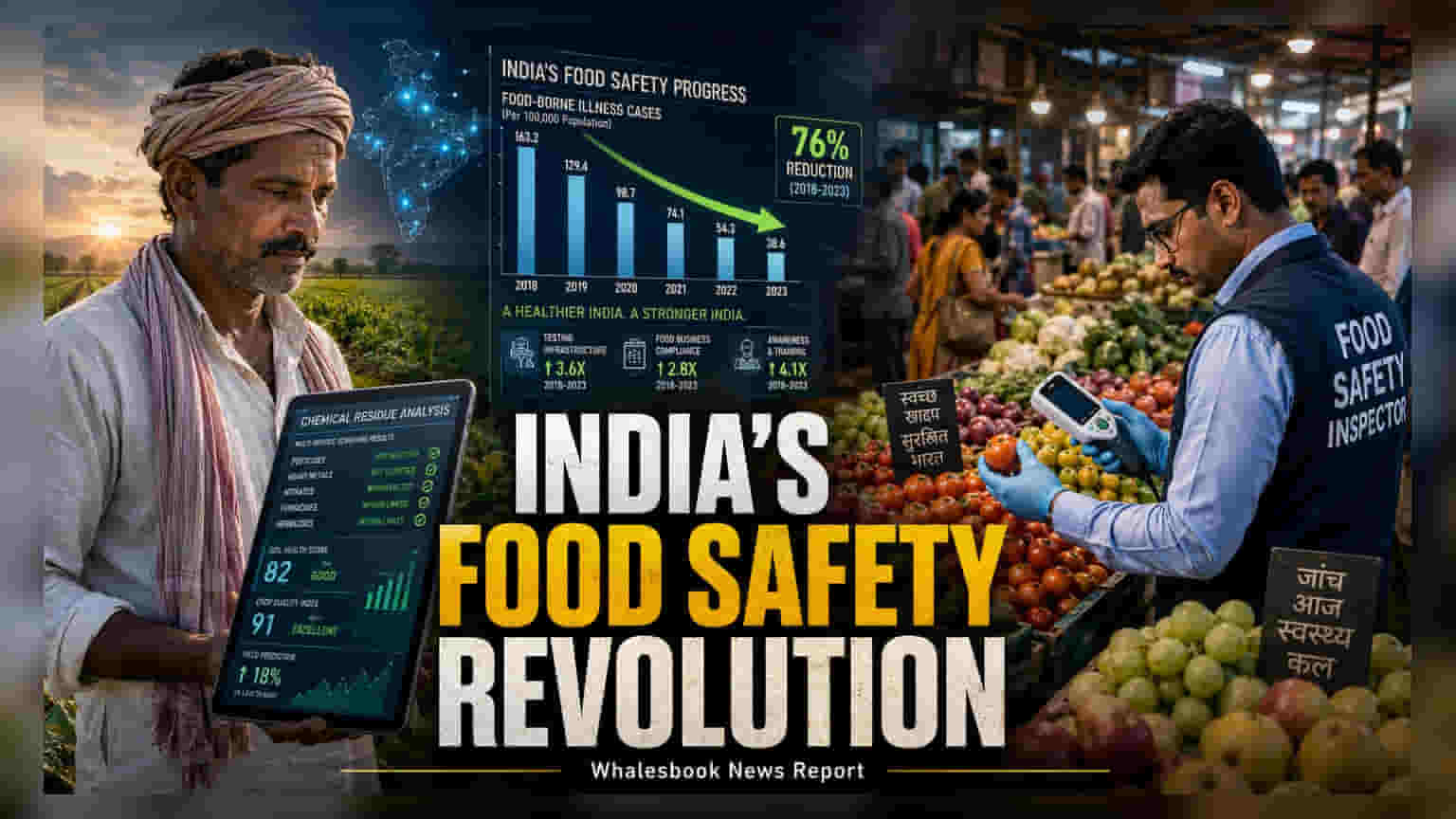
Niti Aayog is spearheading a national initiative to introduce farm-to-fork tracking and stricter food safety enforcement. The plan aims to reduce India's 100 million annual food-borne illness cases by improving testing infrastructure and supply chain quality. Companies in the food processing, cold-chain, and testing laboratory sectors may see increased compliance requirements and infrastructure investment opportunities.
The Indian government is initiating a major update to the national food safety framework, with Niti Aayog leading efforts to implement a comprehensive farm-to-fork traceability system. This move is designed to monitor food products from their agricultural source through to retail shelves, focusing specifically on detecting chemical residues and preventing adulteration at every stage of the supply chain.
Expanding Testing and Surveillance
To support these safety goals, discussions chaired by Niti Aayog member M Srinivas have centered on adopting global best practices for surveillance. The government is evaluating plans to significantly expand the network of accredited food-testing laboratories across the country. There is also a focus on increasing independent third-party sampling and deploying mobile testing units to conduct real-time screenings at markets and production centers. For the food testing and inspection industry, these developments suggest a growing demand for accredited laboratory services and advanced diagnostic technologies.
Supply Chain and Compliance Impacts
The initiative also aims to modernize infrastructure, with officials evaluating the role of cold-chain and efficient transport systems in reducing food spoilage and contamination during storage and transit. A significant potential shift in business operations involves linking access to credit for food businesses with their food safety compliance scores. This mechanism could create a direct financial incentive for companies to adopt stricter quality control measures.
Furthermore, the government plans to use data analytics to identify and monitor food adulteration hotspots by cross-referencing crop production data, yields, and market pricing patterns. This evidence-based approach is intended to streamline enforcement and target inspections more effectively than current manual processes.
Addressing the Public Health Burden
The push for these reforms is driven by public health concerns, as India currently reports roughly 100 million cases of food-borne illnesses each year. Projections indicate this number could rise to between 150 million and 170 million by 2030 if systemic improvements are not made. As food-borne disease remains one of the largest contributors to the national disease burden, these regulations are being positioned as a critical step toward improving economic productivity and public health outcomes.
Investors should track the upcoming policy guidelines for specific timelines on the implementation of the traceability system and the rollout of the compliance-based credit scoring model. Monitoring the pace of laboratory accreditation and the budget allocation for mobile testing infrastructure will also be important for identifying potential shifts in capital investment within the food safety and logistics sectors.