

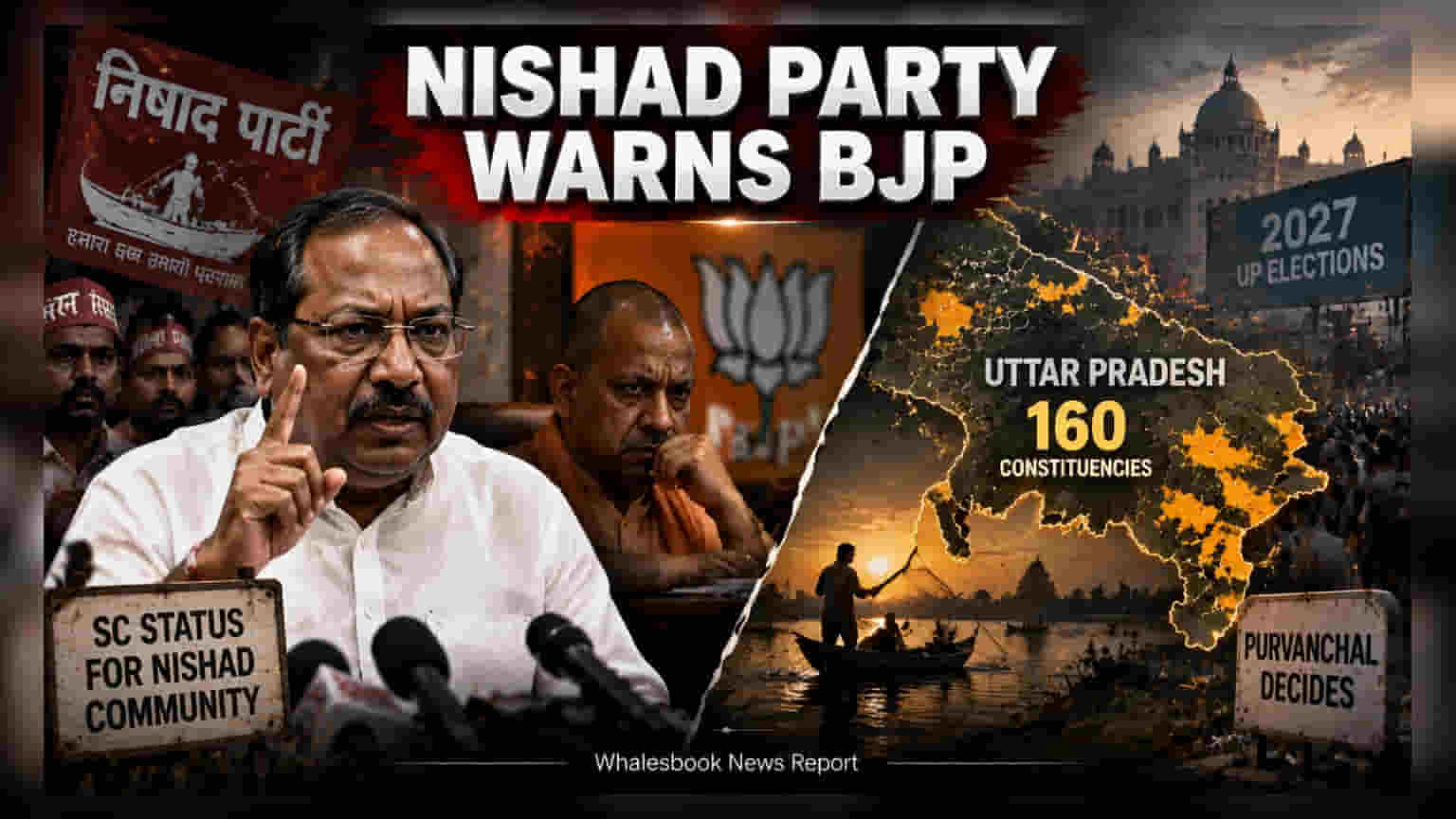
Nishad Party President Sanjay Nishad has publicly demanded more seats for the 2027 Uttar Pradesh Assembly elections, signaling potential friction within the NDA alliance. This political development highlights unresolved demands for reservation status, a key factor investors watch for political stability in India's most populous state.
The political alliance between the Bharatiya Janata Party (BJP) and the Nishad Party is facing new pressure ahead of the 2027 Uttar Pradesh Assembly elections. Nishad Party President Sanjay Nishad has publicly raised concerns regarding seat-sharing arrangements for the upcoming state polls, hinting at the possibility of rethinking the alliance if their demands are not addressed.
At the core of this friction is the long-standing demand for Scheduled Caste (SC) status for the Nishad community. This issue has been a point of contention for several election cycles. While the Nishad Party is a member of the National Democratic Alliance (NDA), its leadership has indicated that the party is seeking greater leverage to ensure their demands for social and administrative recognition are prioritized in the government’s agenda.
For market observers and investors, political stability in major states like Uttar Pradesh is a significant monitorable. Large states often see shifts in policy focus or administrative priorities as elections approach, and regional alliances play a crucial role in maintaining local political balance. A fracture in the alliance, or even prolonged public disagreement, can introduce uncertainty in the state’s political landscape, which is a factor institutional and regional stakeholders typically assess when evaluating the local business environment.
The Nishad Party holds influence in the Purvanchal region of Uttar Pradesh. Any disruption in this alliance could impact the BJP’s strategy for vote consolidation in that area. Historically, political negotiations of this nature involve balancing the demands of regional allies against the national strategy of the coalition leader. The current public posturing by the Nishad Party is being viewed as a strategy to increase their bargaining power before formal seat-sharing discussions are finalized.
The most important factor for observers to track next is the formal seat-sharing announcement between the BJP and the Nishad Party. Whether the leadership reaches a compromise or the Nishad Party maintains its current stance on seeking independent considerations will determine the stability of the alliance heading into 2027. Investors and observers generally track such developments to understand the likely continuity of regional policy and political stability in Uttar Pradesh.