

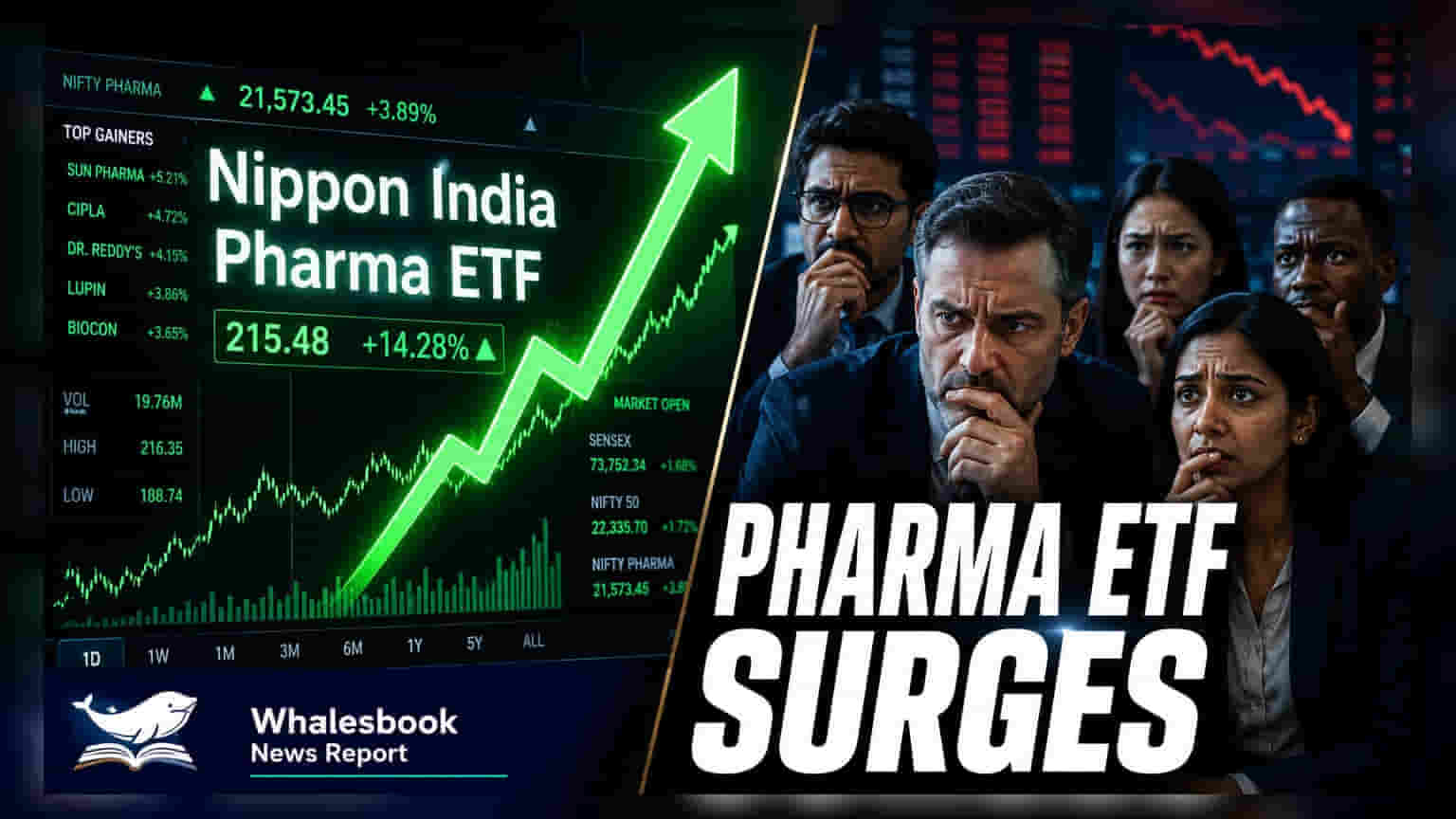
The Nippon India Nifty Pharma ETF recorded an 11.3% return over the last six months, outperforming other major index ETFs. This data highlights the fund's recent momentum in the pharmaceutical sector compared to broader market indices.
What Happened
The Nippon India Nifty Pharma ETF has outperformed its peers in the index exchange-traded fund (ETF) category, delivering a return of 11.3% over the six-month period ending July 2, 2026. This performance stands out when compared to other popular index funds such as the HDFC NIFTY Smallcap 250 ETF and the UTI Nifty Next 50 ETF, which recorded returns of 7.1% and 3.3%, respectively, during the same timeframe according to ACE MF data.
Performance Against Benchmarks
The ETF’s performance is particularly notable when measured against its underlying benchmark. Data indicates that the fund outpaced its benchmark by 19.0 percentage points over a one-year period, during which the benchmark saw a decline of 4.0%. Over a three-year horizon, the fund has demonstrated consistent strength, posting a 23.0% return against the benchmark’s 9.2% return, marking a lead of 13.8 percentage points.
Why Timeframes Matter
While the pharma-focused fund has led the six-month performance charts, market leadership often shifts depending on the investment period. For instance, the HDFC NIFTY Smallcap 250 ETF has shown higher short-term momentum, leading the charts over the one-month and three-month periods with returns of 6.1% and 22.2%, respectively. This variation suggests that different market cycles favor different sectors and market capitalizations, making long-term consistency a critical factor for investors.
Fund Size and Selection Criteria
These performance comparisons are based on funds with assets under management (AUM) exceeding ₹1,500 crore. Among the top-performing schemes in this category, the Nippon India ETF Nifty Next 50 Junior BeES currently maintains a significant corpus of approximately ₹8,043.7 crore. Investors looking at these figures should note that high AUM often provides higher liquidity, though it does not guarantee future returns.
What Investors Should Track
When evaluating index ETFs, investors may look beyond short-term returns. Key monitorables include the tracking error, which measures how closely the ETF follows its benchmark, and the expense ratio, which affects the net return to the investor. Additionally, since pharma is a sector-specific investment, performance remains heavily tied to regulatory approvals, export demand, and domestic pricing policies. Evaluating how these funds perform across various market cycles remains essential for a balanced portfolio approach.