 Whalesbook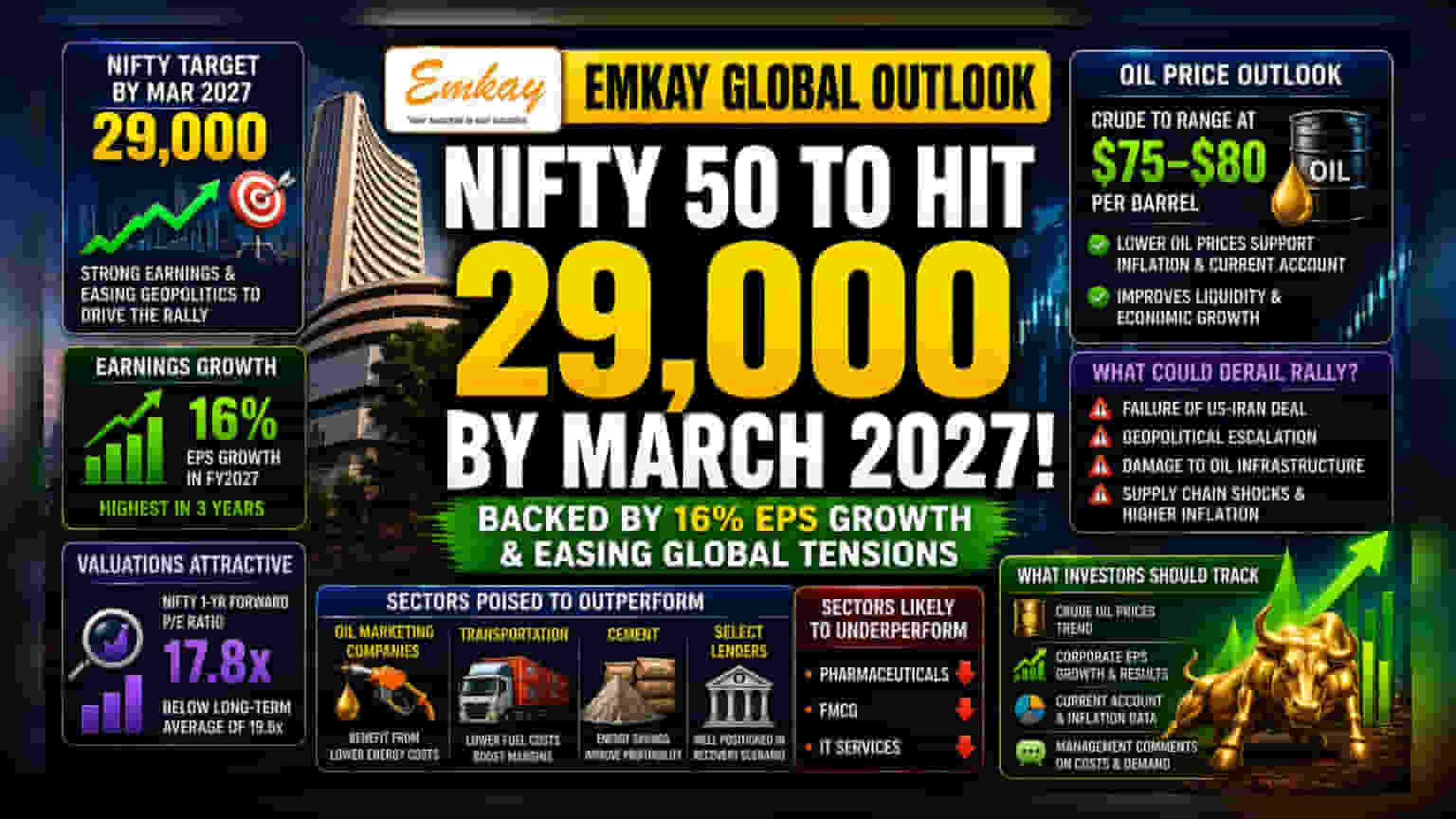


Emkay Global projects the Nifty 50 to reach 29,000 by March 2027, driven by a 16% growth in corporate earnings. The brokerage highlights valuation comfort at a 17.8x forward P/E ratio, suggesting potential upside if global oil prices stabilize. However, this outlook relies heavily on geopolitical stability, a key factor investors should monitor.
What Happened
Emkay Global Financial Services has released a market outlook projecting the Nifty 50 index to touch the 29,000 mark by March 2027. The brokerage attributes this potential growth to a combination of strong corporate earnings expectations and an easing of geopolitical tensions. The core of this forecast rests on the anticipation of a 16% growth in Earnings Per Share (EPS) for Indian companies in the 2027 financial year. The brokerage notes that this would be the highest growth rate seen in three years, signaling a shift in the corporate performance landscape.
Why Investors Focus on Earnings and Valuations
For investors, the most significant takeaway from this forecast is the focus on corporate earnings rather than just market sentiment. When a brokerage projects earnings growth of 16%, it implies that companies are expected to sell more, manage costs better, or benefit from an improved economic environment. The report also highlights that the Nifty is currently trading at a one-year forward Price-to-Earnings (P/E) ratio of 17.8x. To understand this in simple terms, the P/E ratio measures how much investors are willing to pay for every rupee of profit a company makes. Since 17.8x is below the long-term average of 19.6x, the brokerage suggests that the market has room to grow, as valuations are not currently at extreme highs.
The Oil Price Connection
A critical component of this forecast is the path of global crude oil prices. The brokerage links the positive outlook to a potential reduction in crude oil prices to the range of USD 75 to 80 per barrel. India, as a major importer of oil, is sensitive to these costs. Lower oil prices generally help the country reduce its current account deficit and lower inflationary pressures, which in turn can lead to better liquidity in the financial system. If oil prices remain high, these benefits may not materialize, which is why the brokerage highlights this as a key economic variable for the market.
Sectors in Focus
The brokerage’s outlook suggests a rotation in sector preference. Companies that stand to benefit from lower energy costs, such as Oil Marketing Companies (OMCs), transportation firms, and cement manufacturers, are identified as potential areas of interest. Select lenders are also highlighted as companies that could perform well in a recovery scenario. Conversely, the brokerage suggests that traditional defensive sectors like pharmaceuticals, FMCG, and technology may see relatively weaker interest compared to cyclical sectors that typically benefit from a broader economic upturn.
Risks and Market Realities
Investors should be aware that such projections are subject to significant risks. The entire outlook is heavily dependent on specific geopolitical outcomes, such as a potential agreement between the US and Iran. If this deal fails or if geopolitical tensions flare up again, the expected drop in oil prices may not occur, potentially putting pressure on inflation and corporate margins. Furthermore, any damage to oil infrastructure could lead to supply-chain shocks. These risks serve as a reminder that market projections are scenarios based on specific assumptions, and actual market performance can differ significantly if those assumptions are not met.
What Investors Should Track
The most important monitorables for investors in the coming months are global commodity prices, specifically crude oil, and the actual earnings reports from India Inc. Investors should watch for the trend in EPS growth, as this will confirm whether the projected 16% growth is taking shape. Additionally, keep an eye on official data regarding the country’s current account deficit and inflation figures, as these will directly influence the macroeconomic environment that the brokerage expects to support the market rally. Management commentary regarding cost pressures and demand in the upcoming quarterly results will also provide real-time evidence of whether the corporate sector is delivering on these growth expectations.