

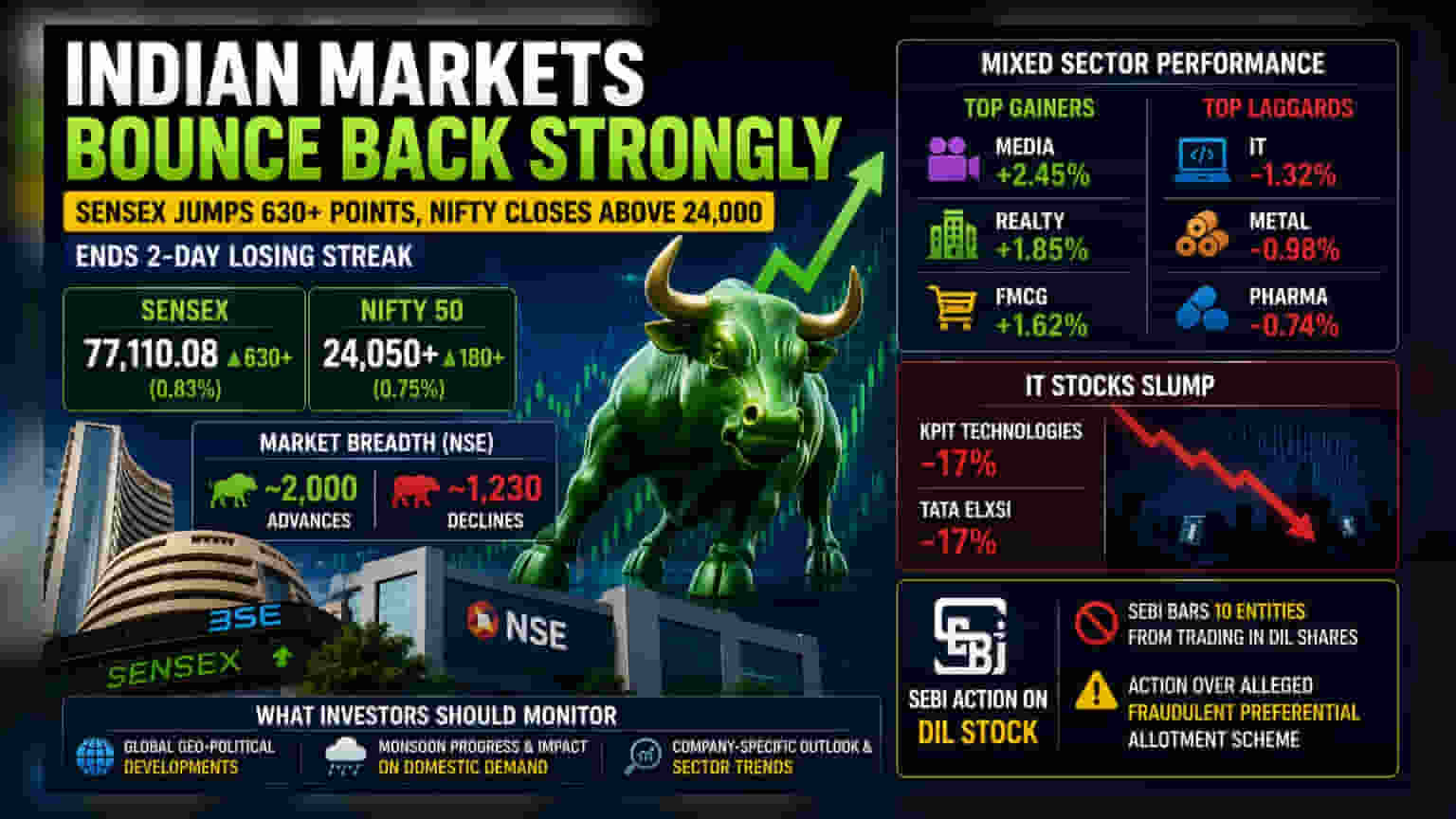
Indian markets staged a strong rally on Wednesday, with the Sensex gaining over 630 points and the Nifty reclaiming the 24,000 mark. While FMCG and media stocks led the gains, the IT sector faced significant selling pressure. Separately, SEBI restricted 10 entities linked to DIL stock following an investigation into a preferential allotment scheme.
What Happened
Indian stock markets saw a solid recovery on Wednesday, ending a two-day losing trend. The BSE Sensex jumped over 630 points, touching an intraday high of 77,110.08. The Nifty 50 index also showed strength, rising by more than 180 points to close above the 24,000 level. Market breadth remained positive, with nearly 2,000 stocks advancing on the National Stock Exchange (NSE), compared to about 1,230 stocks that saw declines.
Mixed Sector Performance
Despite the broad market gains, investor sentiment remained cautious due to ongoing global concerns, including geopolitical tensions and worries over the progress of the monsoon season. This caution led to a split in performance across sectors. Investors showed interest in consumer-facing and real estate stocks, with the media, realty, and fast-moving consumer goods (FMCG) sectors outperforming the broader market. In contrast, sectors like information technology (IT), metal, and pharmaceuticals faced selling pressure, highlighting a selective approach by market participants.
Why IT Stocks Slumped
The technology sector faced a tough day, with major IT companies among the notable laggards on the Nifty 50. The decline was particularly sharp in the midcap IT space, where shares of KPIT Technologies and Tata Elxsi fell by as much as 17%. Such sharp drops often suggest that investors are reacting to specific company news, changes in growth expectations, or broader concerns about IT spending and project pipelines in the coming quarters.
SEBI Action On DIL Stock
In a separate development, the Securities and Exchange Board of India (SEBI) took regulatory action concerning DIL stock. The market regulator barred 10 entities from trading in the company's shares. This action follows allegations of a fraudulent preferential allotment scheme. This move serves as a reminder of the regulator's ongoing oversight regarding governance and fair trading practices in listed companies.
What Investors Should Monitor
Moving forward, market participants may focus on a few key factors. First, global geopolitical developments and the monsoon's impact on domestic demand will likely continue to influence sentiment. Second, the divergence between sectors like FMCG and IT suggests that investors are closely evaluating company-specific growth outlooks rather than buying blindly across the board. Monitoring upcoming company commentary, especially from the IT sector, may provide further clarity on whether the current selling pressure is temporary or indicative of a longer-term trend.