

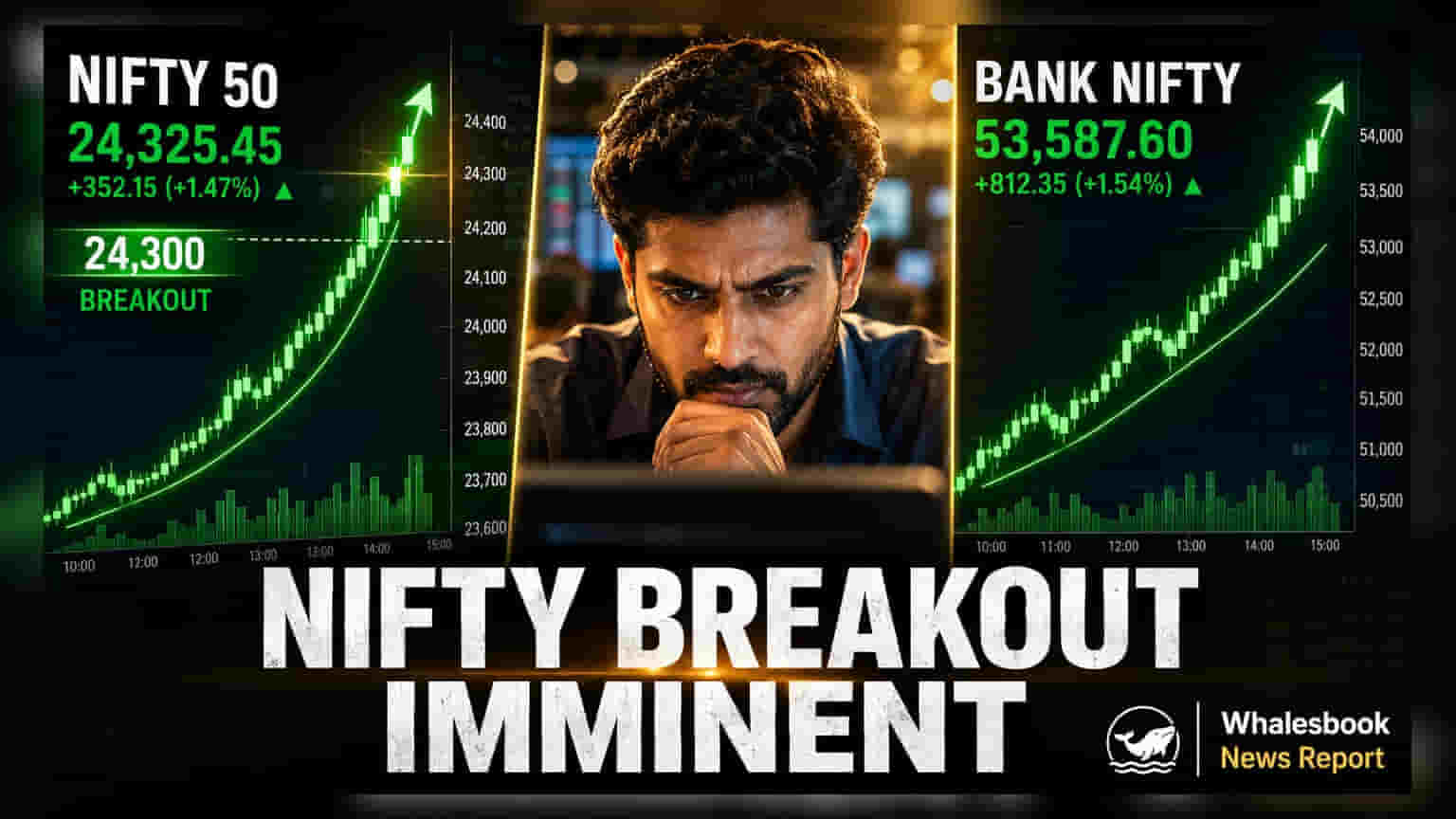
The Nifty 50 is testing the 24,300 level after closing at 24,176 on July 2. Lower volatility and cooling oil prices are supporting the index, while the Bank Nifty remains a key focus for traders tracking potential breakouts near 58,700.
What Happened
Indian equity markets displayed upward momentum as of July 2, 2026. The Nifty 50 index concluded the trading session at 24,176, marking a gain of 170 points. Market data from the National Stock Exchange shows that more shares advanced than declined, reflecting a broad-based positive sentiment among investors. The index is now approaching the 24,300 level, a point that has served as a recent technical hurdle. Simultaneously, the Bank Nifty index ended the day at 58,032, showing a relatively stable but cautious structure compared to the broader Nifty.
Why The 24,300 Level Matters
For many market participants, the 24,300 mark is closely watched because it represents a technical resistance point from previous sessions. If the Nifty 50 sustains a move above this level, the next potential points of interest are often identified around 24,420—which aligns with the 200-day exponential moving average—and further toward 24,600. Conversely, market analysts often view the 24,000 level as a significant support zone. A failure to maintain this level could indicate a shift in short-term sentiment, potentially leading to increased volatility.
Banking Index Dynamics
The Bank Nifty has displayed a different pattern of movement. It is currently oscillating near the 58,000 mark. Traders often look for a clear breakout above 58,700 to confirm a move toward higher ranges, such as 59,500. On the downside, the 57,500 to 57,600 range is viewed by market participants as a key area of support. Because banking stocks carry significant weight in the Nifty 50, the performance of major private and public sector banks often dictates whether the broader index can clear its current technical hurdles.
Broader Market Indicators
Several macroeconomic factors are influencing current market behavior. A decline in global oil prices is generally perceived as a supporting factor for the Indian economy, as it helps in maintaining manageable import costs. Additionally, the Volatility Index (VIX), which measures the market's expectation of risk, has remained at lower levels recently. A lower VIX typically suggests that investors are not currently pricing in extreme market swings, which can create an environment conducive to steady, incremental moves rather than sharp, unpredictable corrections.
What Investors Should Track Next
Investors tracking the market may monitor a few specific indicators in the coming sessions. First, the trading volume near the 24,300 resistance level will be important; higher volumes usually confirm the strength of a breakout. Second, the movement of the Bank Nifty will be critical, as it often leads or lags the broader market trend. Finally, global cues, including crude oil price updates and any changes in institutional investor flows, will remain relevant for the direction of the Nifty 50.