 Whalesbook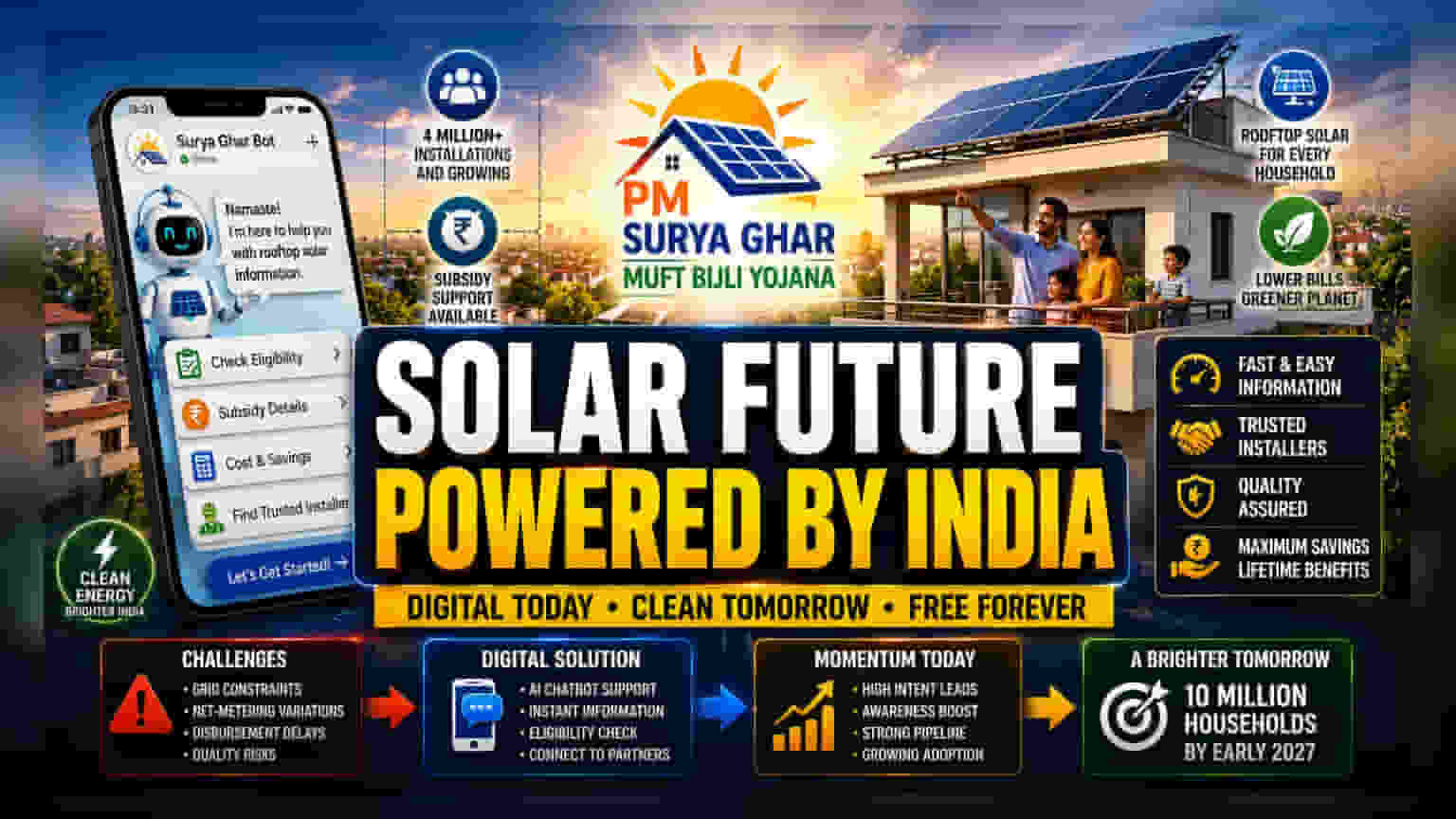


The Digital Push for Rooftop Capacity
The shift toward a mobile-first engagement strategy for the PM Surya Ghar Muft Bijli Yojana reflects an urgent need to condense the decision-making cycle for retail energy consumers. By offloading inquiries regarding sanctioned load capacity, localized subsidy eligibility, and lifetime cost-benefit analysis onto an automated platform, the administration aims to lower the administrative friction that has historically stalled residential solar project completion. The system functions as a digital funnel, identifying high-intent users and pairing them with regional installation partners to maintain momentum through the often-complex procurement phase.
Scaling Against Infrastructure Reality
While the automation of information flow addresses the information asymmetry inherent in distributed energy resources, it does not solve the underlying technical constraints. Despite four million successful installations, the broader sector continues to grapple with inconsistent net-metering policies across various state-level distribution companies. Investors should note that while this bot serves as a demand-generation catalyst, the bottleneck for solar growth remains the physical readiness of local distribution networks to handle bi-directional energy flows. Companies operating in the solar EPC space may see a temporary increase in inbound leads, but project conversion rates will likely remain tethered to the availability of certified installers rather than just consumer interest.
The Operational Risk of Automated Onboarding
Reliance on a third-party messaging platform for critical infrastructure deployment introduces unique systemic risks. The primary concern lies in the quality control of the suggested vendor ecosystem. If the automated referral system fails to filter for high-performance installation providers, the government risks a surge in sub-standard rooftop quality, which often results in premature equipment degradation and diminished return on investment for the end-user. Furthermore, previous cycles of aggressive subsidy rollouts have frequently been hampered by delayed disbursement schedules, a systemic issue that a messaging bot can highlight but cannot resolve.
Future Trajectory and Market Outlook
Achieving the stated objective of 10 million households by early 2027 requires an onboarding rate that significantly outpaces current momentum. Market analysts remain divided on whether digital tools are sufficient to overcome the capital intensity and technical hurdles associated with residential solar adoption. While the initiative provides a necessary boost to public engagement, institutional observers are watching for updates on financing accessibility and improvements in grid stability, which remain the true indicators of long-term sector viability.