

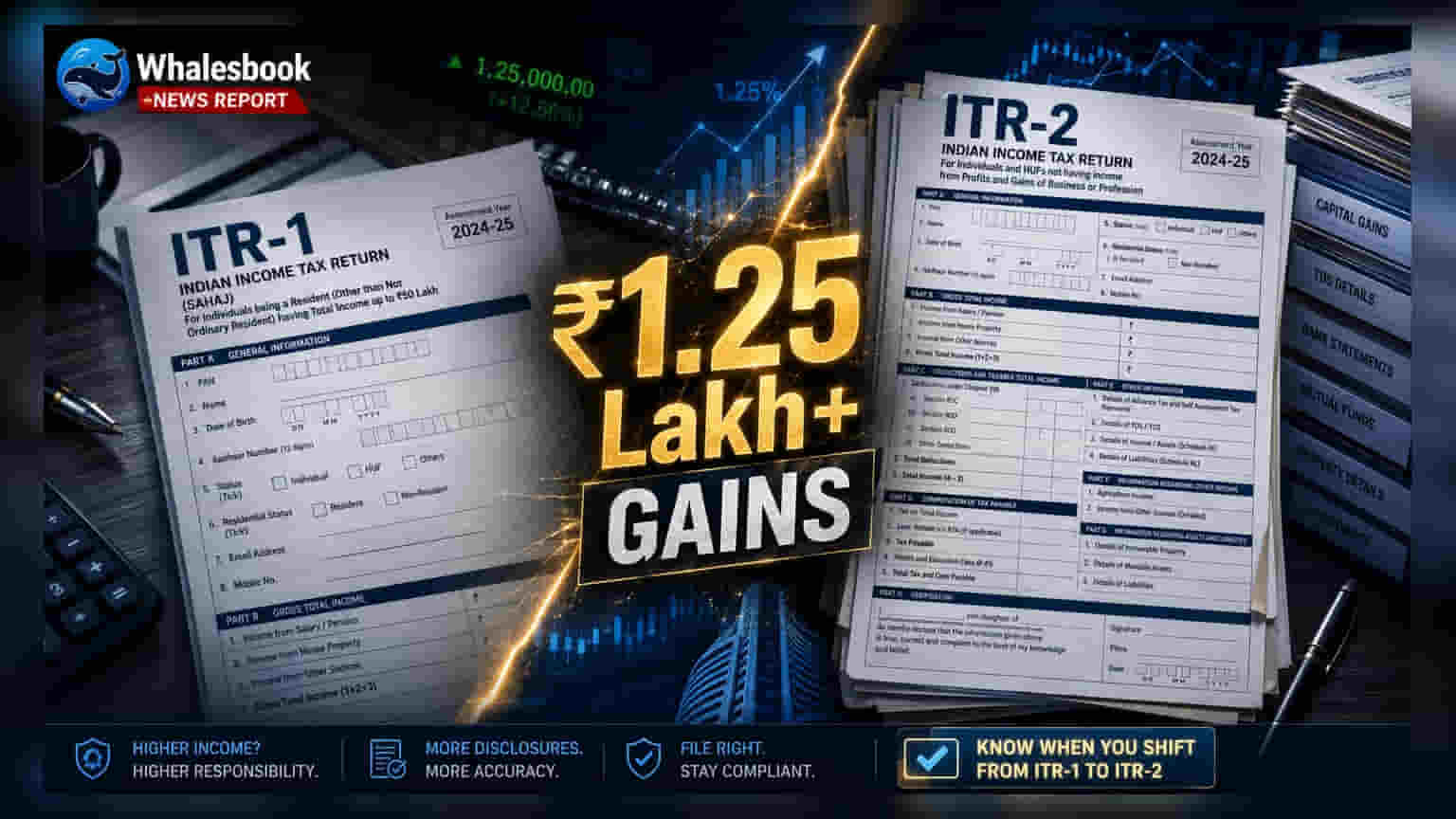
Taxpayers earning long-term capital gains from equities above ₹1.25 lakh for Assessment Year 2026-27 must now file using ITR-2. This shift moves away from the simpler ITR-1 form for those exceeding the tax-exempt threshold. Investors with gains within the limit or those managing income from up to two house properties may still be eligible to use the simplified ITR-1 filing.
For the Assessment Year 2026-27, the Central Board of Direct Taxes (CBDT) has clarified the filing requirements for taxpayers reporting long-term capital gains (LTCG) from listed equity shares and equity-oriented mutual funds. Individuals whose long-term gains exceed the ₹1.25 lakh threshold—which is the current tax-free limit under Section 112A—are now required to use the ITR-2 form rather than the simpler ITR-1.
Why the Form Matters for Investors
ITR-1, often referred to as 'Sahaj,' is designed for simplicity and is typically used by individuals with straightforward income sources, such as salary, a single house property, and limited other income. However, ITR-2 is a more comprehensive form. It is mandatory for individuals who have income from capital gains, multiple house properties, or those who held positions as company directors or owned unlisted equity shares during the financial year. By requiring ITR-2 for gains above ₹1.25 lakh, the tax department ensures that taxpayers provide the necessary detailed disclosures for the 12.5% tax applicable on those gains.
Changes to ITR-1 Scope
While the requirement for ITR-2 has been reinforced for higher equity gains, there have been some updates that expand the usability of ITR-1. For AY 2026-27, resident individuals can now report income from up to two house properties using the ITR-1 form, an option that was previously restricted and required moving to the more detailed ITR-2. This change may benefit many middle-class taxpayers who own more than one residential property but do not have complex business or professional income.
Important Considerations for Filers
Investors should note that if they have brought-forward or carry-forward capital losses from previous years, they generally cannot use the ITR-1 form, regardless of the size of their current gains. ITR-2 remains the appropriate choice for those needing to report such losses or those with more complex financial profiles, including Hindu Undivided Families (HUFs) and individuals with agricultural income exceeding ₹5,000.
As the tax filing season progresses, the primary monitorable for investors is to accurately calculate their total long-term capital gains for the financial year. Those crossing the ₹1.25 lakh threshold should prepare the additional documentation required for the ITR-2 form, which asks for more detailed schedules regarding capital assets compared to the simplified ITR-1. Given that tax rules can be updated, checking the latest official guidance from the Income Tax Department’s website before filing is the safest approach to avoid potential notices or processing delays.