

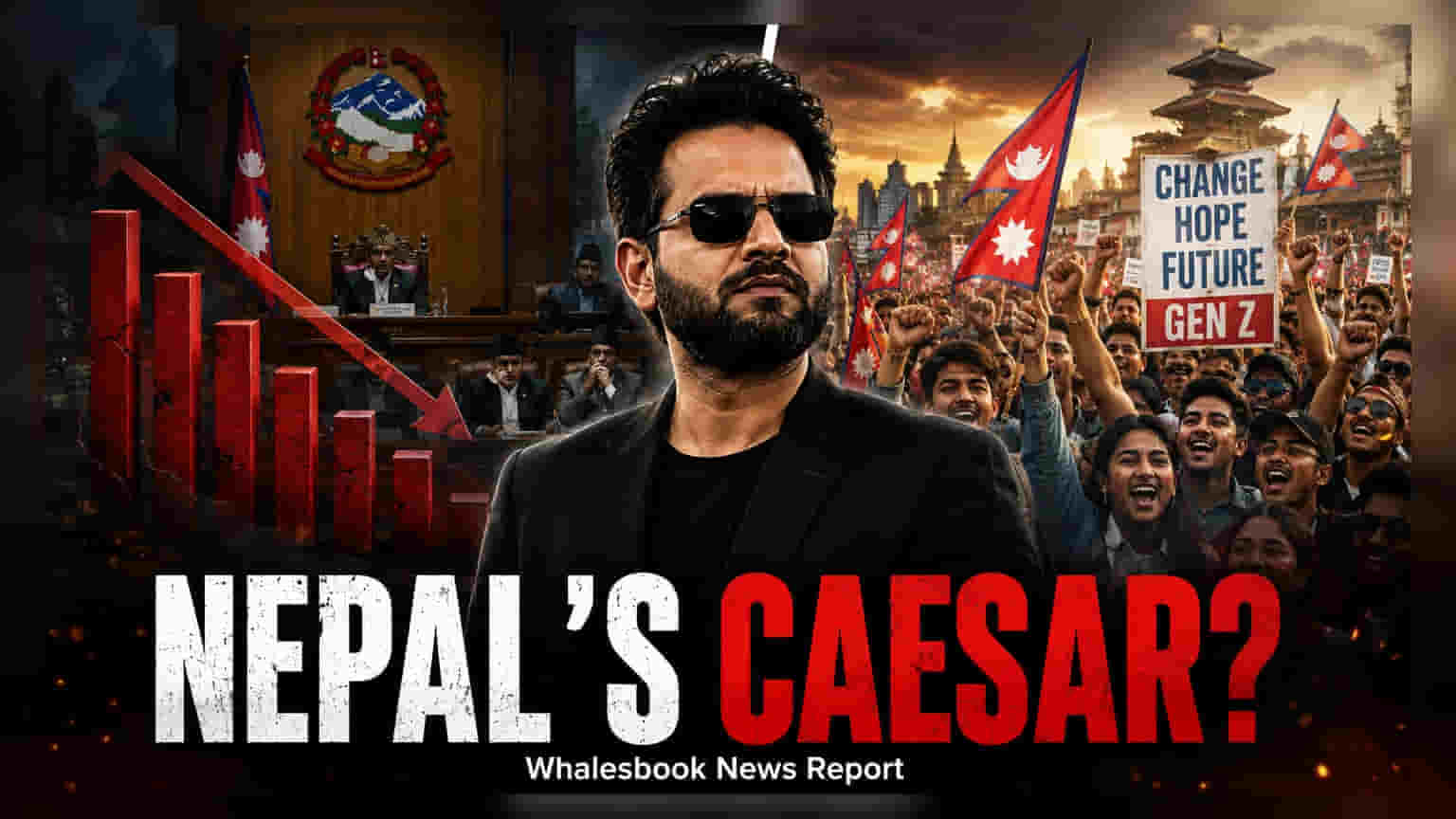
Nepal's Prime Minister Balen Shah is under increasing scrutiny as his administration nears its 150-day mark. Concerns regarding executive overreach and strained relations with Parliament have raised questions about political stability, which is a key factor for cross-border business sentiment.
Nepal's Prime Minister Balen Shah, who took office in March 2026, is currently navigating a challenging phase in his leadership. As his government approaches the 150-day milestone, the political atmosphere in Kathmandu is marked by growing friction between his administration and state institutions. For investors and businesses with exposure to Nepal, this tension raises important questions about the country’s near-term stability and policy continuity.
The Shift in Political Sentiment
Balen Shah initially rose to prominence as a symbol of change, appealing to a younger generation frustrated by traditional political structures. His transition from Mayor of Kathmandu to the nation's leader was fueled by a promise to tackle corruption and inefficiency. However, the current debate revolves around whether his governance style is beginning to challenge the very institutions designed to provide checks and balances.
Critics and analysts have begun using the term "Caesar-like" to describe what they perceive as an increasing focus on personality-driven leadership. This narrative stems from concerns that executive power is being consolidated at the cost of independent constitutional bodies, such as the Commission for the Investigation of Abuse of Authority (CIAA). While supporters see his direct communication style and unconventional approach as necessary, observers warn that bypassing established political norms may weaken democratic accountability.
Parliamentary Accountability
The most immediate test for the administration is a scheduled appearance before Parliament on August 26, 2026. The Speaker of the House has summoned the Prime Minister to address his frequent absences from legislative sessions. While the discussion has often focused on symbolic issues, such as the Prime Minister’s signature black sunglasses, the underlying investor concern is deeper: it relates to the relationship between the executive branch and the legislature.
A government that struggles to maintain a constructive relationship with Parliament often faces difficulties in passing key legislation or implementing long-term economic reforms. Any signal that the executive branch is ignoring parliamentary processes can create uncertainty, which is rarely welcomed by the business community or foreign investors.
Investor and Business Context
For those monitoring the Himalayan nation’s economy, political stability is a critical monitorable. Nepal relies heavily on stable policy frameworks for tourism, hydropower projects, and cross-border trade. When a government becomes preoccupied with internal political clashes—whether with the opposition, the media, or constitutional bodies—the focus on addressing economic stagnation, inflation, and infrastructure development can suffer.
The next important update for market observers will be the outcome of the August 26 parliamentary session. Investors will be watching for signs of whether the Prime Minister chooses to engage constructively with lawmakers or if the friction continues to escalate. How the administration balances its populist appeal with the necessity of respecting institutional frameworks will determine whether this current phase leads to a policy gridlock or a stabilization of the political environment.