

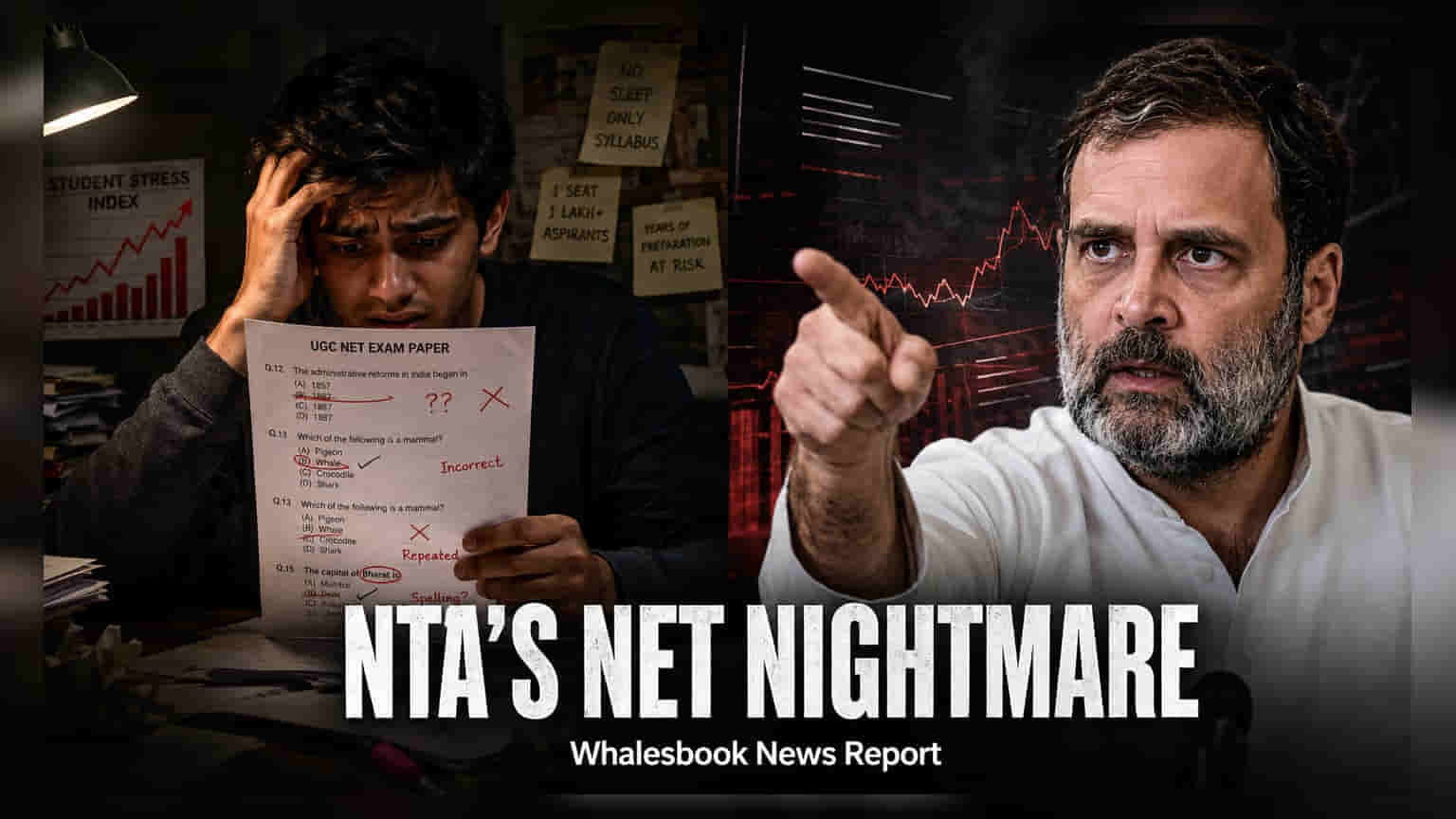
The National Testing Agency has announced re-examinations for specific UGC-NET papers following errors in the June 2026 tests, drawing sharp criticism from opposition leader Rahul Gandhi. While the NTA manages significant funds as an autonomous government body, it is not a publicly listed company. The focus remains on systemic governance and the operational efficiency of the agency responsible for national-level assessments.
On August 17, 2026, the National Testing Agency (NTA) faced renewed scrutiny following strong criticism from Leader of the Opposition Rahul Gandhi regarding the integrity of the University Grants Commission–National Eligibility Test (UGC-NET). The testing body has confirmed that it will re-conduct the examination for specific subjects, including English, Commerce, and Sociology, in September 2026 after identifying significant errors in the original question papers held in June.
The decision to cancel and reschedule follows internal reports of factual inaccuracies, typographical mistakes, and repeated questions from previous years' examinations. The re-examinations are now scheduled for September 9 for English and Commerce, followed by Sociology on September 10. Rahul Gandhi, in his critique, questioned the administrative capabilities of the NTA, highlighting the emotional and financial burden placed on thousands of students who must now prepare and reappear for the tests. He specifically raised concerns regarding potential security lapses, questioning whether question papers may have been leaked prior to the original exam dates.
It is important for readers to note that the NTA is an autonomous, self-sustaining government body under the Department of Higher Education and is not a publicly traded company. Investors or market participants often search for entities involved in large-scale government contracts or educational technology; however, the NTA does not have shares, market capitalization, or stock price movements. Its operations are funded primarily through examination fees rather than equity capital.
From a financial and governance perspective, the NTA functions on a self-sustaining model. Reports indicate that the agency has accumulated a surplus of approximately ₹448 crore over its first six years of operation. This accumulation has previously drawn attention from parliamentary bodies, which have recommended that such funds be reinvested into enhancing in-house testing infrastructure and improving vendor monitoring systems to prevent technical and operational failures.
The primary risks associated with the current situation are operational and reputational. The recurring nature of administrative issues—ranging from technical glitches to suspected paper leaks—raises questions about the governance framework of national testing bodies. For the broader education sector, these systemic failures can lead to delays in academic cycles and undermine public trust in national-level assessments.
The immediate monitorable for the public and students will be the smooth execution of the re-examinations in September. Future discourse is expected to center on whether the government will implement stricter oversight or structural reforms to ensure the integrity of the testing process, particularly regarding the management of testing vendors and the security protocols used during exam conduction.