

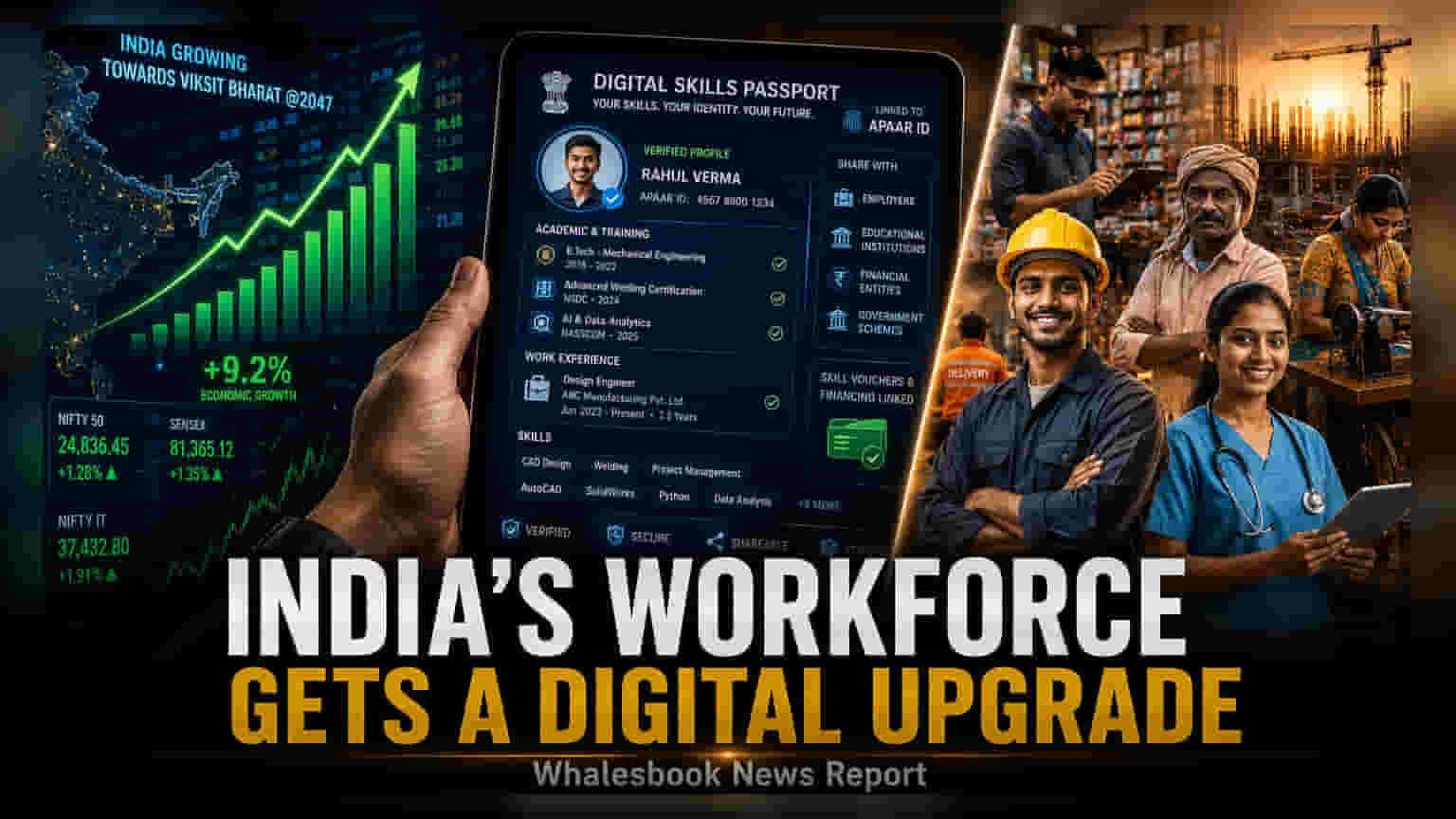
NITI Aayog has unveiled plans for a 'Digital Skills Passport' in its 'Reimagining Skilling for Viksit Bharat@2047' report. The initiative aims to create a unified, verified digital account for learners and workers using the APAAR ID to improve job matching and training efficiency. This development may influence the long-term landscape for India's ed-tech, recruitment, and vocational training sectors.
NITI Aayog has released a strategic roadmap titled 'Reimagining Skilling for Viksit Bharat@2047,' which includes a proposal for a 'Digital Skills Passport.' This initiative is designed to function as a singular digital account for every learner and worker in India, intended to track academic records, training, and professional experience in one place.
The passport will be linked to the Automated Permanent Academic Account Registry, commonly known as the APAAR ID. This existing government digital infrastructure acts as a permanent identifier for students. By connecting the Digital Skills Passport to this ID, the government aims to create a 'digital layer' that allows individuals to store verified credentials and share them seamlessly with employers, educational institutions, or financial entities.
From an economic perspective, the proposal addresses the challenge of verifying skills in a fragmented labor market. Currently, employers often spend significant resources on background verification and skill assessment. A unified, government-verified passport could theoretically streamline these processes. If implemented effectively, this system may benefit sectors such as staffing, recruitment, and ed-tech, as it would provide a standardized, reliable method to assess candidate capabilities. Companies in the training and upskilling space could also see greater integration opportunities, as the passport is expected to support stackable learning records—where small, verified certifications accumulate to build a comprehensive professional profile.
The policy also explores the potential for linking skill vouchers and financing schemes directly to these verified IDs. This approach aims to make government support more targeted, ensuring that funds or training opportunities reach those with documented needs and capabilities. To support this, the proposal suggests creating State-level Skills Digital Registries, which would help align local training programs with the actual requirements of the labor market.
However, the initiative faces significant implementation challenges. Building and maintaining a secure nationwide digital infrastructure that handles sensitive personal and professional data is a complex task. Investors and industry observers will likely monitor the framework for data privacy protections and the robustness of the cybersecurity measures put in place. Furthermore, the success of this system depends heavily on multi-stakeholder coordination between state governments, private industry partners, and educational bodies.
Another critical factor is adoption, particularly in the vast informal sector of the Indian workforce. Integrating millions of informal workers into a digitized, verified system requires extensive on-ground efforts. The next important updates to watch include the specific roll-out timelines, the government's approach to data security, and how private sector firms in the HR and skilling domains engage with this new digital architecture.