

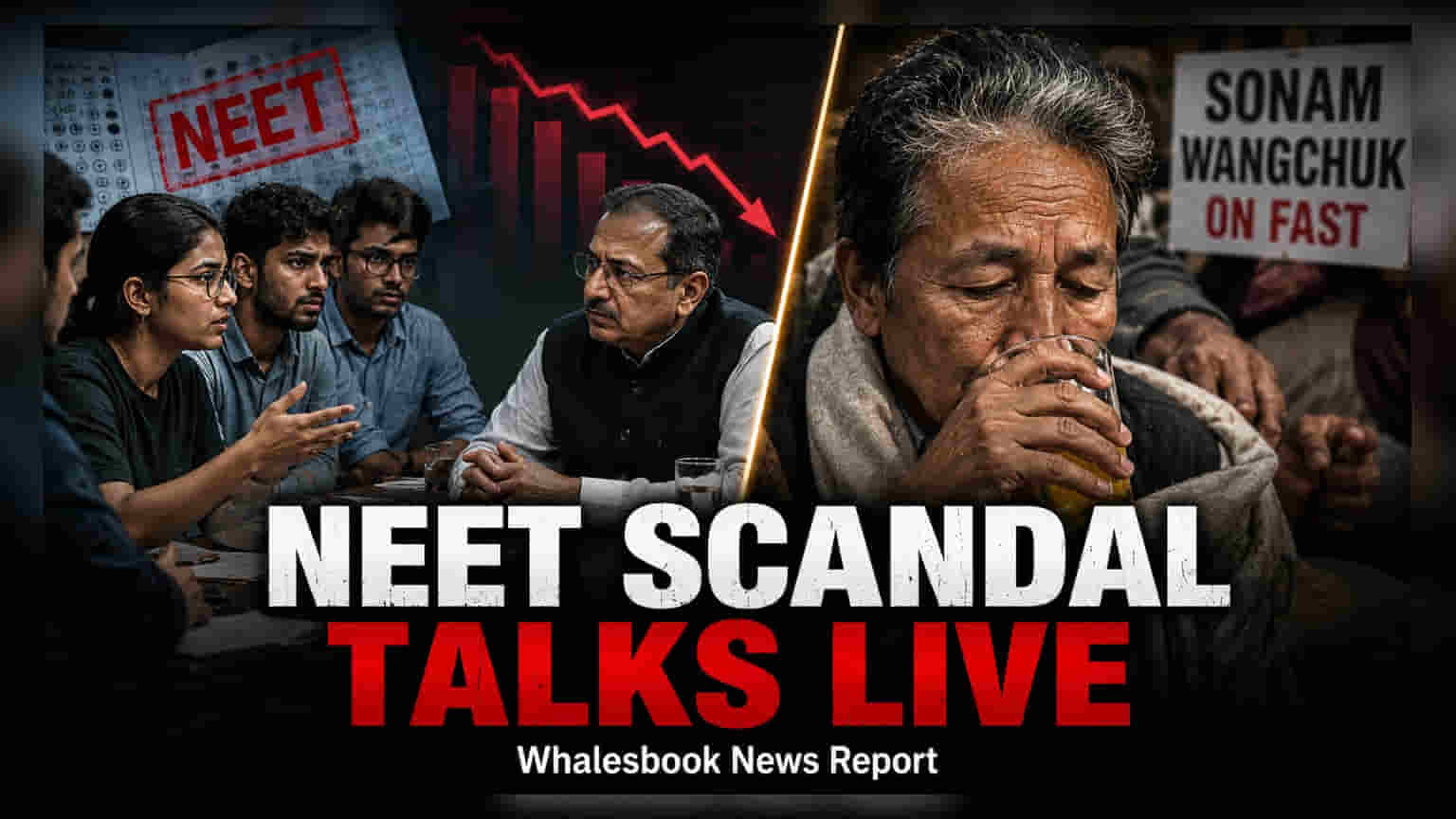
The government and the Cockroach Janta Party are set to hold formal talks today at Delhi's Constitution Club regarding the NEET-UG 2026 paper leak. This development follows activist Sonam Wangchuk ending his 26-day hunger strike after receiving assurances from union ministers. Investors may monitor the situation for potential policy changes regarding education sector governance.
Detailed Coverage
The ongoing controversy surrounding the NEET-UG 2026 examination is reaching a critical stage as formal discussions between the government and the Cockroach Janta Party (CJP) are scheduled for Friday at the Constitution Club of India. This meeting comes after weeks of intense student activism and public pressure regarding alleged irregularities in the conduct of the medical entrance exam.
Impact of Recent Protests
The protest environment shifted significantly following the decision by activist Sonam Wangchuk to end his 26-day hunger strike. Wangchuk, who had been vocal about the alleged examination irregularities, concluded his fast at Medanta Hospital in the presence of Union Ministers JP Nadda and Jitendra Singh. He stated that the decision to end the strike was based on government assurances and a commitment to avoid potential unrest. His protest had drawn national attention, and his move to engage with the government is viewed as a development that may help stabilize the immediate situation.
Government and CJP Positions
The CJP has maintained a consistent list of demands throughout the protest period. Their representatives have stated that they will continue to seek the resignation of Union Education Minister Dharmendra Pradhan. Additionally, the party is advocating for financial compensation for the families of affected students and the withdrawal of police cases filed against protesters. The government's decision to hold these talks at a neutral, requested venue is being seen as a move to facilitate direct communication with the protesting groups.
Market and Sector Context
While the current event is primarily a socio-political matter, it carries implications for the broader education and coaching sector in India. The government has recently signaled an intent to introduce more stringent regulations to prevent exam paper leaks, a move highlighted by BJP MP Manoj Tiwari as a sign of institutional response to the crisis. For investors with exposure to companies in the education and test-prep space, the key monitorable remains potential regulatory shifts. Increased oversight or changes in how entrance exams are managed could impact the operational costs and business models of private coaching institutions. The final outcome of these discussions and any resulting policy changes will be important for market participants to track, as they may influence future government oversight of the competitive examination sector.