

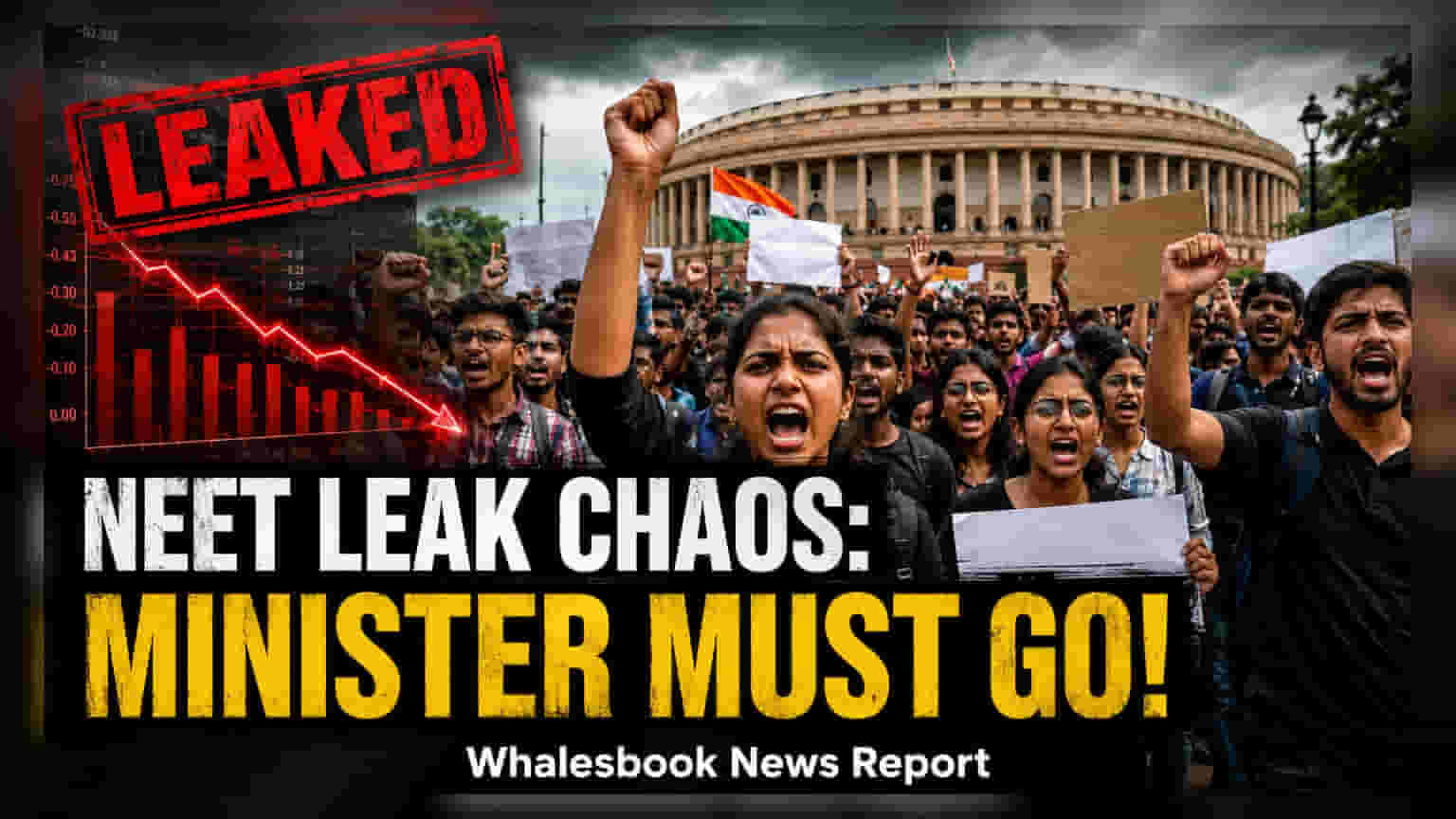
Protesters marched toward Parliament in New Delhi on Monday to demand the resignation of Union Education Minister Dharmendra Pradhan over alleged irregularities in the NEET-UG 2026 examination. The demonstration highlights growing unrest among students and activists, with protesters also calling for compensation for affected families.
Detailed Coverage
Massive protests broke out in New Delhi on Monday as thousands of students, activists, and unemployed youth marched toward Parliament to demand the resignation of Union Education Minister Dharmendra Pradhan. The gathering follows widespread allegations of paper leaks during the NEET-UG 2026 examination, which has triggered national concern regarding the integrity of medical entrance testing in India.
Escalation and Police Action
The protest, which initially took place at Jantar Mantar, intensified as demonstrators attempted to move toward Parliament House. To manage the large crowds, authorities deployed heavy security, barricaded key roads, and reportedly used measures including tear gas and lathi-charges. Local internet services in several areas were suspended to prevent the coordination of the agitation. During the events, activist Sonam Wangchuk, who had been on a hunger strike since June 28, was removed from the protest site and taken to Safdarjung Hospital, with authorities citing health concerns and court directives.
Key Demands from Protest Leaders
Representatives from the Cockroach Janata Party (CJP), including Ashutosh Ranka and Saurav Das, held discussions with Union Health Minister JP Nadda regarding the situation. The protesters have outlined three primary demands to the government: the immediate release of Sonam Wangchuk, the resignation or dismissal of Education Minister Dharmendra Pradhan, and a compensation payment of ₹1 crore for the families of NEET aspirants who have reportedly died in connection with the exam irregularities. Leaders of the movement have stated that they plan to continue their agitation until these demands are addressed.
Broader Investor and Sector Context
The ongoing volatility surrounding national examinations often has indirect implications for the education and coaching sector in India. Companies operating in the test-prep and supplementary education space rely heavily on the perceived fairness and stability of national testing systems. Any sustained disruption, regulatory uncertainty, or government intervention regarding exam processes can influence student enrollment patterns, sentiment, and the operational stability of these private firms.
Investors in the education and skill-development sector may watch for further government communications regarding the investigation into the alleged leaks, potential structural changes to exam administration, and any policy responses that could impact the operating environment for coaching institutes. The primary monitorable remains the government’s timeline for resolving these allegations and the potential for long-term shifts in how medical entrance examinations are conducted.