

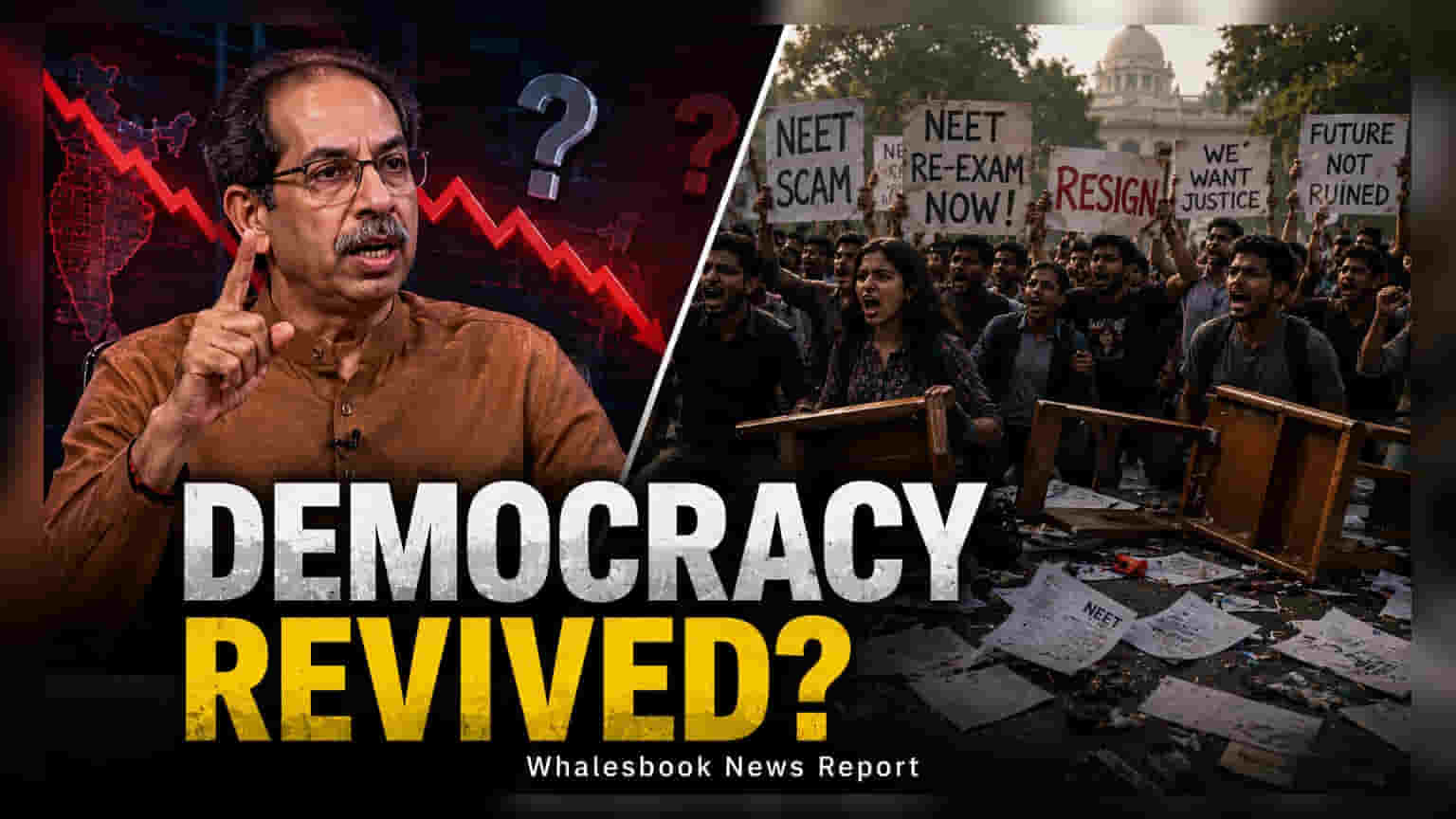
Shiv Sena (UBT) leader Uddhav Thackeray has voiced support for youth-led nationwide protests sparked by alleged irregularities in national competitive exams like NEET. He described the movement as a crucial sign of public discontent against the ruling government. The protests follow significant controversies surrounding exam management and ministerial accountability in the education sector.
Detailed Coverage
Shiv Sena (UBT) chief Uddhav Thackeray has characterized recent nationwide protests as a vital turning point for India's democratic process. These demonstrations, primarily driven by students and youth, emerged following widespread reports of irregularities in national entrance exams, most notably the NEET (National Eligibility cum Entrance Test) paper leak controversy. Thackeray’s comments highlight a growing public dissatisfaction that has transcended education-related concerns to become a broader critique of government administration and institutional accountability.
The Impact of NEET Controversies
For investors and market observers, the education and coaching sector has been under immense scrutiny due to these alleged irregularities. The integrity of national examination processes is essential for the stability of the education services industry, which includes large-scale private coaching institutes, digital learning platforms, and test-prep services. When exam credibility is questioned, it often leads to regulatory interventions, potential changes in testing protocols, and increased pressure on companies operating within this space to prove the effectiveness and reliability of their services.
Broader Socio-Political Context
Thackeray argued that the willingness of the youth to protest reflects a loss of fear among the general public regarding state responses to dissent. By framing these protests as an "explosion of betrayal," he suggested that the grievances go beyond specific paper leaks, pointing toward a cumulative frustration with employment prospects, economic opportunities, and the pace of governance. This sentiment has become a focal point for various political factions, potentially influencing future policy decisions and public spending priorities in sectors like education and vocational training.
Monitoring Regulatory and Sector Risks
Investors should track the potential for increased regulatory oversight in the education sector. When public discontent leads to high-profile protests and political shifts, it often results in government efforts to overhaul existing frameworks. Future updates to monitor include any new mandates from the Ministry of Education or regulatory bodies regarding exam security, the performance of outsourced testing agencies, and the operational stability of major education-tech and test-preparation firms. Continued monitoring of how these firms manage their reputation and regulatory compliance will be essential as the government addresses these systemic concerns.