

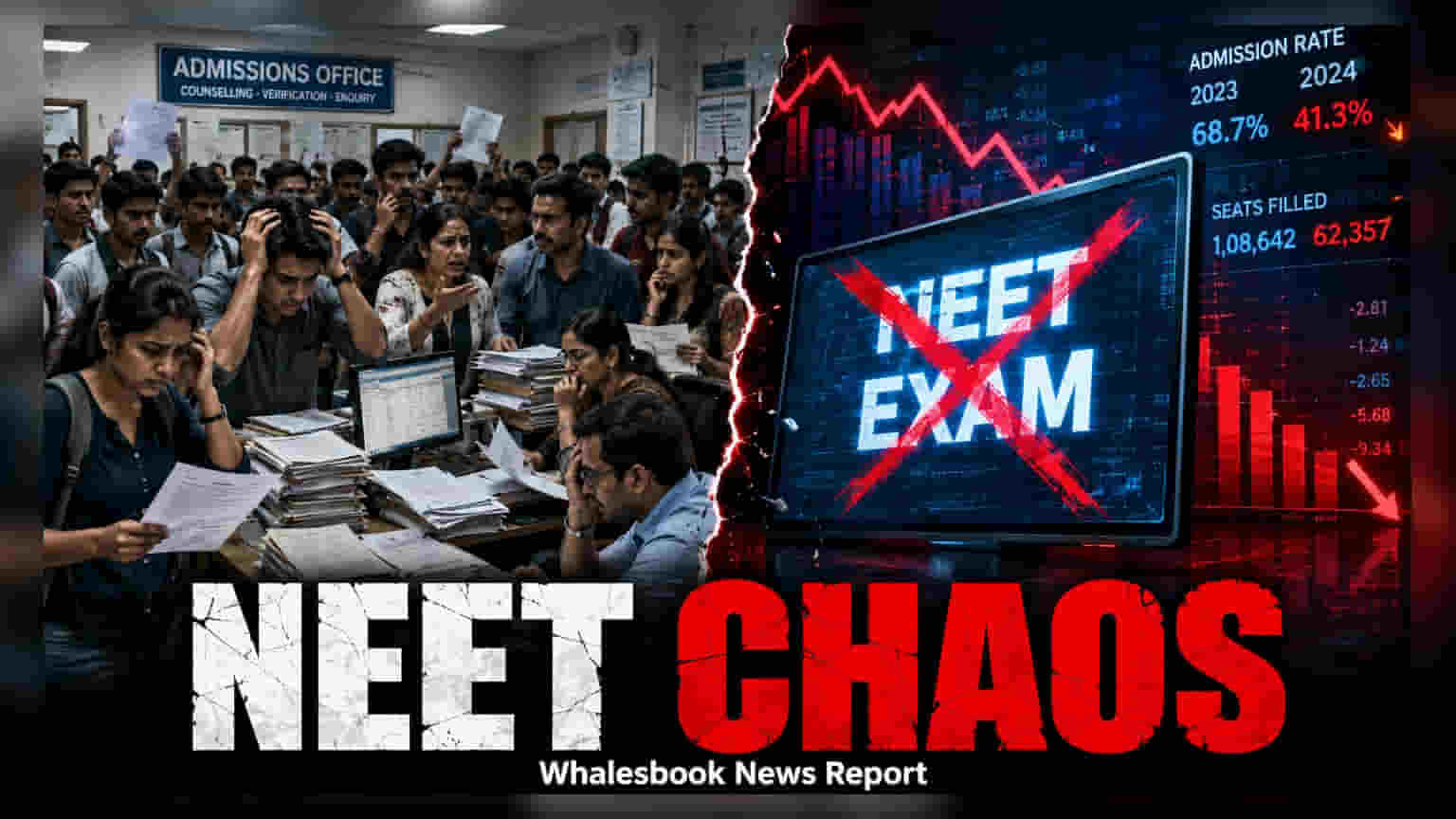
Delays in the NEET medical counselling process are causing medical aspirants to temporarily hold engineering seats as a backup. This trend is forcing engineering colleges to manage uncertainty in seat vacancies and potentially conduct additional admission rounds. Investors and educational institutions are monitoring how this cycle affects student enrollment stability in private and technical universities.
The ongoing uncertainty surrounding the NEET medical entrance examination has extended its impact beyond medical colleges, now disrupting the admission cycle for engineering institutions across India. Because medical counselling has been postponed, many students who are waiting for medical seat allotments are securing spots in engineering programs as a safety measure. This behavior creates a ripple effect in the higher education sector, particularly for private and technical universities that rely on stable admission numbers to plan their academic year.
Impact on Engineering Seat Stability
Engineering colleges typically see some students withdraw their applications after the initial admission phase, often when those students secure a medical seat. While this is a known pattern, the current delay is expected to prolong the period during which these seats remain occupied by candidates who may eventually leave. Education experts note that while some institutions might see minimal impact, others are preparing for extended admission timelines. To manage potential vacancies, engineering colleges may be forced to hold additional rounds of admissions, including late spot rounds, to ensure that seats are filled once the final medical counselling results are released.
Trends in Student Preferences
Beyond the disruption in seat occupancy, there is a visible shift in student academic interest. Many aspirants are increasingly looking at alternative career paths to avoid losing a full academic year. There has been a reported uptick in interest and enrollment for life sciences and biotechnology programs, such as the B. Tech in Biotechnology. This pivot suggests that students are prioritizing degree programs that align with their core interest in science even if their primary goal of a medical degree remains stalled.
Institutional Perspectives
Universities are navigating these disruptions differently depending on their specific admission structures. While some senior officials from technical universities suggest that withdrawal numbers may remain within historical norms, others are acknowledging that the timing mismatch between the two streams creates significant stress and operational challenges. For investors and stakeholders in the private education space, the ability of these institutions to manage enrollment capacity and maintain operational efficiency during this period of uncertainty will be important to track. The primary monitorable for the coming months will be the final withdrawal rates once medical counselling concludes, which will determine the actual financial and operational impact on engineering college seat occupancy and revenue realization for the current academic session.