

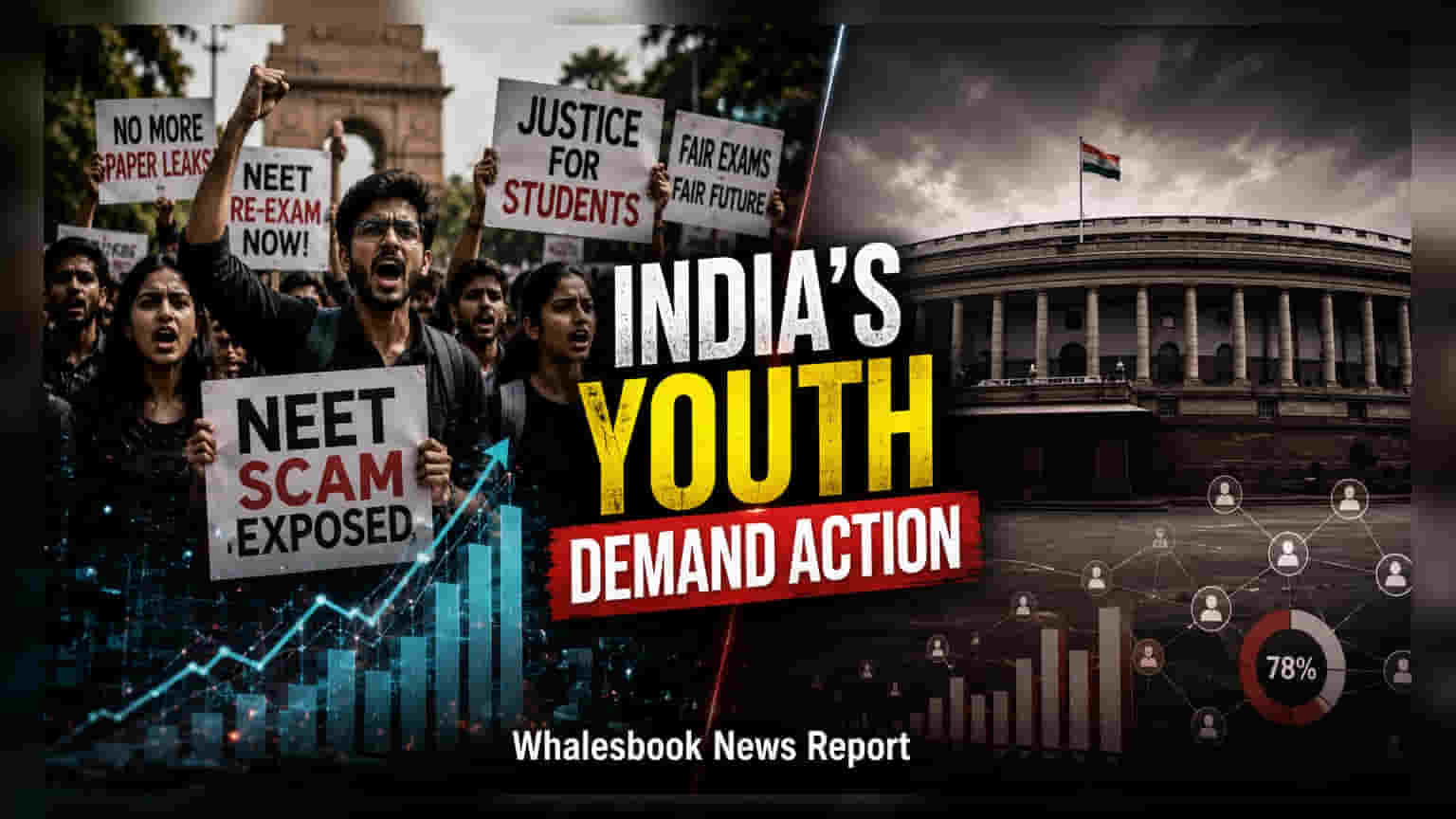
Recent public demonstrations following NEET examination irregularities have highlighted a shift in how Indian youth interact with state institutions. The event emphasizes a growing reliance on protest as a primary channel for addressing grievances due to limited formal avenues for civic participation. This trend raises important questions about the health of democratic processes and the need for more effective platforms for youth representation in policy.
The recent series of protests triggered by irregularities in the NEET examination has brought significant attention to the political engagement of India's youth population. Traditionally viewed as a demographic focused primarily on personal career advancement and academic success, the active mobilization of students has challenged this perception. While the protests have provided a platform for students to voice immediate concerns, they also reflect a deeper, long-term trend regarding how young citizens interact with the country's governance structures.
The Shift Toward Protests as a Grievance Channel
For many young people, the current reliance on street demonstrations is often a reaction to perceived barriers in traditional democratic participation. When established mechanisms for feedback, such as local government consultations or institutional grievance cells, are seen as unresponsive, students frequently turn to public protest as a final, visible resort. This dynamic points to a potential mismatch between the aspirations of a large, informed demographic and the capacity of current institutions to integrate their voices into everyday policy-making.
Challenges in Institutional Representation
Data suggests that despite the significant size of India's youth population, their direct influence in legislative bodies and formal advisory committees remains limited. The pre-legislative consultation process, which is designed to gather public feedback on new laws, often fails to reach or adequately engage this group. This lack of formal integration can lead to a sense of alienation, where young citizens feel that their concerns are only acknowledged during periods of crisis or public disruption rather than through ongoing, constructive dialogue.
The Role of Educational and Civic Infrastructure
Educational institutions play a critical role in shaping civic habits, yet current systems often prioritize academic performance over participatory discourse. Many colleges have restricted student elections or discouraged engagement in political discussions, which reduces opportunities for leadership development and civic learning. Experts often point out that fostering democratic habits requires more than just formal education; it requires creating platforms where students can exercise influence, such as through student councils with real decision-making power or mandatory youth involvement in local municipal planning.
Future Monitorables for Civic Health
Moving forward, the focus for stakeholders will likely be on whether the state and educational bodies can create more reliable, non-disruptive channels for youth input. Key areas to watch include the strengthening of pre-legislative consultations, the potential for formal youth councils at the municipal level, and the restoration of robust student governance in universities. A more collaborative approach, modeled on successful international examples where youth input is formally integrated into planning, could help reduce the reliance on protests and build greater trust in democratic institutions.