

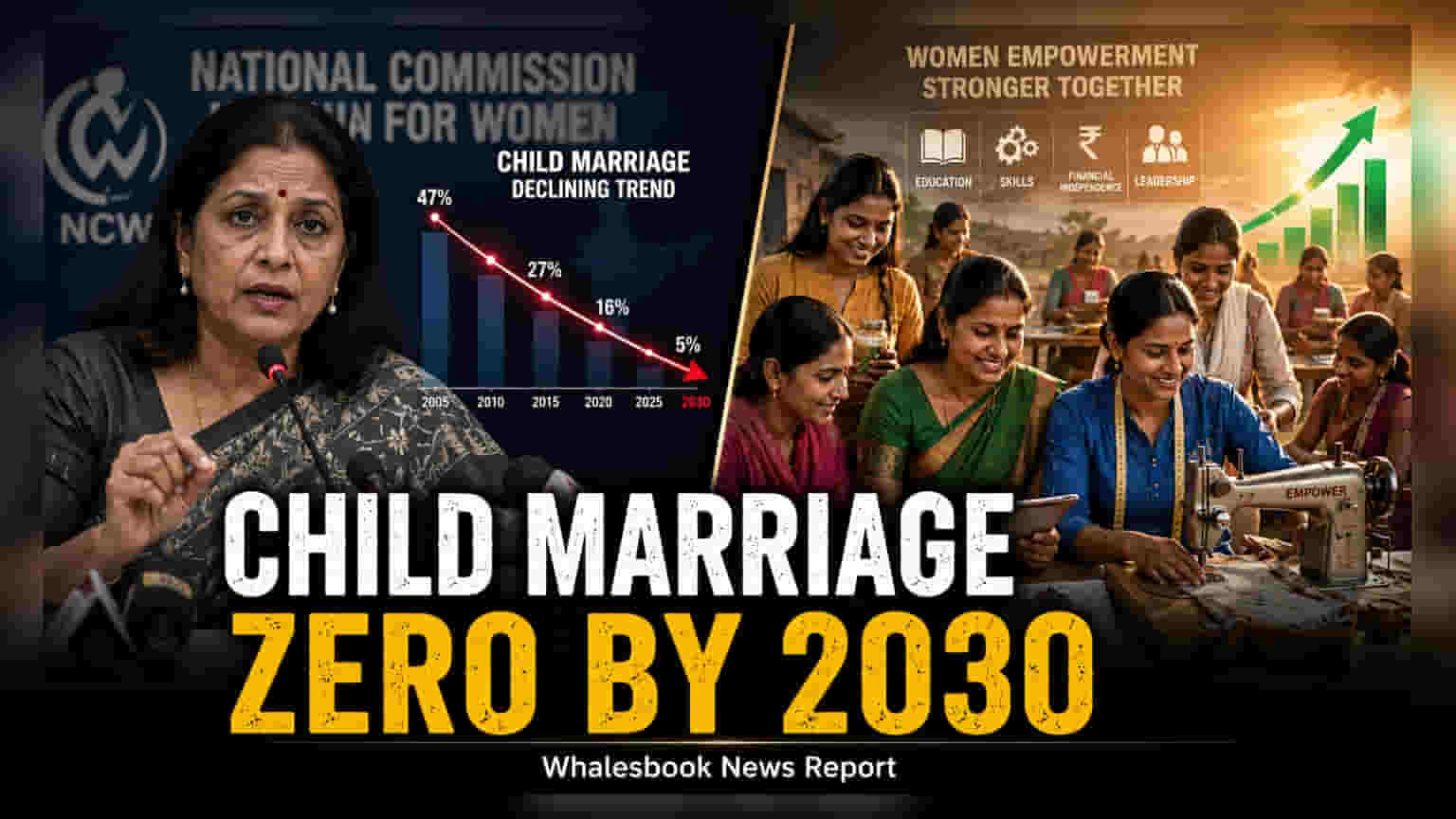
The National Commission for Women has set a nationwide target to eliminate child marriage by 2030, starting with a 10% reduction this year. Chairperson Vijaya Rahatkar identified states like West Bengal and Bihar as high-priority areas, as the national average currently sits at 23.3%.
The National Commission for Women (NCW) has officially launched a strategic initiative to eradicate child marriage in India by 2030. During a recent visit to Tripura, NCW Chairperson Vijaya Rahatkar announced that the commission has set an interim goal to achieve a 10% reduction in these cases by the end of 2026. This move comes as the commission tackles a national child marriage rate of 23.3%, which remains a significant social and economic challenge.
Focus on High-Incidence States
The commission’s data highlights specific regions where the prevalence of child marriage significantly exceeds the national average. In states including West Bengal, Bihar, and Tripura, reported rates for women married before the age of 18 have crossed the 40% threshold. The NCW plans to coordinate with state authorities to implement stricter monitoring and awareness programs in these areas. The focus on these specific states is critical because high rates of child marriage are often linked to lower female education levels and higher health risks, which can impact the long-term economic participation of women in the workforce.
Border Security and Anti-Trafficking Measures
Beyond marriage statistics, Chairperson Rahatkar addressed the intersection of child marriage and girl trafficking, particularly in border states. During her visit to Tripura, which shares an international border, the NCW held consultations with Border Security Force officials. The goal is to enhance sensitization among security personnel to detect and prevent trafficking cases more effectively. The commission also reviewed the implementation of the Protection of Children from Sexual Offences Act to ensure better legal protection for minors.
Economic Empowerment Through Self-Help Groups
A central pillar of the commission’s strategy involves the economic empowerment of women to reduce the vulnerability of households that may resort to child marriage due to poverty. Rahatkar highlighted the success of women-led self-help groups (SHGs), specifically noting the progress of 'Lakhpati Didis' in Tripura’s Gomati district. By fostering sustainable income generation, the NCW aims to provide families with financial alternatives, which can decrease the perceived necessity of early marriage. The commission’s next steps will involve monitoring the progress of these SHGs and evaluating the state-level reduction in child marriage figures as the 2026 interim deadline approaches.