

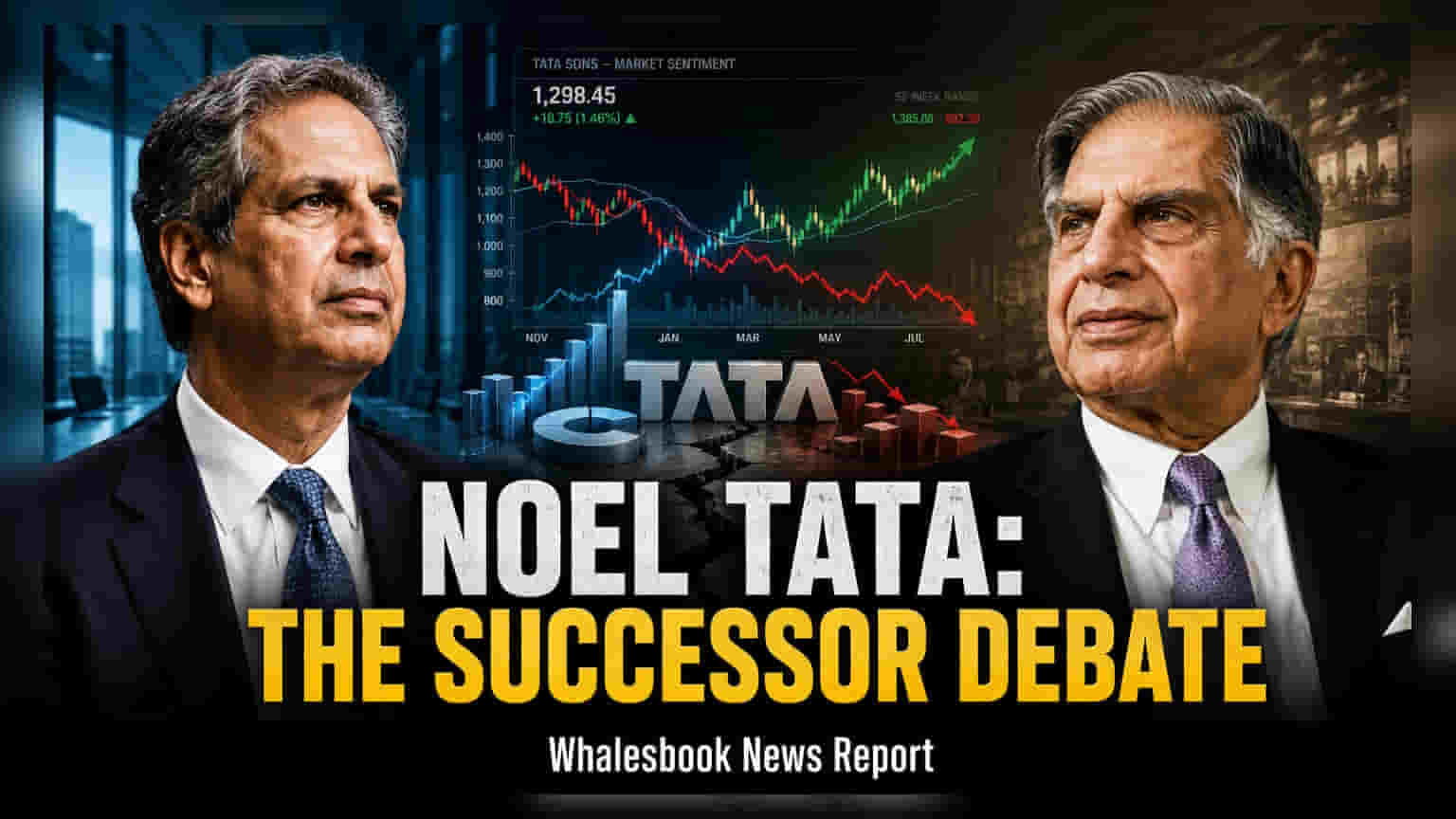
N Chandrasekaran has announced he will not seek another term as Chairman of Tata Sons when his tenure ends on February 20, 2027. This decision follows a period of disagreement with Tata Trusts over strategy and group performance. The news has caused volatility in Tata Group stocks, as investors await clarity on the conglomerate's future leadership.
N Chandrasekaran, the long-serving Chairman of Tata Sons, has formally announced that he will not seek reappointment when his current tenure concludes on February 20, 2027. This development comes after a six-month deadlock between the Tata Sons management and the Tata Trusts, led by Chairman Noel Tata. The disagreement reportedly centered on the performance of several group entities, including Air India, and the group's stance on maintaining Tata Sons as a private entity amid potential regulatory pressure for an initial public offering.
The leadership change is a significant event for the conglomerate, as Tata Trusts holds approximately 66% of the equity in Tata Sons. This controlling stake gives the Trusts, and by extension the Tata family, a decisive influence over the selection of the next chairman. A formal Selection Committee will be formed in the coming days, with a majority of its members nominated by the Tata Trusts, to lead the search for a successor.
Governance and Leadership Debate
The transition has triggered a broader discussion on the group's future governance. Former senior executive Mukund Rajan recently highlighted the need for swift clarity, drawing a historical parallel to the succession of Ratan Tata. When JRD Tata sought to hand over the reins, similar questions were raised about Ratan Tata’s experience in managing a group of that scale. Rajan noted that Ratan Tata eventually proved his leadership through his vision and ability to steer the group through challenges. He argued that the current discussion should focus less on perceived experience gaps and more on building a robust framework where the controlling shareholder and professional management can work together effectively.
Market Reaction and Investor Concerns
The announcement led to a notable reaction in the stock market on August 12, 2026. Tata Group shares, including major companies like TCS, Tata Motors, and Titan, saw a decline in trading. For investors, the concern stems from the uncertainty surrounding the leadership transition. Market participants often prefer stability in top-level management, especially in a massive conglomerate with interests ranging from software and steel to retail and aviation. Any ambiguity regarding the group’s strategic direction—such as its approach to major turnarounds like Air India or its capital allocation strategy—can lead to short-term volatility.
Challenges Ahead
Beyond the immediate succession, the incoming leadership will face several complexities. There is the challenge of maintaining operational continuity across a vast workforce and diverse business portfolio. Furthermore, the group faces regulatory scrutiny, including potential pressure from the Reserve Bank of India for Tata Sons to list as an upper-layer Non-Banking Financial Company (NBFC), which could significantly alter the group's ownership structure and long-term strategy.
Investors will likely track the formation of the Selection Committee and any early signals regarding the management structure—whether the next chairman will hold an executive or non-executive role. Clarity on these aspects will be essential to rebuilding market confidence as the group navigates this pivotal transition phase.