

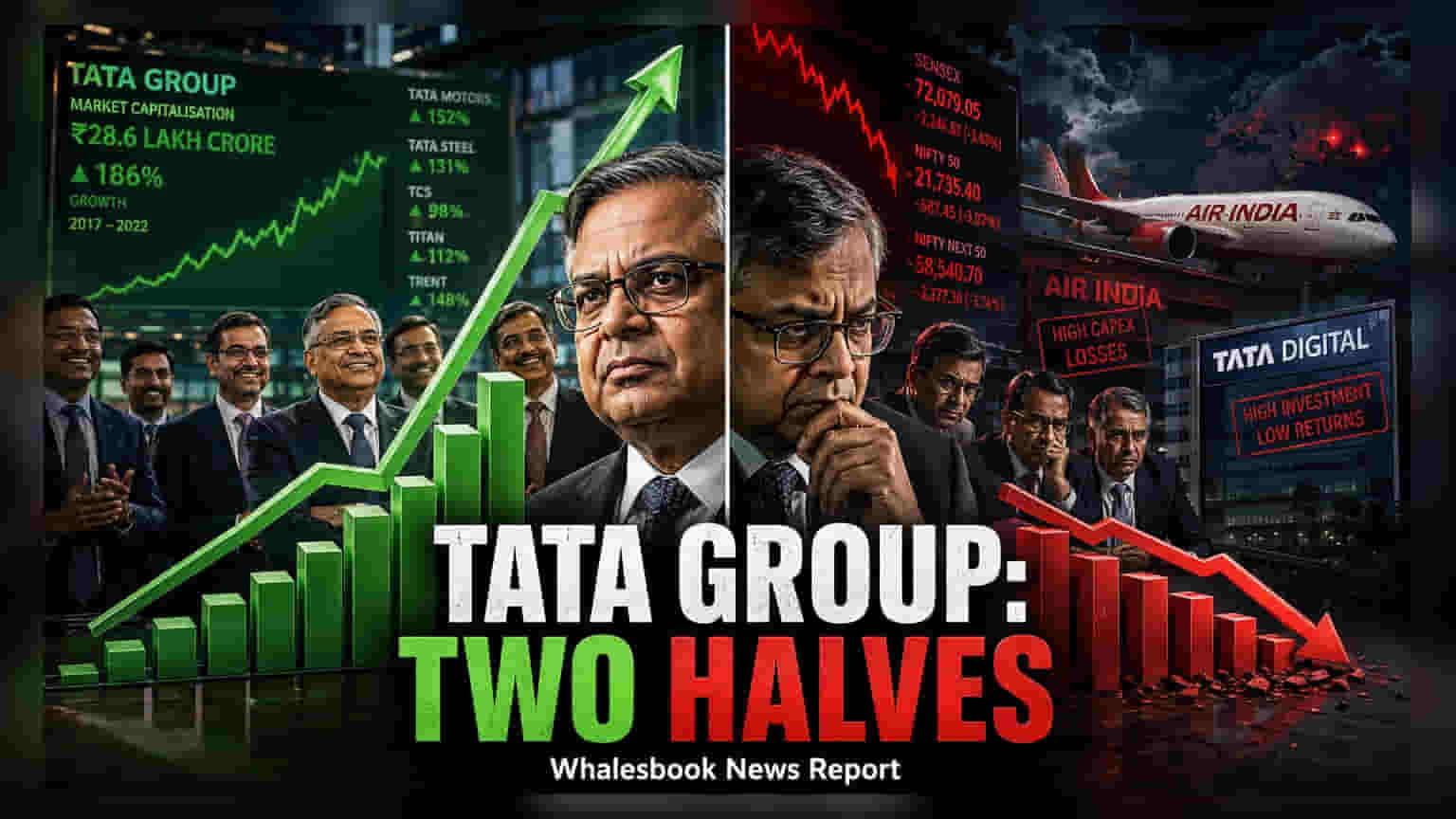
Natarajan Chandrasekaran will not seek a third term as Tata Sons Chairman when his tenure ends in February 2027, following board disagreements. On August 12, 2026, Tata Group stocks witnessed a sharp sell-off as investors reacted to the leadership uncertainty and the high cash burn in major ventures like Air India.
Natarajan Chandrasekaran, Chairman of Tata Sons, has officially announced that he will not seek reappointment when his current term concludes on February 20, 2027. This decision ends a decade-long leadership tenure at the helm of the conglomerate. The move follows a six-month period of internal boardroom deadlock, where a unanimous vote for his extension could not be secured. Reports indicate that the proposal for a third term failed to gain full support, with Noel Tata notably withholding his approval.
Following the announcement on August 12, 2026, Tata Group stocks experienced significant selling pressure. Shares of Tata Consultancy Services (TCS), typically a stabilizing force for the group, declined by approximately 5.7% to 6% during the trading session. The market reaction highlights investor anxiety regarding leadership stability and the future strategic direction of the conglomerate, which had relied on Chandrasekaran to spearhead its recent expansion and restructuring.
Chandrasekaran’s time as chairman has been a period of two distinct phases. His first five years, which ended in 2022, were characterized by strong financial growth across key entities, with the group's market valuation tripling in that span. However, the second term, which began in 2022, has been marked by complex operational and financial challenges. TCS, long considered the group's primary profit engine, faced its first annual revenue decline in dollar terms since its public listing, as the company worked to adapt to the disruptions caused by artificial intelligence.
While Tata Sons reported a 21.8% rise in profit after tax to ₹31,961 crore for the fiscal year 2026, these aggregate figures mask significant strain from newer, high-capital-expenditure ventures. Air India’s losses doubled during the year to ₹22,238 crore, placing a burden on the parent company's resources. Simultaneously, other units, including Tata Digital, have struggled to gain significant consumer traction, and Jaguar Land Rover (JLR) faced operational hurdles ranging from a major cyberattack to production delays driven by global supply chain and tariff issues.
For investors, the primary monitorable in the coming months will be the group's transition plan. The "governance premium" often associated with the Tata Group is currently being tested by the lack of clear leadership continuity. Shareholders will be watching to see how the board manages the capital-intensive turnarounds of businesses like Air India and the ongoing semiconductor investments without further affecting overall group profitability. The stability of the board and the timeline for naming a successor will be the next key updates for the market.