

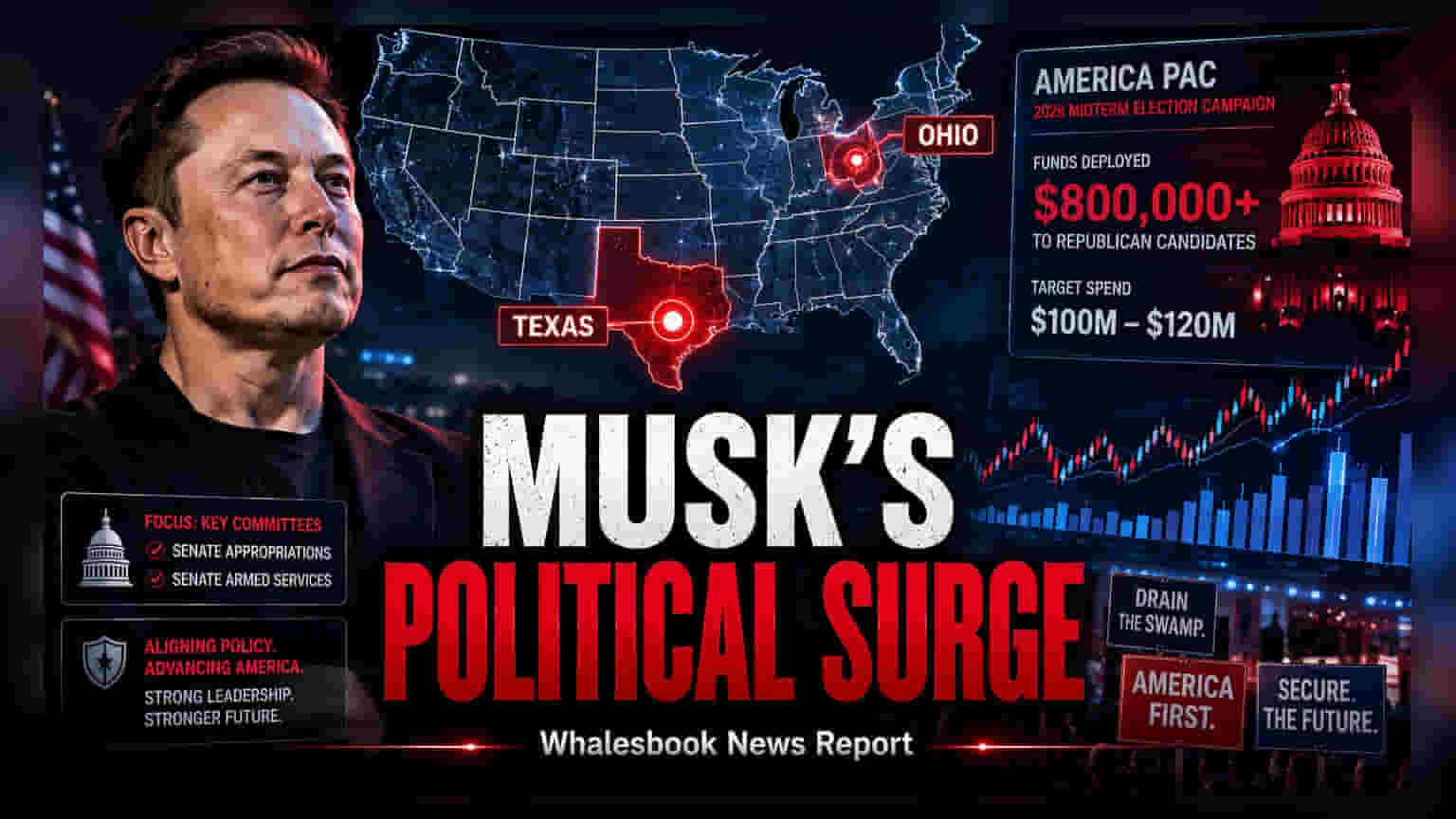
Elon Musk’s political action committee, America PAC, has deployed over $800,000 to support Republican Senate candidates in key battleground states. The spending strategy targets committees with oversight of federal contracts relevant to Musk's companies. Investors often monitor such political activity for potential regulatory risks and governance implications for Musk’s associated business interests.
America PAC, the political action committee backed by Elon Musk, has initiated its influence campaign for the 2026 midterm election cycle. Recent filings reveal that the committee has deployed over $800,000 to support Republican candidates in competitive battleground states. This capital is primarily directed toward voter outreach programs, including direct-mail campaigns and digital advertising, as part of a larger fundraising and spending goal that reports suggest could reach between $100 million and $120 million.
Strategic Focus on Legislative Committees
A notable aspect of the PAC’s activity is the selection of candidates for financial support. The organization has focused resources on lawmakers serving on powerful congressional bodies, including the Senate Appropriations Committee and the Senate Armed Services Committee. These groups wield significant influence over federal budget allocations and Pentagon spending, which are directly relevant to the operations of Musk’s aerospace company, SpaceX. By influencing the composition of these committees, the PAC’s strategy aligns with broader business interests related to government contracts and regulatory policy.
Governance and Regulatory Context
For investors in Tesla and other public entities associated with Elon Musk, this activity is often viewed through the lens of corporate governance and key-person risk. While America PAC operates independently from Tesla, the heavy involvement of a public company's CEO in high-stakes partisan politics can introduce complex dynamics for shareholders. Increased political activity may lead to heightened scrutiny from regulatory bodies or political opponents, which could indirectly affect the business environment in which these companies operate.
There are also potential reputational risks to consider. Significant involvement in partisan elections can divide a customer base, particularly for consumer-facing brands like Tesla. Furthermore, any perception of a conflict of interest—where business interests are seen as influencing campaign spending or vice versa—can become a point of contention for lawmakers and public watchdogs. This, in turn, may lead to increased compliance requirements or legislative pressure on the sectors in which Musk’s businesses are active.
What Investors Should Monitor
The long-term impact of this political expenditure remains a key monitorable for market participants. Investors will likely look for signs of how these political alliances might influence future government contract awards, regulatory approvals, or policy shifts that could impact Musk’s broader business portfolio. The critical factor for shareholders is not the political agenda itself, but whether such engagement creates or mitigates risks related to regulatory stability, government relations, and the public perception of the companies under Musk's leadership.