

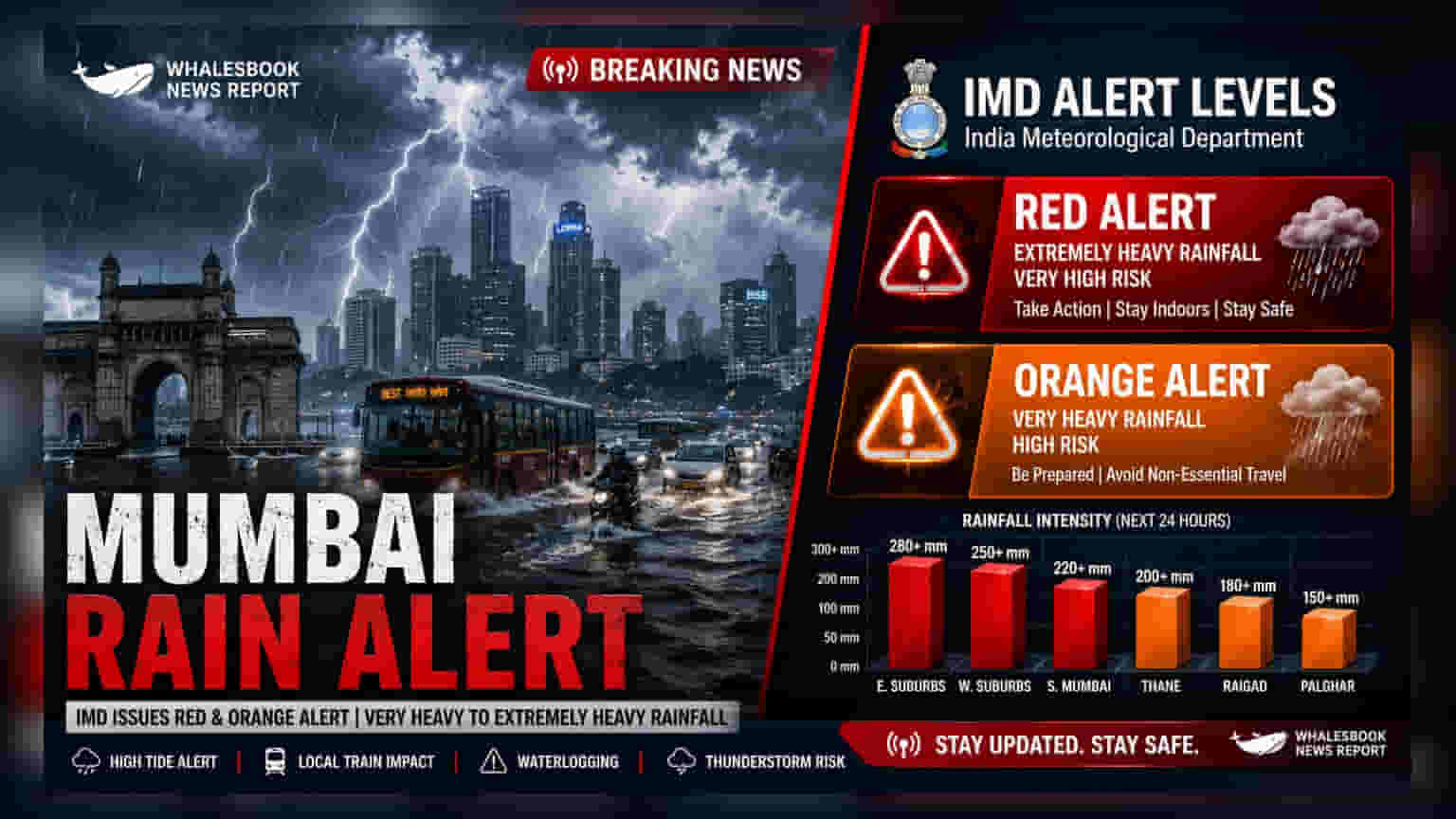
The India Meteorological Department has issued an orange alert for Mumbai, Thane, and Raigad, while Palghar faces a red alert due to intense monsoon showers. Significant rainfall has caused waterlogging and delays in transportation networks across the city. For businesses and local operations, these weather-related disruptions highlight ongoing infrastructure challenges in India's financial capital.
What Happened
Mumbai and the surrounding coastal districts are bracing for continued heavy monsoon rainfall. The India Meteorological Department (IMD) has issued an orange alert for Mumbai, Thane, and Raigad, indicating a high likelihood of moderate to intense weather. Meanwhile, Palghar district has been placed under a red alert, which is the highest level of warning, signaling expectations of extremely heavy rainfall.
This weather pattern follows persistent showers that have affected the region for three consecutive days. On Wednesday, the financial capital saw significant rainfall, with western and eastern suburbs recording between 90 mm and 99 mm. Several localized areas, including Vikhroli, Powai, and Bhandup, reported even higher figures, with some spots receiving over 140 mm of rain.
Impact On Infrastructure And Logistics
The heavy downpour has led to waterlogging in multiple low-lying areas, including Andheri, Santacruz, Khar, Bandra, and Kurla. While public transport systems, including the suburban train network, have largely remained operational, they have faced notable delays due to the intensity of the rain and the accumulated water on tracks and roads.
The municipal authorities and the Brihanmumbai Municipal Corporation (BMC) have been managing the situation as the city grapples with the combined effect of heavy rainfall and a high tide of 4.16 meters, which can temporarily limit the drainage of water from the city into the sea. These recurring monsoon disruptions are a familiar logistical challenge for the city's transport and utility infrastructure.
Why This Matters For Business Operations
For businesses operating in Mumbai, weather-related disruptions are an operational reality during the monsoon months. Heavy rains often affect employee mobility, attendance, and local supply chain efficiency. While large-scale institutional services have developed contingency plans, including remote work capabilities, small and medium enterprises in sectors like retail, logistics, and manufacturing often face more direct productivity impacts during intense rainfall days.
Investors typically view these events through the lens of business continuity. Prolonged infrastructure issues or severe waterlogging can temporarily impact the daily output of commercial hubs, although such events are usually localized and do not have a lasting effect on long-term corporate performance. Companies with robust business continuity planning and digital infrastructure are generally better positioned to mitigate these operational risks.
What To Monitor Next
The immediate focus for stakeholders remains on the IMD's daily weather updates and the operational status of the city’s transport network. Key monitorables include the intensity of rainfall in the coming days, the effectiveness of civic drainage efforts during high tide periods, and any potential long-term infrastructure updates by municipal bodies to improve urban resilience.