

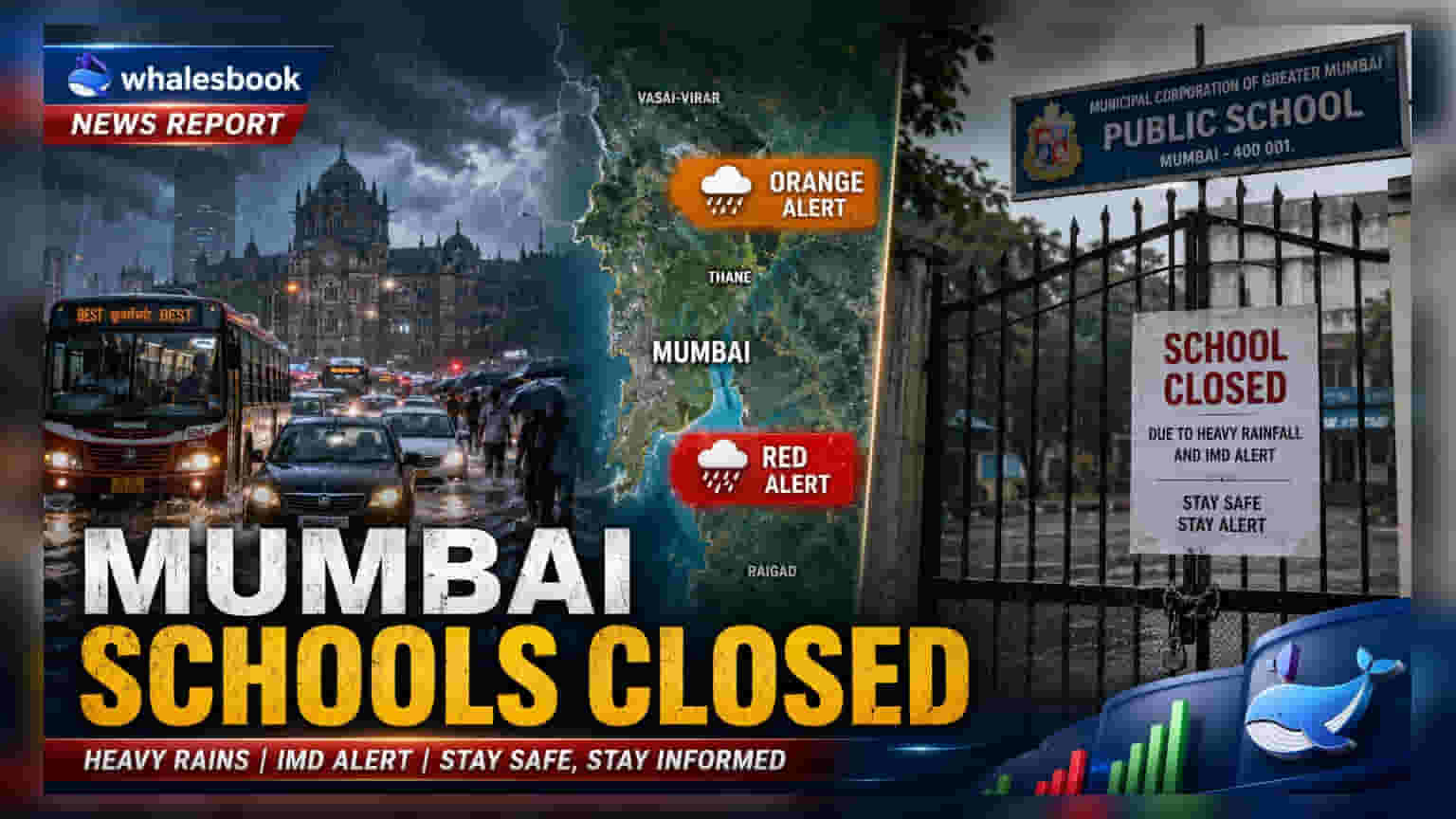
Heavy monsoon rains have forced school closures in Palghar, Uran, and Raigad, while the IMD issued an orange alert for Mumbai and Thane. These weather-related disruptions often impact commuter movement, suburban rail efficiency, and logistical operations across the financial capital.
What Happened
Heavy monsoon rains have caused significant disruptions across the Mumbai Metropolitan Region. As of July 2, 2026, authorities have ordered the closure of schools and colleges in several districts, including Palghar, Uran, and Raigad, due to persistent waterlogging and safety concerns. The India Meteorological Department (IMD) has issued an orange alert for Mumbai, Thane, and Raigad, warning of heavy to very heavy rainfall. Palghar is under a red alert, which indicates a forecast for extremely heavy downpours. The recent spell of rain has led to localized traffic delays and interruptions in the suburban rail network, which serves as the primary mode of transport for millions of commuters in the city.
Economic And Logistical Impact
For investors and businesses, large-scale weather disruptions in Mumbai, India’s financial hub, can have immediate operational consequences. The city’s economy relies heavily on the efficiency of its workforce, a large portion of which commutes via the suburban railway network. When rail lines, such as the Harbour Line mentioned in recent reports, face failures like overhead wire issues, it often leads to a slowdown in service sector productivity. Additionally, logistics and last-mile delivery services frequently face delays during periods of severe waterlogging, impacting retail and e-commerce supply chains within the city.
Infrastructure Under Stress
The recurring nature of urban flooding in Mumbai highlights the ongoing pressure on municipal infrastructure. Civic bodies, including the Brihanmumbai Municipal Corporation (BMC) and neighbouring municipal corporations, are often tasked with managing drainage systems and road maintenance during these peak monsoon months. For companies operating large facilities, office parks, or retail outlets in low-lying areas, the risk of property damage or operational downtime remains a seasonal variable that requires consistent monitoring of civic updates and weather forecasts.
Insurance And Financial Considerations
While these weather events are routine during the monsoon, intense rainfall often correlates with a temporary rise in insurance claims, particularly for vehicle and commercial property damage. General insurance companies may observe an increase in claim volumes following such periods of heavy rainfall. Additionally, businesses that rely on uninterrupted supply chain movement across the Mumbai Metropolitan Region may see short-term cost increases due to logistical delays or the need for alternative transport arrangements.
What Investors Should Track
Investors monitoring the impact of monsoon conditions on the broader market typically track the efficiency of critical infrastructure and the continuity of business operations. The primary monitorables include the recovery time for public transport, any major reports of property damage from listed companies with significant assets in the region, and official updates on municipal preparedness. The ability of civic authorities to restore normalcy remains a key factor in assessing the short-term impact of such weather events on urban economic activity.