

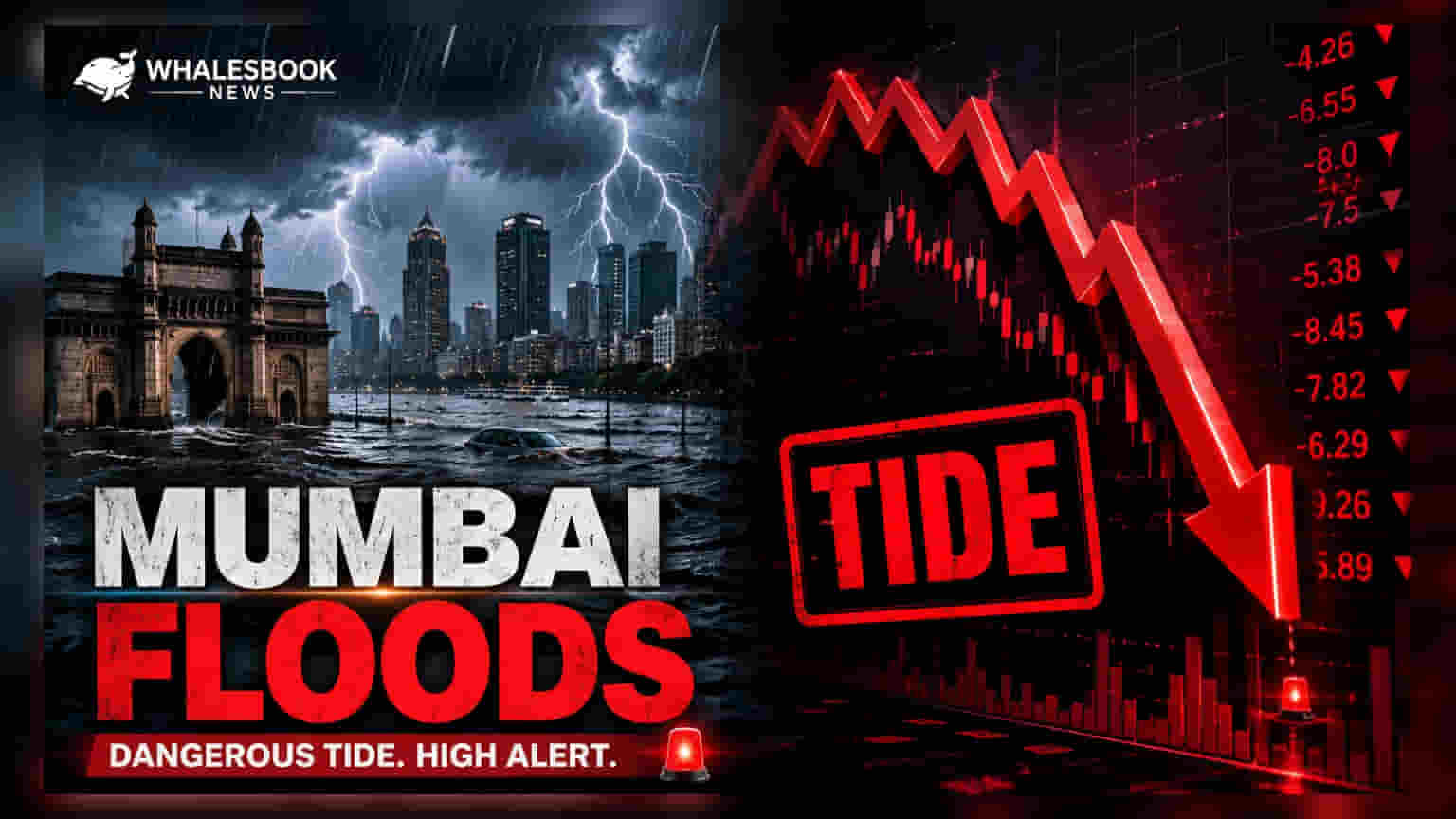
Mumbai is under an IMD red alert with a 4.27-meter high tide expected, causing widespread waterlogging. The weather disruption impacts logistical supply chains, office attendance, and construction activity in the financial hub. Investors may look at the effects on local infrastructure, insurance claim trends, and operational continuity for city-based businesses.
What Happened
Mumbai is currently experiencing severe weather conditions, with the Brihanmumbai Municipal Corporation (BMC) issuing a high tide advisory for 1:45 PM today. The India Meteorological Department (IMD) has placed the city under a red alert, indicating heavy to very heavy monsoon rainfall. Numerous areas have reported significant waterlogging following intense downpours. The eastern suburbs received an average of 109 mm of rain in the last 24 hours, while the western suburbs and the island city recorded 87 mm and 86 mm, respectively. Mankhurd saw the highest rainfall intensity at 170.4 mm, leading to disruptions in localities including Andheri, Kurla, Ghatkopar, and Mulund.
Impact On Business And Logistics
As a primary hub for financial services, IT, and manufacturing in India, Mumbai’s operational health is closely tied to its infrastructure. Severe waterlogging creates immediate challenges for logistics and supply chain movement across the city. Many businesses face temporary issues with employee attendance, especially when rail and road transport services are restricted. For listed companies with head offices or major data centers in Mumbai, such weather events can lead to short-term operational hurdles. Supply chains relying on timely deliveries through the city's road network often experience delays during these periods.
Infrastructure And Utility Trends
The construction sector often faces temporary pauses during extreme monsoon conditions, as sites are prone to waterlogging and safety concerns. This can delay the planned execution timelines for real estate projects. From a utility perspective, water stock remains a critical metric. The collective water stock in Mumbai's seven key reservoirs is currently at 7.18% of their total capacity. While Vihar Lake has crossed 50% and Modak Sagar has reached 20%, low levels in reservoirs like Bhatsa—which is below 5%—suggest that the city remains dependent on consistent monsoon rainfall for future water security, which is vital for local industrial operations.
Potential Sectoral Effects
For investors, the immediate aftermath of such weather events typically brings focus to the non-life insurance sector. Periods of heavy rain and flooding often lead to higher claim volumes for vehicle and property damage. While these events are seasonal, they influence the short-term financial performance of insurance companies. Additionally, the speed at which civic infrastructure recovers and resumes normal operations is a standard point of observation for businesses and investors to gauge the extent of the disruption to the city's economic activity.