

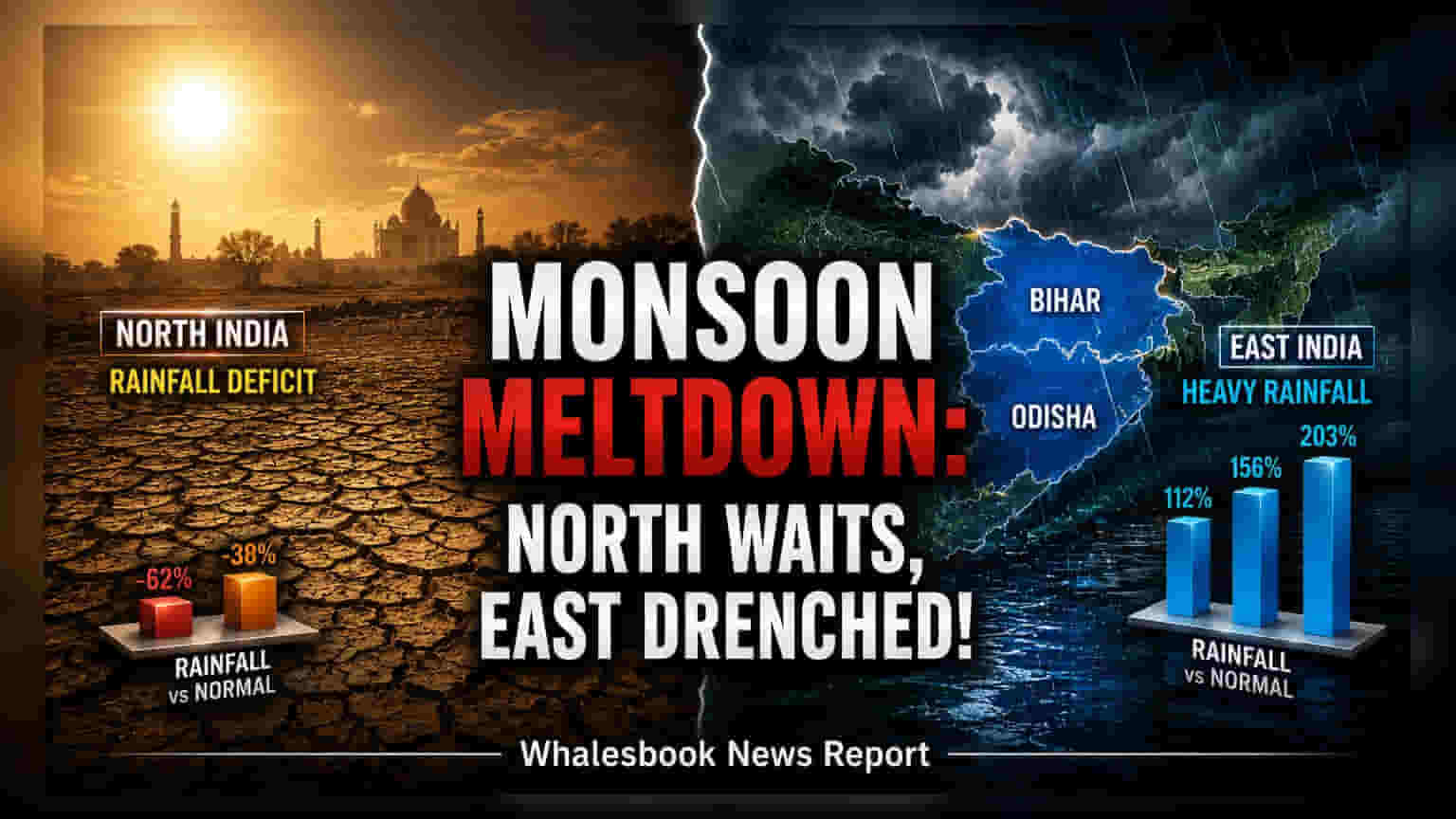
The southwest monsoon is showing uneven progress, with heavy rain alerts for Bihar and Odisha while northern regions face dry spells. This inconsistent weather pattern poses risks to agriculture and regional logistics across parts of India. Investors should watch for potential impacts on commodity prices and rural demand.
The India Meteorological Department (IMD) has reported a significant shift in monsoon activity as of July 14, 2026. While large parts of North India are experiencing a weak monsoon phase with limited rainfall, eastern and northeastern states are bracing for intense weather conditions. An Orange Alert has been issued for Bihar and Odisha, where heavy to very heavy rainfall—potentially reaching up to 204.4 mm—is expected. This level of precipitation often brings risks of local flooding and transport delays, which can temporarily disrupt supply chains in these regions.
Regional Weather Contrast and Economic Impact
The weather pattern remains highly localized. States including Assam, Meghalaya, West Bengal, and Chhattisgarh are currently under a Yellow Alert, with forecasts suggesting thunderstorms and gusty winds. For investors, these regional variations are important as they directly influence agricultural output and rural consumption patterns. While excessive rain in the East can damage standing crops and disrupt distribution, a lack of sufficient rain in Northern India—where many kharif crops are currently in the growth phase—could affect yield projections if the dry spell continues.
In Delhi, moderate rainfall provided temporary relief from high humidity, though it also highlighted recurring urban infrastructure challenges like waterlogging. Meanwhile, several regions including Marathwada, north interior Karnataka, and parts of coastal Andhra Pradesh are reporting temperatures significantly above normal. Some areas even face heatwave warnings, creating a sharp contrast to the flood-prone conditions in the East.
Maritime and Agricultural Advisories
The IMD has also warned mariners of strong winds in the Arabian Sea and the Bay of Bengal, with gusts reaching up to 65 kmph. Such conditions typically limit fishing activities and can slow down maritime logistics. For the agricultural sector, the IMD has issued specific advisories to ensure proper field drainage and the protection of livestock. The timing of these weather events is critical, as any prolonged delay in rainfall or excessive moisture can affect the quality and quantity of crop production, potentially impacting food inflation and related industry input costs.
Investors may monitor the progress of the monsoon in the coming weeks, as the spatial distribution of rainfall is a key driver for rural economic health. The consistency of these rains will be a primary monitorable for companies in the FMCG, tractor, fertilizer, and seed sectors, which depend heavily on a normal monsoon cycle to support consumer demand and operational stability.