 Whalesbook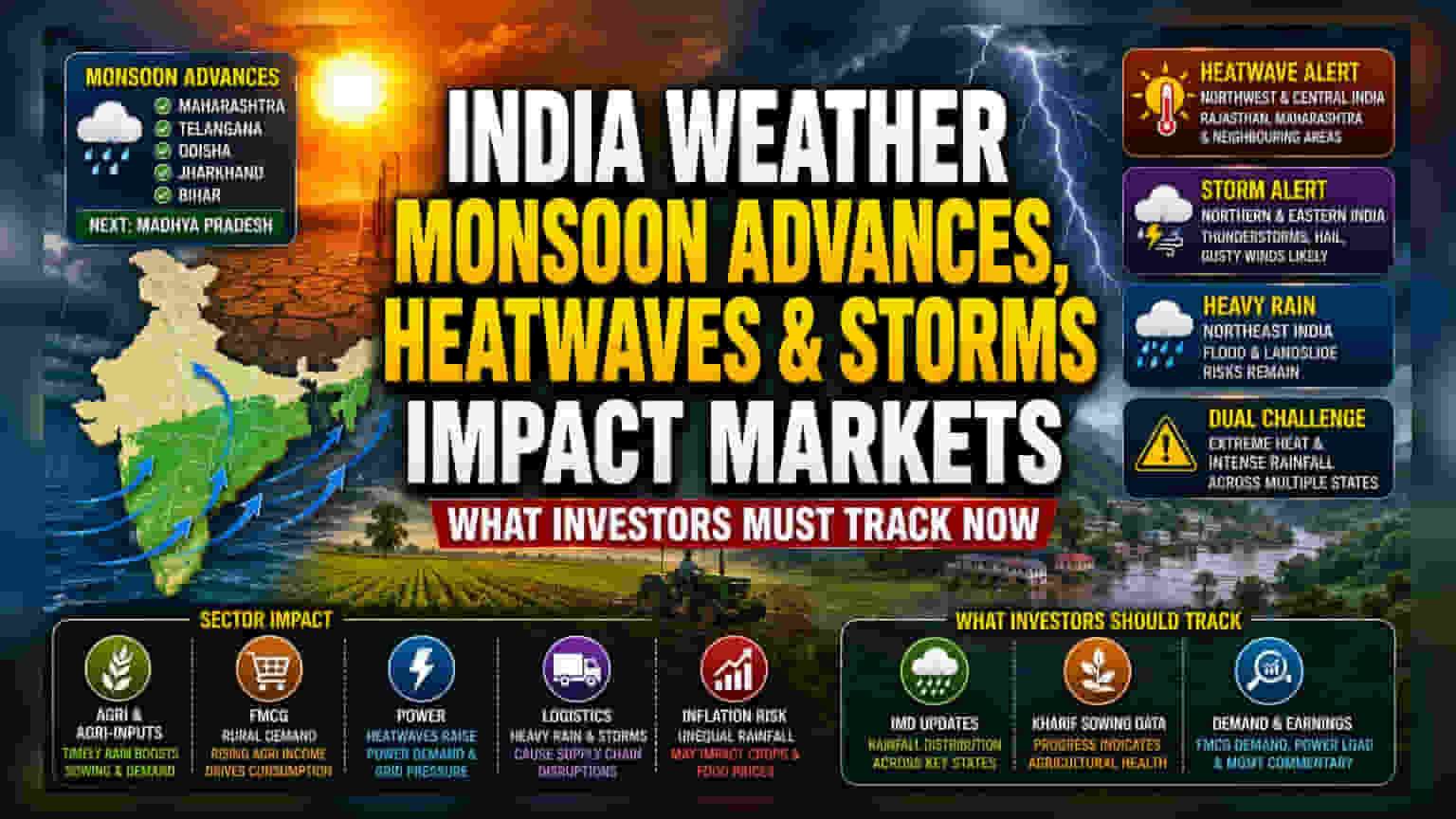


As the southwest monsoon advances into Madhya Pradesh, India faces a mix of heavy rain, storms, and severe heat. For investors, this weather duality is critical as it influences kharif crop sowing, potential food inflation trends, rural consumption, and power demand. Understanding how these patterns affect sectors like agriculture, FMCG, and utilities is key to gauging economic stability.
What Happened
The Indian weather landscape is currently in a transition phase. The southwest monsoon has officially advanced into parts of Maharashtra, Telangana, Odisha, Jharkhand, and Bihar, with projections indicating it will move into Madhya Pradesh within the coming days. While this brings much-needed rainfall, the country is simultaneously dealing with extreme weather elsewhere. Northwest and central India, including parts of Rajasthan and Maharashtra, are experiencing heatwaves. Additionally, northern and eastern regions are facing storm alerts, while heavy rain is impacting the northeast. This complex weather system creates a dual challenge of managing extreme heat and rainfall across different states.
Why This Matters For Investors
For the Indian stock market, the monsoon is the most important macroeconomic event of the year. It is not just about weather; it is a primary driver of the rural economy, which forms a significant portion of India's GDP. Investors track the monsoon closely because it dictates the success of the kharif (summer) crop season. A healthy and well-distributed monsoon supports agricultural income, which in turn fuels rural demand for goods and services. Conversely, extreme heat or uneven rainfall can disrupt these cycles, impacting corporate earnings in specific sectors.
Sector Impact and Economic Context
Several sectors are directly sensitive to these weather patterns. The agriculture and agri-input sector, including fertilizer and seed companies, relies heavily on the timing and spread of rainfall to determine demand for their products. When the monsoon is timely, these companies typically see stronger volume growth. In the consumer goods sector, specifically FMCG companies with a high share of rural sales, the monsoon is a key indicator of potential volume recovery. Strong agricultural income often leads to higher spending on soaps, detergents, and packaged foods in rural India.
The Power Demand Equation
While the monsoon impacts the rural economy, the ongoing heatwaves in regions like Rajasthan and Maharashtra drive power demand. High temperatures increase the usage of cooling appliances like air conditioners and refrigerators. While this leads to higher electricity consumption, which can be positive for power generation and distribution companies, it also puts significant pressure on the grid and fuel supplies. Investors in the utility sector often watch these heatwave periods to see how companies manage peak load demands and supply reliability.
Risks and Supply Chain Concerns
Weather disruptions can also create short-term risks for companies. Heavy rainfall and storms in northern and eastern India can lead to logistics bottlenecks and supply chain delays. Furthermore, while rain is generally positive for agriculture, an uneven distribution—where some regions get too much rain and others face drought—can hurt crop yields. If food production is impacted, it can lead to higher food inflation, which is a major concern for the Reserve Bank of India and can influence monetary policy decisions. Additionally, potential waterlogging and flood risks in the northeast remain an area to monitor for impact on local infrastructure and regional logistics.
What Investors Should Track
Investors looking to understand the economic impact of these weather trends should monitor a few key developments in the coming weeks. First, the India Meteorological Department’s (IMD) updates on the spatial distribution of rainfall are crucial; total rainfall matters less than whether the rain hits the key farming belts on time. Second, official data on kharif sowing progress will provide a clearer picture of agricultural health. Finally, tracking consumer demand signals in the FMCG sector and any management commentary regarding power demand or supply chain issues in quarterly results will provide a more grounded view of how these weather events translate into financial performance.