 Whalesbook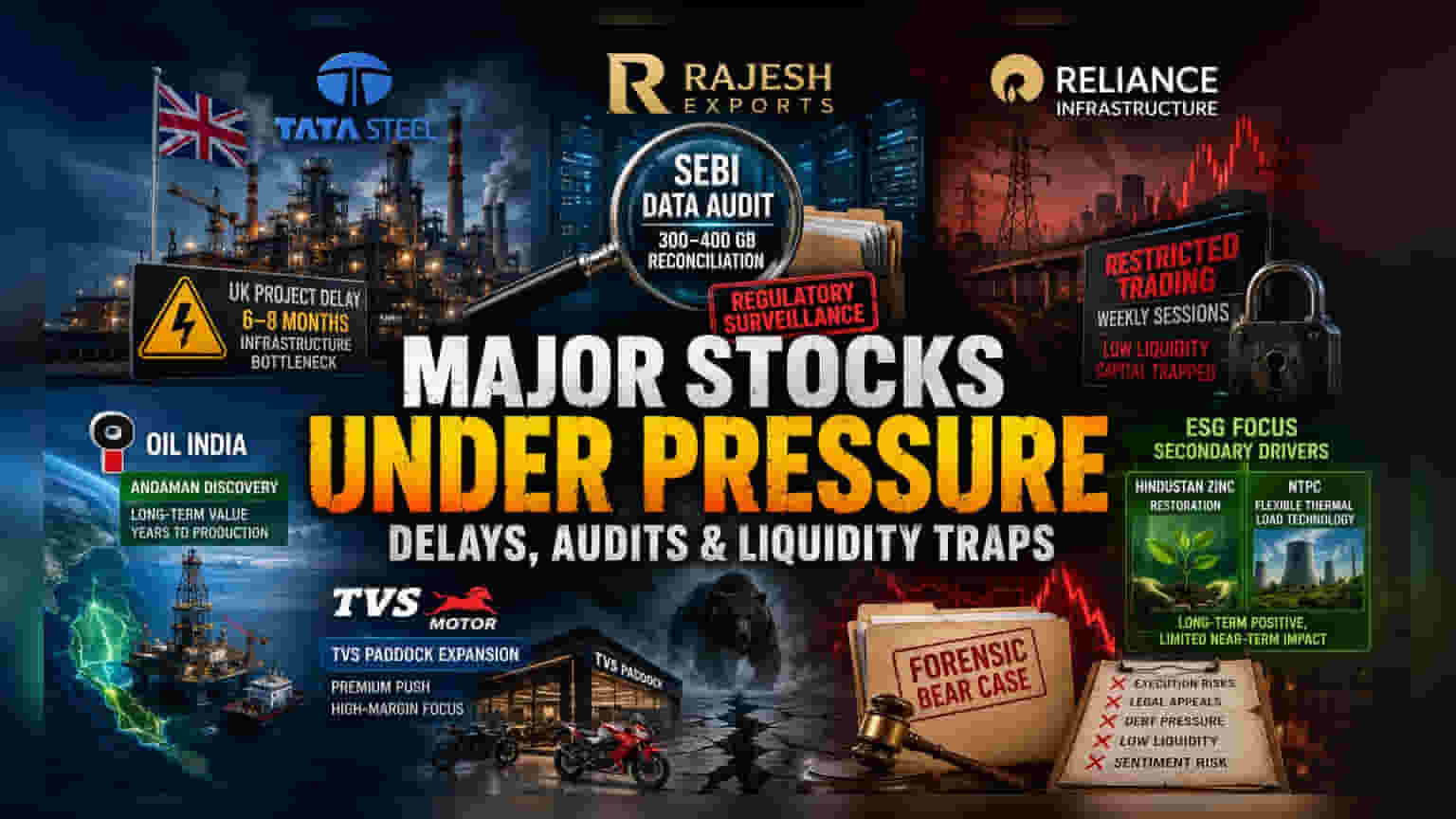


The Operational Friction at Tata Steel
Tata Steel’s green transition strategy faces a significant tactical setback. The 1.25 billion euro investment aimed at decarbonizing its UK assets is encountering a six-to-eight-month delay, primarily tied to electrical infrastructure capacity. Beyond the immediate project timeline, this delay increases the risk of higher capital expenditure due to inflation and potential currency fluctuations. Analysts remain wary of whether the company can maintain its margin guidance while navigating these logistical bottlenecks, especially as the European steel market shows signs of softening demand.
The Regulatory Surveillance Trap
Rajesh Exports is currently embroiled in an exhaustive data reconciliation process with the Securities and Exchange Board of India. The sheer volume of information being transferred, estimated between 300 and 400 GB, indicates a deep-dive audit that suggests the regulator is not merely performing a routine check. Investors should monitor this for potential governance red flags. Simultaneously, Reliance Infrastructure continues its arduous efforts to exit restrictive trading categories. Being relegated to weekly trading sessions severely impacts liquidity, effectively trapping capital and preventing institutional investors from hedging or exiting positions efficiently.
Market Sentiment and Strategic Shifts
While industrial players grapple with headwinds, mid-cap and energy stocks are signaling divergent trends. Oil India’s discovery in the Andaman offshore basin provides a fundamental long-term value narrative, though the time-to-production remains years away. TVS Motor’s pivot to the 'TVS Paddock' retail model illustrates an aggressive push for premium market share, directly challenging competitors in the high-margin motorcycle segment. This expansion is essential as mass-market two-wheeler demand shows signs of plateauing.
The Forensic Bear Case
The current environment for Reliance Infrastructure and Rajesh Exports necessitates extreme caution. Reliance Infrastructure’s reliance on legal and regulatory appeals to normalize trading status underscores a lack of organic operational momentum. Without a clear path to debt reduction or structural improvement, the stock remains vulnerable to sentiment-driven sell-offs. For Tata Steel, the UK infrastructure delay is symptomatic of larger cross-border execution risks. Past experience suggests that large-scale industrial projects in the UK often face cost overruns, which could further strain the balance sheet if the company’s domestic operations do not provide an immediate buffer.
Forward Outlook
Market expectations for the coming weeks are anchored on how quickly these regulatory and operational hurdles are cleared. If Rajesh Exports fails to satisfy the regulator within the mandated two-week window, we could see a heightened liquidity squeeze. Meanwhile, the sector-wide focus on ESG—evidenced by Hindustan Zinc’s restoration efforts and NTPC’s pursuit of flexible thermal load technology—will remain a secondary driver, though it offers little protection against the current macroeconomic and regulatory volatility.