

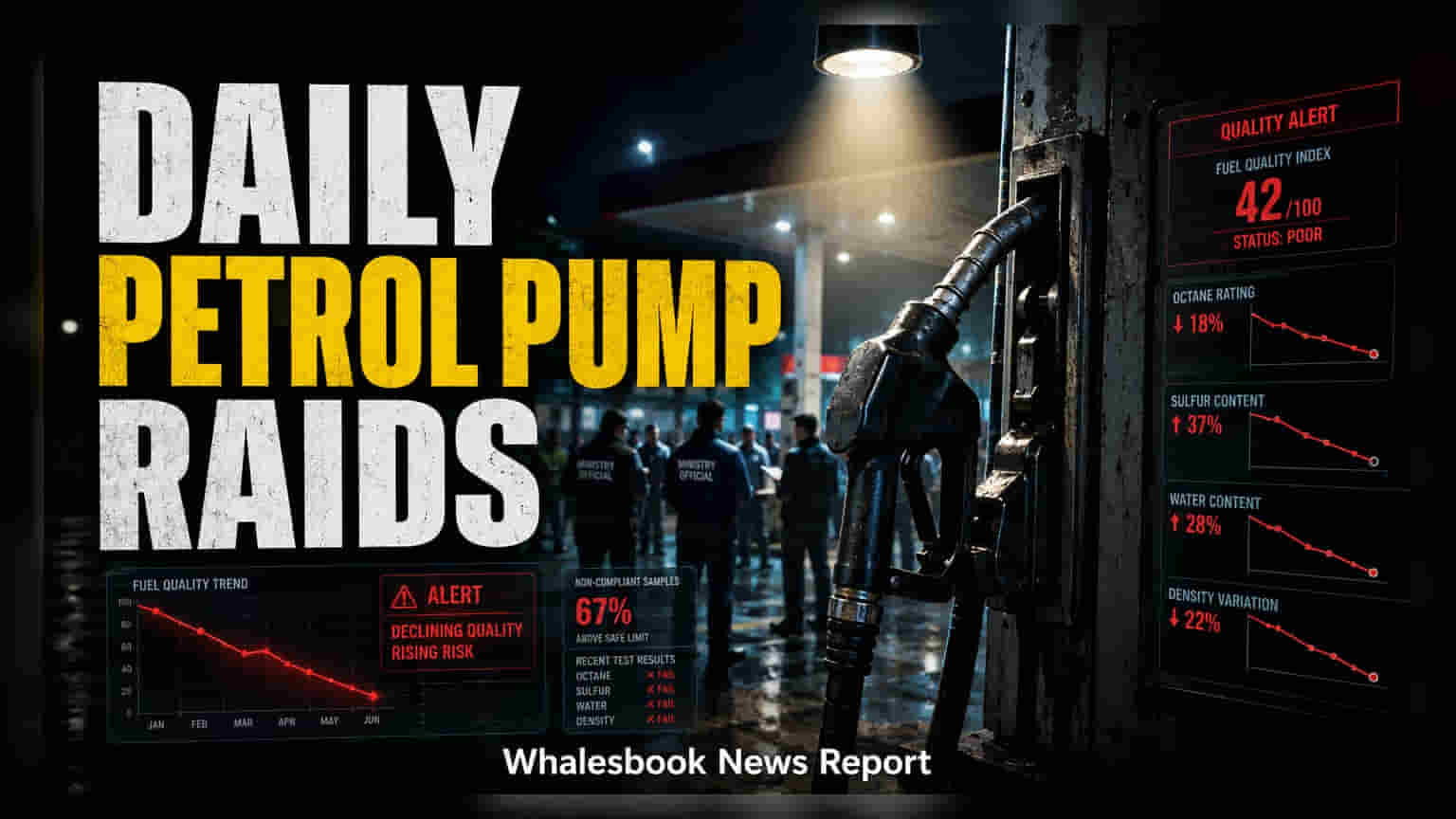
India’s Ministry of Petroleum & Natural Gas has directed oil companies to perform daily water ingress testing at over 87,000 retail outlets. This mandate follows recent concerns regarding E20 fuel quality. Authorities clarified that there is no widespread contamination, noting that testing over 2,000 samples revealed only two isolated cases, both of which led to immediate station suspensions.
The Ministry of Petroleum & Natural Gas (MoPNG) has mandated a rigorous increase in fuel quality inspections at retail outlets across the country. This directive requires oil marketing companies to perform water ingress and contaminant testing between 8 to 12 times daily at more than 87,000 petrol pumps. The move is designed to address recent public and industry concerns regarding fuel quality, specifically related to the potential presence of moisture, sulfides, and chlorides in E20 petrol.
While concerns have been raised regarding the impact of ethanol-blended fuel on engine components, government data suggests that these issues are not systemic. The ministry reported that, out of more than 2,000 fuel samples tested across the country, only two cases of chloride contamination were identified. In both instances, authorities immediately suspended sales at the affected fuel stations. This data indicates that current quality control protocols, when strictly followed, are capable of filtering out non-compliant fuel.
For investors monitoring state-run oil marketing companies like Indian Oil Corporation, Bharat Petroleum, and Hindustan Petroleum, these operational protocols are essential to manage. While the increased frequency of testing adds to operational compliance costs, it is a necessary step to maintain consumer trust and protect the reputation of the state-run fuel supply chain. Maintaining consistent fuel quality is a core requirement for the successful nationwide transition to E20 fuel, which is a major government initiative.
Furthermore, the supply chain for ethanol appears to be under closer scrutiny. Between July 2024 and June 2026, authorities rejected approximately 10,500 kilolitres of ethanol that failed to meet quality standards. This shows that quality controls are being applied not just at the final retail pump, but also during the procurement and blending phases. This regulatory oversight helps prevent contaminated fuel from entering the distribution network, thereby reducing the financial and operational risks associated with poor fuel quality.
The industry continues to navigate technical and operational discussions regarding the full implementation of E20 policies. As the Ministry and oil companies work to ensure that ethanol blending complies with BIS IS 15464 standards, which require a minimum ethanol purity of 99.6%, the market will monitor these quality assurance measures. The focus for stakeholders remains on the smooth scaling of these operations and the ability of oil companies to maintain fuel integrity while managing the costs of expanded testing and regulatory compliance.