 Whalesbook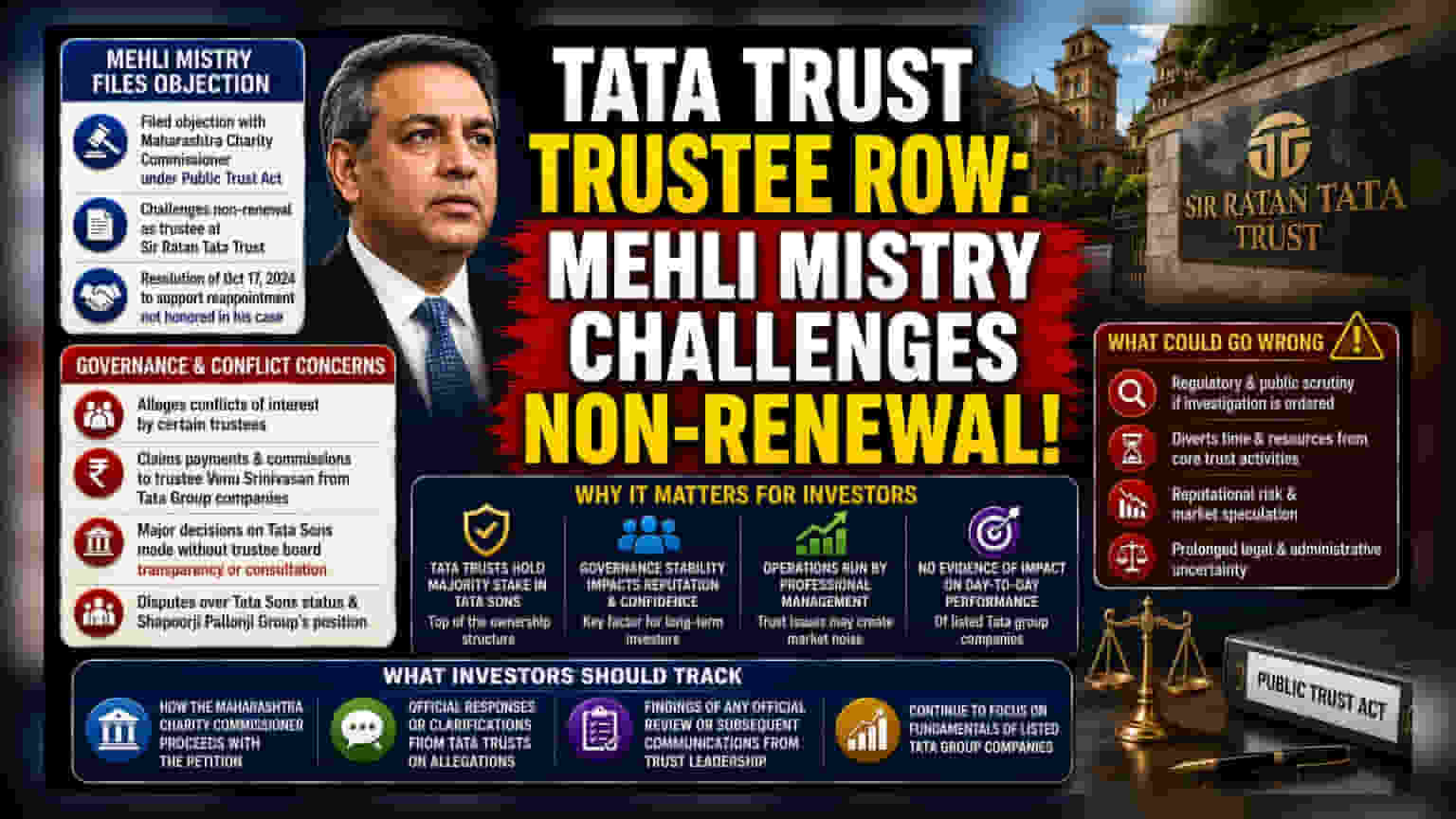


What Happened
Mehli Mistry has filed a formal objection with the Maharashtra Charity Commissioner regarding his non-renewal as a trustee at the Sir Ratan Tata Trust. This legal step, taken under the Maharashtra Public Trust Act, seeks to contest the decision to end his tenure. Mistry claims that a resolution passed on October 17, 2024, by trustees of both the Sir Ratan Tata Trust and the Sir Dorabji Tata Trust—which was intended to support the reappointment of existing trustees to ensure continuity—was not honored in his specific case. He is requesting a thorough scrutiny of how trustee appointments and broader governance decisions are handled within the organization.
Governance and Conflict Concerns
The petition filed by Mistry goes beyond his individual tenure and raises questions about internal governance standards. He has alleged that specific trustees may have had conflicts of interest, asserting that some have benefited from financial arrangements with Tata Group companies while serving as trustees. The filing highlights payments and commissions allegedly received by trustee Venu Srinivasan from various Tata entities, calling for an independent examination of these arrangements. Furthermore, Mistry claims that major decisions impacting Tata Sons were made without adequate transparency or consultation with the board of trustees. These include disagreements regarding the handling of Tata Sons' status and strategies concerning the Shapoorji Pallonji Group's position.
Why This Matters For Investors
Tata Trusts hold a majority stake in Tata Sons, the holding company that controls the various operating firms under the Tata Group. Because the Trusts sit at the very top of the ownership structure, the governance and stability of these charitable entities are important to the group's reputation. While Tata group operating companies are run by independent, professional management, significant leadership friction or governance uncertainty at the promoter level can create unwanted noise. Investors typically track such events to understand if they signal any shift in long-term strategic direction or leadership stability within the conglomerate.
What Could Go Wrong
The primary concern for observers is the potential for reputational risk and institutional uncertainty. Legal challenges and allegations regarding trust management can lead to prolonged regulatory or public scrutiny. If the Charity Commissioner decides to investigate these claims, the trust may need to dedicate resources and time to address these concerns, potentially distracting from its primary activities. Additionally, while the companies themselves may continue normal operations, public disputes involving the promoter trusts can lead to market speculation.
What Investors Should Track
The immediate monitorable is how the Maharashtra Charity Commissioner proceeds with Mistry's petition. Investors will also track any official responses or clarifications from the Tata Trusts regarding these governance allegations. The situation is currently a legal and administrative matter, and the impact will largely depend on the findings of any official review or subsequent communications from the trust's leadership. There is no evidence currently linking these allegations to the day-to-day operational or financial performance of the listed Tata group companies.