 Whalesbook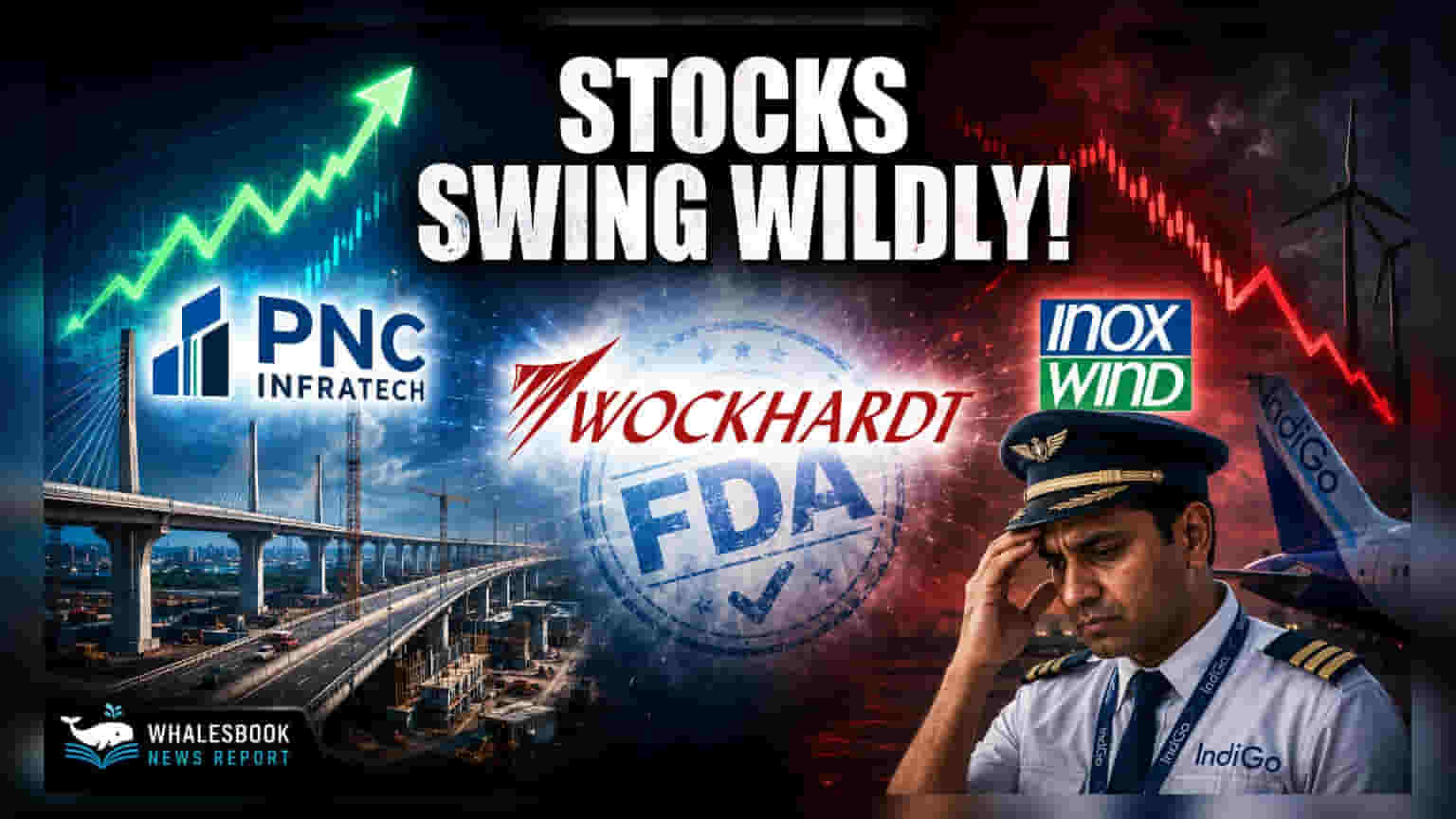


The Innovation Premium: Wockhardt's Strategic Shift
The pharmaceutical sector is reacting to a watershed moment for Wockhardt, as its novel antibiotic, Zaynich, secured U.S. Food and Drug Administration approval. This is not merely a regulatory win; it is the first New Chemical Entity discovered and developed in India to receive such clearance. With a reported addressable market of $9 billion, the drug is designed to combat multi-drug resistant Gram-negative infections. While the market initially cheered this with an 11% surge, institutional analysts remain focused on the commercial execution phase. Unlike generic commodity medicines that compete on volume and razor-thin margins, Zaynich’s success hinges on Wockhardt’s ability to navigate hospital access and build physician adoption, transforming the company's long-standing R&D investment into durable, premium-priced revenue.
Aviation Volatility and Macro Headwinds
InterGlobe Aviation, despite maintaining operational resilience with capacity growth of 9.5% for the year, reported a consolidated net loss of ₹2,536.9 crore for the March quarter. The results illustrate a sharp divergence between top-line performance and bottom-line reality. While revenue remained steady, the airline was hit by exceptional costs, including a ₹250 crore one-time charge, and significant foreign exchange turbulence. Management pointed toward an exceptionally challenging operating environment throughout fiscal 2026, where Middle East airspace disruptions and rising labor costs systematically eroded margins. The discrepancy between the company’s strong balance sheet and its current earnings pressure underscores the vulnerability of the aviation sector to external macroeconomic variables.
The Infrastructure Paradox: Order Books vs. Execution
Inox Wind shares faced downward pressure after reporting a significant decline in quarterly profit, largely attributed to higher operational expenses and logistical hurdles in project execution. Although the company maintains a robust order book exceeding 3 GW, investors are increasingly scrutinizing the time lag between booking an order and converting it into realized cash flow. In contrast, PNC Infratech continues to demonstrate a methodical diversification strategy. By securing a ₹302.44 crore airport infrastructure project in Pantnagar, the company is actively reducing its reliance on traditional road construction—a vertical that has previously suffered from sector-wide execution delays.
The Forensic Bear Case: Structural Risks
The current market optimism regarding recent wins often masks underlying structural risks. For firms like Inox Wind, the high working capital cycle remains a persistent threat; until the company can demonstrate a consistent ability to convert its order pipeline into cash without excessive logistical overhead, margin compression will likely remain a volatility driver. Similarly, while Gujarat Gas reported a dramatic 1,000% year-on-year jump in quarterly profit, critics point to the fact that revenue from operations actually declined by 9%, suggesting that current profitability is heavily leveraged on pricing actions rather than sustainable volume expansion. Investors should remain cautious of companies relying on one-time settlements or price hikes to mask slowing operational growth in an inflationary environment.