

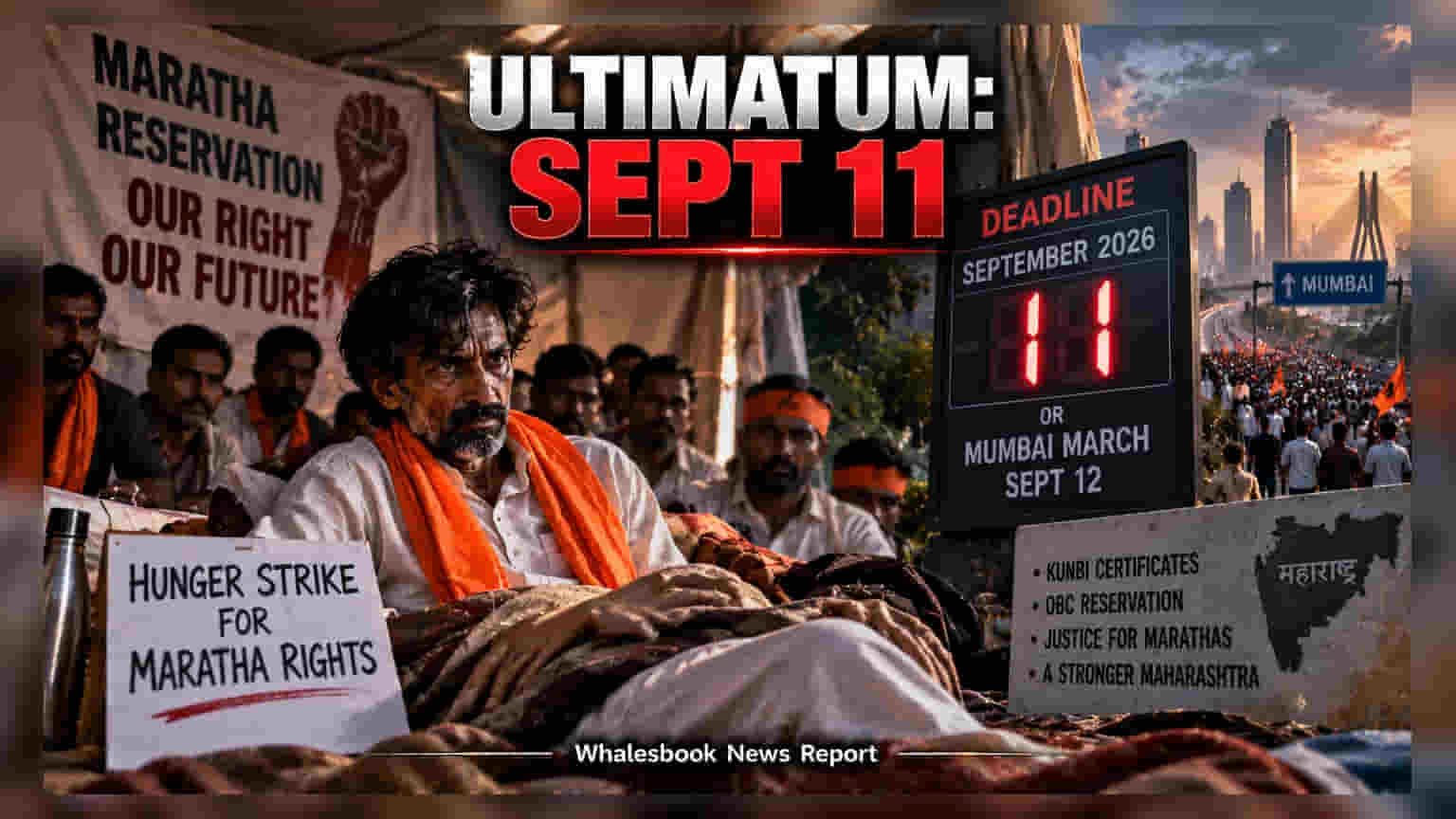
Activist Manoj Jarange has issued a September 11 ultimatum to the Maharashtra government, demanding Kunbi caste certificates for Marathas. If the demands remain unmet, he has planned a protest march to Mumbai for September 12. Businesses in the state are monitoring the situation for potential regional disruptions.
Manoj Jarange, a prominent activist in the Maratha reservation movement, has issued a final ultimatum to the Maharashtra government, setting a deadline of September 11, 2026, to address the community's long-standing demands. The activist, who is currently on an indefinite hunger strike in Antarwali Sarati, has stated that if the government fails to fulfill his requirements by this date, he will lead a protest march to Mumbai on September 12. This development marks a significant escalation in the ongoing agitation, as previous negotiations between the activist and government officials have not reached a resolution.
Core Demands and Government Response
The central demand of the protest is the classification of Marathas under the Other Backward Class (OBC) category through the issuance of Kunbi caste certificates. Supporters of the movement are being urged to use existing family, blood, and clan records to apply for these certificates. The state government, led by a delegation that includes ministers Radhakrishna Vikhe Patil and Uday Samant, has stated that it has identified approximately 5.8 million Kunbi records and is taking steps to expedite the issuance process. Despite these efforts, the impasse continues as the activist seeks more concrete commitments regarding the legal and administrative pathway for the reservations.
Potential Economic and Operational Impact
For businesses and residents in Maharashtra, the protest has created an atmosphere of uncertainty. Recent days have seen road blockades and localized shutdowns in various districts, including Beed, Latur, and Dharashiv. These actions have begun to disrupt daily logistics, transportation, and small-scale business operations in the Marathwada region. The announcement of a potential march to Mumbai on September 12 introduces a higher level of risk regarding civil order in the state's commercial capital.
Historically, large-scale protests in major urban centers can lead to temporary closures of local markets, increased security presence, and disruptions in public transport. While the government has pledged to appoint nodal officers to handle the certificate distribution and resolve administrative hurdles for applicants, the volatile nature of the current protest suggests that the situation remains fluid.
Investors and regional stakeholders are currently monitoring the situation for any signs of de-escalation or further unrest. The primary focus for the coming days will be on whether the state administration can reach an agreement with the activist before the September 11 deadline, or if the situation will proceed toward a larger confrontation in Mumbai, which could further impact regional business stability.