

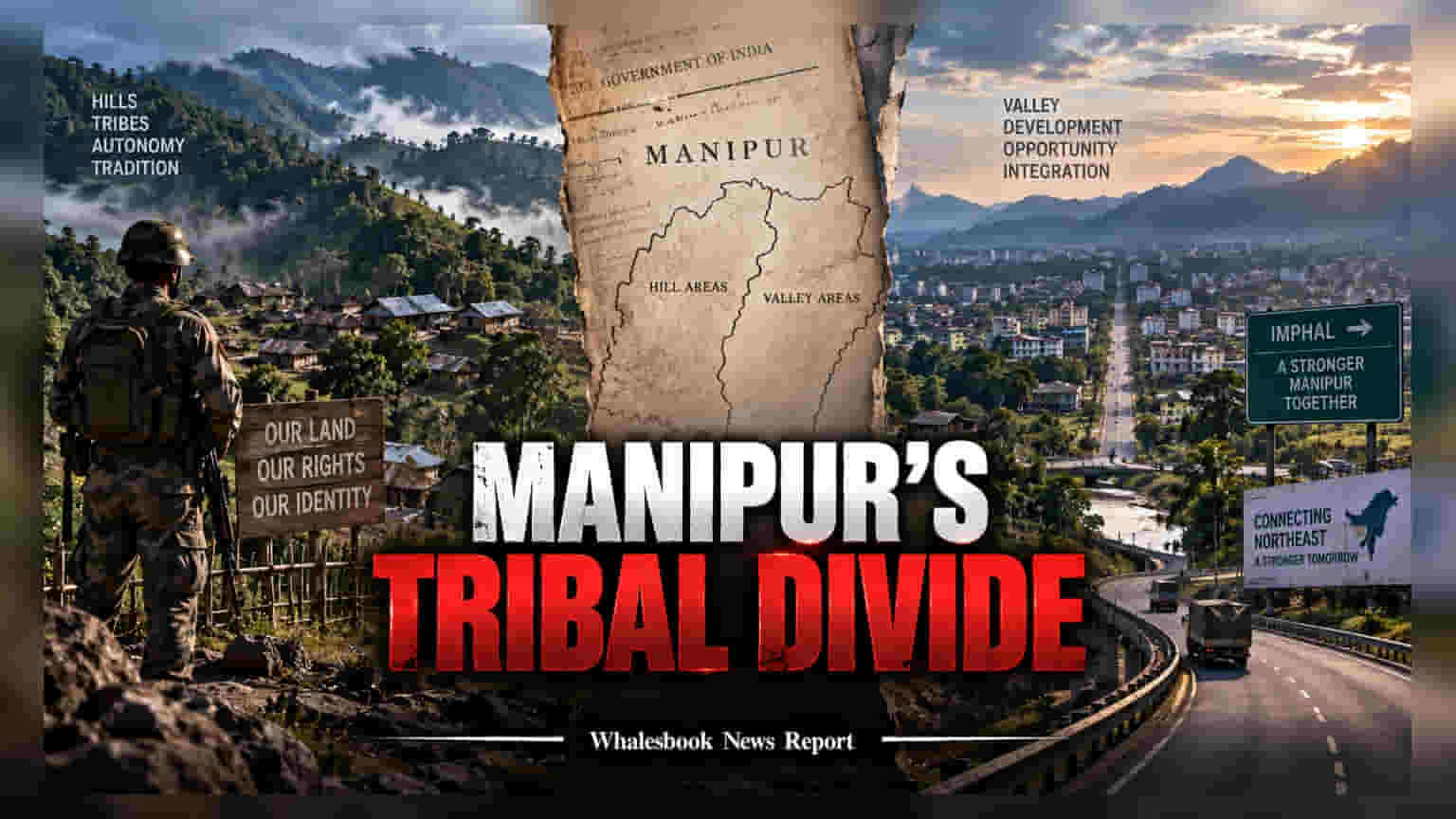
The ongoing ethnic crisis in Manipur, which began in May 2023, has led to President's Rule and significant local economic disruptions. For investors, the prolonged instability presents clear risks to the timeline and execution of critical infrastructure and connectivity projects across Northeast India.
The ethnic crisis in Manipur, which first erupted in May 2023, remains a critical situation as of September 2026. The conflict, stemming from deep-seated disputes over tribal status, land rights, and historical hill-valley divisions, has severely impacted the state's social and economic environment. With over 260 reported deaths and the displacement of approximately 60,000 people, the Indian government has imposed President's Rule to manage the ongoing security challenges.
For the broader economy, the situation in Manipur is not merely a local concern. It creates significant friction for business activities, particularly in trade, tourism, and agriculture. Small-scale businesses and local supply chains have faced consistent disruptions, leading to economic strain in the region. When the local ecosystem is unstable, it often limits the ability of businesses to operate effectively, impacting regional economic growth and consumer demand.
From an investment perspective, the most direct impact concerns infrastructure development. The Northeast region is central to India's "Act East" policy, which aims to improve trade connectivity with Southeast Asia. Several high-value national projects, including segments of the Trans-Asian Railway and the Trilateral Highway, pass through or rely on stability in this region. Continued violence and civil unrest pose a material risk to the execution timelines of these projects. Cost overruns and project delays are common when the operational environment is volatile, which can affect companies involved in infrastructure, engineering, and logistics that are currently executing or bidding for work in the Northeast.
Beyond direct project risks, there is the wider concern of regional stability. Investors typically watch for spillover effects that could create uncertainty in neighboring Northeastern states. A stable environment is a prerequisite for long-term capital deployment in infrastructure and manufacturing. When such instability persists, it can lead to a more cautious approach from businesses that are planning to expand their presence in the region.
For those monitoring the Indian economy, the situation highlights the sensitivity of major infrastructure development to regional stability. The immediate monitorables for investors and analysts remain the restoration of law and order, the status of key connectivity project timelines, and government commentary regarding regional economic development. As long as the unrest continues, the primary risk remains the potential for further delays in integration projects that are vital for the economic development of Northeast India.