

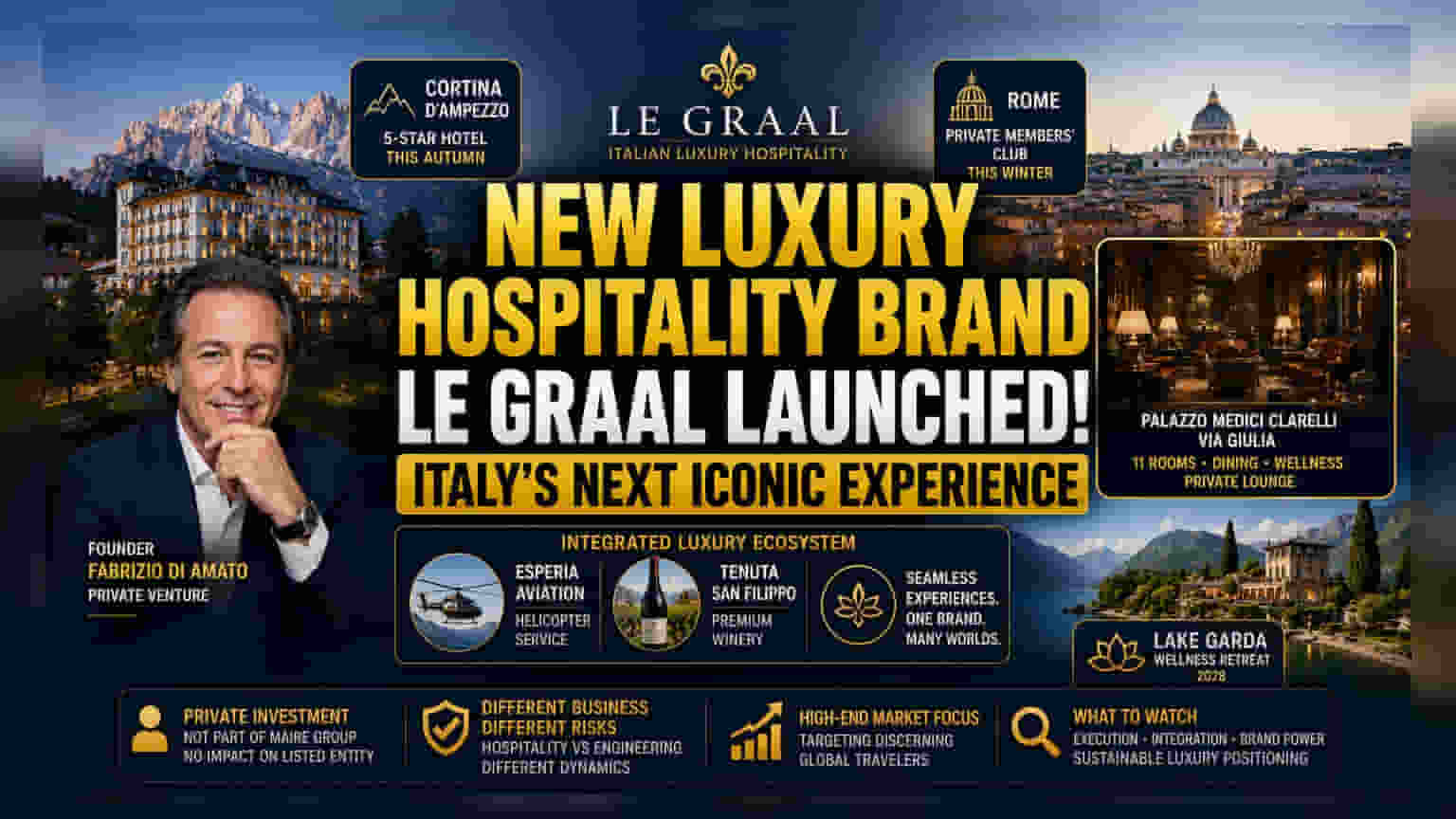
Fabrizio Di Amato, founder of the listed engineering firm Maire, is entering the luxury hospitality sector with his new private brand, Le Graal. The venture plans a network of exclusive Italian properties, starting with a debut in Cortina d'Ampezzo. While separate from the listed Maire group, the expansion highlights the trend of industrial leaders diversifying into the high-end travel market.
What Happened
Fabrizio Di Amato, the founder of the engineering firm Maire (formerly Maire Tecnimont), has announced the launch of a new luxury hospitality brand called Le Graal. The venture is positioned as a private project aimed at creating a network of high-end Italian destinations. According to the brand’s roadmap, the rollout will begin this autumn with a five-star hotel in the alpine town of Cortina d'Ampezzo. This will be followed by a private members' club in Rome during the winter and a wellness retreat on Lake Garda, scheduled for 2028.
Business Model and Strategy
The brand strategy focuses on creating an integrated experience for guests rather than operating standalone properties. The business plan includes linking its hospitality locations with other affiliated services, such as Esperia Aviation, a helicopter service, and the Tenuta San Filippo winery. The Cortina property will feature 30 rooms in a renovated 1920s building, while the Rome members' club will be housed in Palazzo Medici Clarelli on Via Giulia, featuring 11 rooms and various leisure facilities. The management team includes industry veterans such as Claudio Ceccherelli, formerly associated with high-end properties like Villa d'Este.
Why This Matters For Investors
It is important for investors to note that Le Graal is a private investment by Fabrizio Di Amato and is not a part of the listed Maire group’s operations. The project does not involve the engineering company’s capital, balance sheet, or order book. However, the move is notable as it reflects a broader trend among major business owners in Italy to diversify personal wealth into the luxury and lifestyle sectors, leveraging the 'Made in Italy' brand identity.
The Industry Context
Luxury hospitality is a sector heavily dependent on discretionary consumer spending, which can be sensitive to global economic shifts, interest rates, and geopolitical stability. Unlike the engineering and energy transition projects handled by Maire, which rely on long-term contracts and industrial demand, hospitality businesses face different operational risks. These include high capital intensity during the construction or renovation phase, significant ongoing maintenance costs, and a high reliance on attracting and retaining affluent clientele in a competitive market.
What Investors Should Track
For investors following Fabrizio Di Amato’s broader business interests, the primary takeaway is the separation of his private investments from his public engineering ventures. There is no direct financial link between the two. Observers interested in the Italian luxury market may track the execution of these projects—specifically, whether the group can successfully integrate its aviation and winery services to command the premium pricing required to sustain luxury operations in these high-cost regions.