

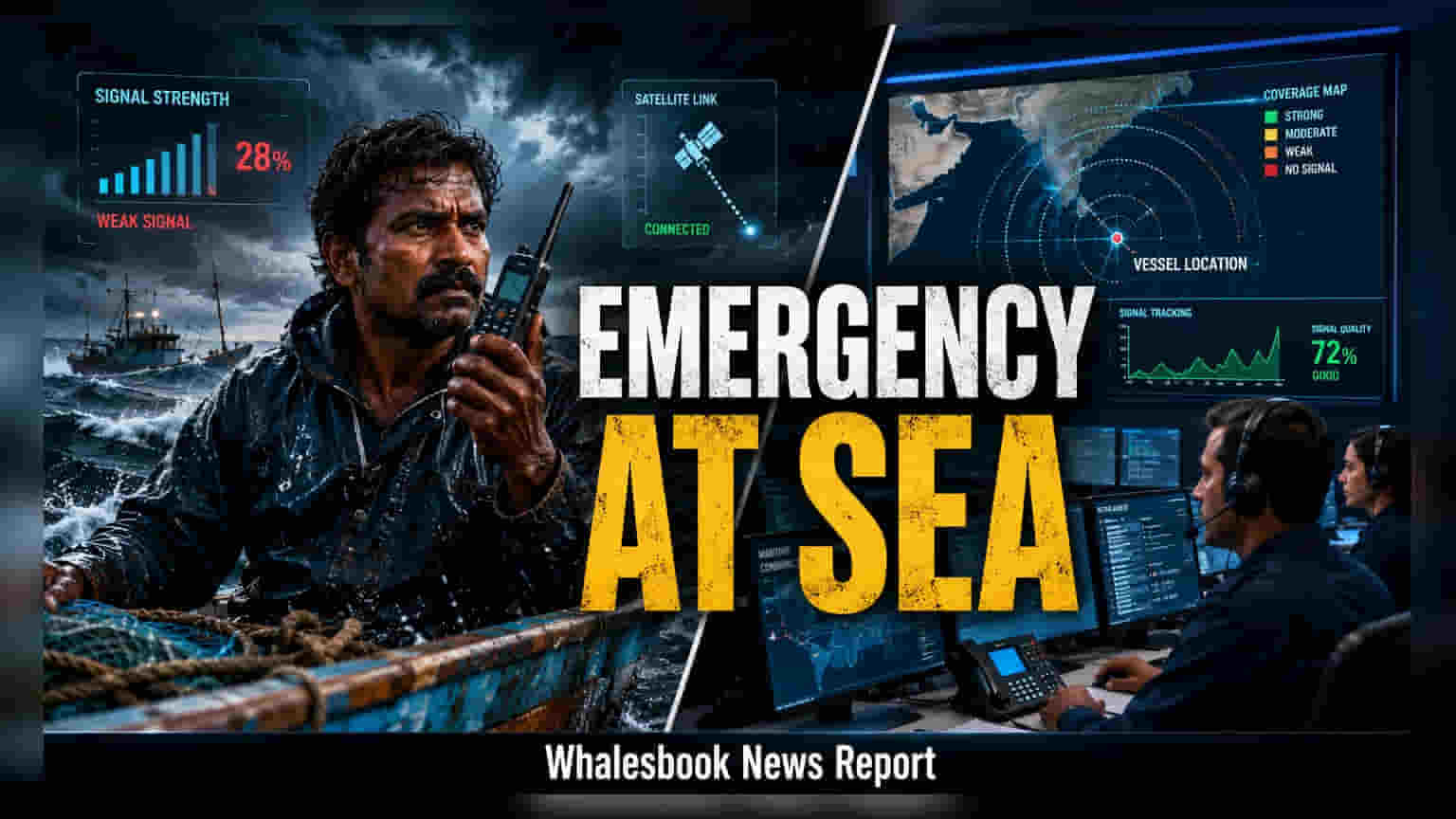
Maharashtra is in talks with BSNL to provide satellite phone connectivity to deep-sea fishermen to improve maritime safety. This initiative aims to ensure reliable communication in remote offshore areas where mobile networks do not reach, potentially speeding up rescue operations during emergencies.
The Maharashtra government is evaluating a plan to equip deep-sea fishing vessels with satellite phone technology. This initiative focuses on solving a long-standing challenge for the fishing community: the complete lack of mobile network coverage in distant offshore waters. By partnering with the state-run Bharat Sanchar Nigam Limited (BSNL), the state aims to create a reliable communication lifeline for fishermen operating far from the coast.
BSNL Service Assessment
State officials, including Fisheries Minister Nitesh Rane, have conducted a review of BSNL’s Global Satellite Phone Service (GSPS). The assessment examined the technical feasibility and coverage range of these devices to ensure they can function reliably in the middle of the sea. Unlike standard mobile phones that rely on land-based towers, satellite phones connect directly to orbiting satellites, allowing for connectivity in even the most remote marine environments. This is a critical factor for the government, as the goal is to provide continuous coverage rather than intermittent signals.
Improving Emergency Response and Safety
For the fishing industry, the inability to communicate during a crisis can be life-threatening. When vessels face mechanical failures, medical emergencies, or severe weather conditions in deep-sea zones, the absence of communication often leads to delays in search and rescue efforts. The government expects that by providing these satellite devices, fishing vessels will be able to contact shore-based authorities immediately, significantly reducing the time taken for rescue operations. Beyond emergency use, this connectivity could also allow for better coordination between vessel operators and land-based agencies.
Strategic Importance to the Fisheries Sector
This move reflects a shift toward modernizing maritime safety infrastructure in Maharashtra. While the fisheries sector has historically relied on traditional methods of navigation and communication, the increasing range of deep-sea fishing operations has made digital connectivity a necessity. For investors and stakeholders tracking the maritime and telecommunications sectors, the potential adoption of this technology marks a push toward greater operational efficiency in the coastal economy. The next steps will involve finalizing the deployment strategy, determining the subsidy model for the hardware, and establishing the operational framework with BSNL to ensure that these communication services remain affordable and accessible for the fishing community.