

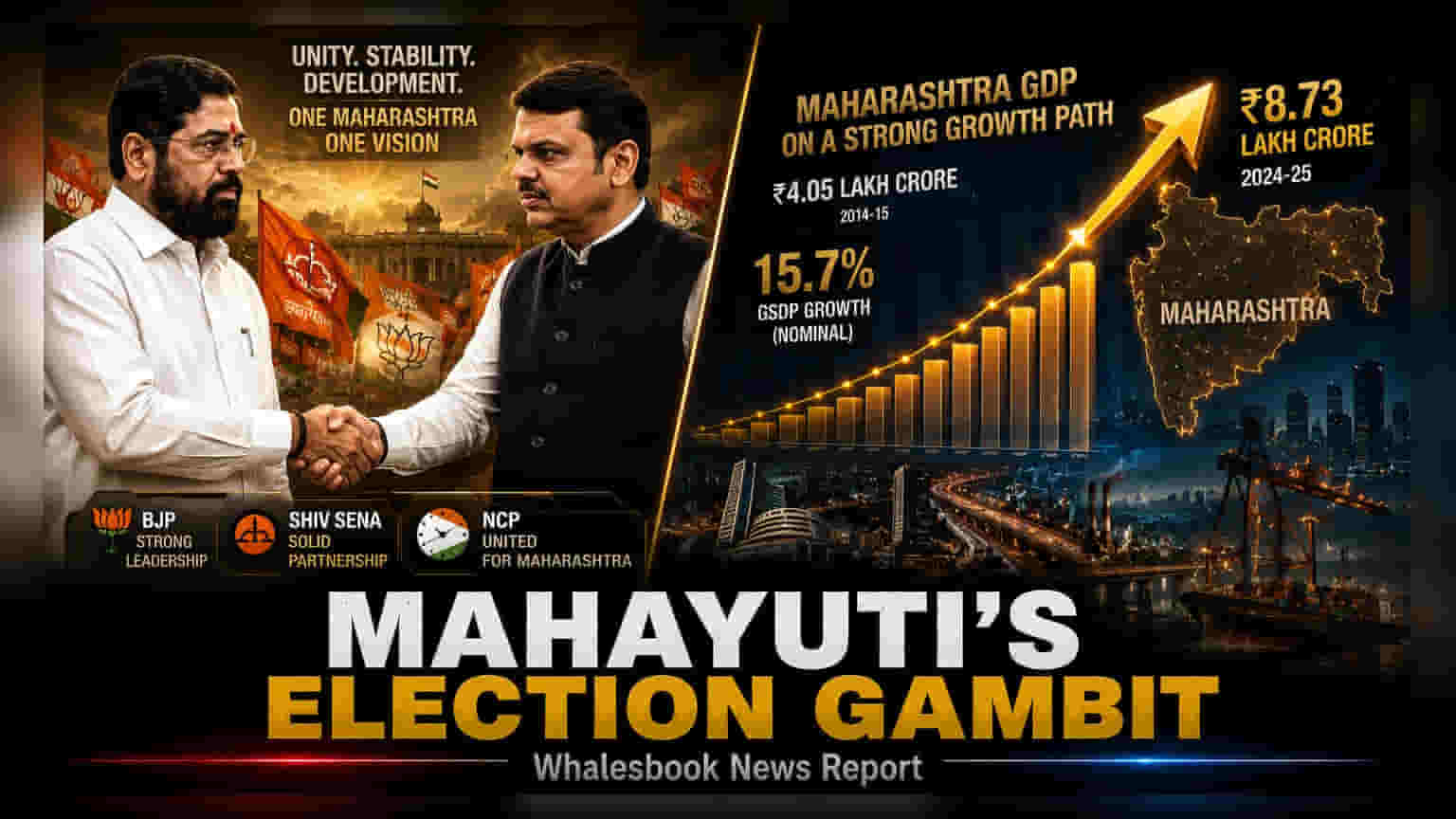
The Maharashtra Mahayuti alliance, comprising the BJP, Shiv Sena, and NCP, has decided to contest all upcoming elections as a single block. This move aims to resolve internal friction and maintain a consistent policy approach. For investors, the coalition's stability is vital as it impacts policy continuity and infrastructure project implementation in India's leading industrial state.
The Maharashtra Mahayuti coalition has announced a unified strategy for all upcoming elections, seeking to present a cohesive front to voters. Leaders from the BJP, Eknath Shinde’s Shiv Sena, and Sunetra Pawar’s NCP have formally agreed to stop public criticism of each other. This directive is intended to prevent internal discord, which has been a concern following recent public disagreements among members of the alliance.
Importance of Stability for Maharashtra
For investors and the business community, political stability in Maharashtra is significant. The state is a major contributor to India's GDP and serves as a primary hub for manufacturing, finance, and services. A government that functions as a unified unit typically supports the consistent implementation of industrial policies, infrastructure projects, and regulatory approvals. When an alliance works in harmony, it reduces the risk of policy paralysis, which is essential for maintaining investor confidence in the state's economic environment.
Leadership and Appointments
Senior BJP leader Chandrashekhar Bawankule addressed concerns regarding potential leadership changes, confirming that the current government under Chief Minister Devendra Fadnavis will continue as is. This clarification is aimed at providing certainty to stakeholders who track the state’s governance. Furthermore, the alliance is working on filling vacancies in over 170 government corporations. These appointments are viewed as a necessary step to improve administrative efficiency and ensure that development projects move forward without unnecessary delays.
Fiscal and Administrative Risks
While the alliance aims for unity, challenges remain. The administration has introduced large-scale welfare initiatives, such as the 'Ladki Bahin' scheme. Observers and financial analysts often track the implementation of such programs for their potential impact on the state's fiscal health and budget allocation. Additionally, history shows that internal coalition friction—whether regarding portfolios, appointments, or local-level issues—can lead to administrative bottlenecks. If the ban on internal criticism is not strictly followed, it could signal potential instability to the market.
Next Steps for Investors
The market will look for the effectiveness of the alliance's coordination committees, which are planned to meet every two months to manage communication and development funds. The key monitorable for investors will be how the government balances its commitment to welfare schemes with the need for fiscal discipline and project execution. Progress on infrastructure and the stability of the current cabinet will remain primary indicators of the state's policy environment leading up to the elections.