 Whalesbook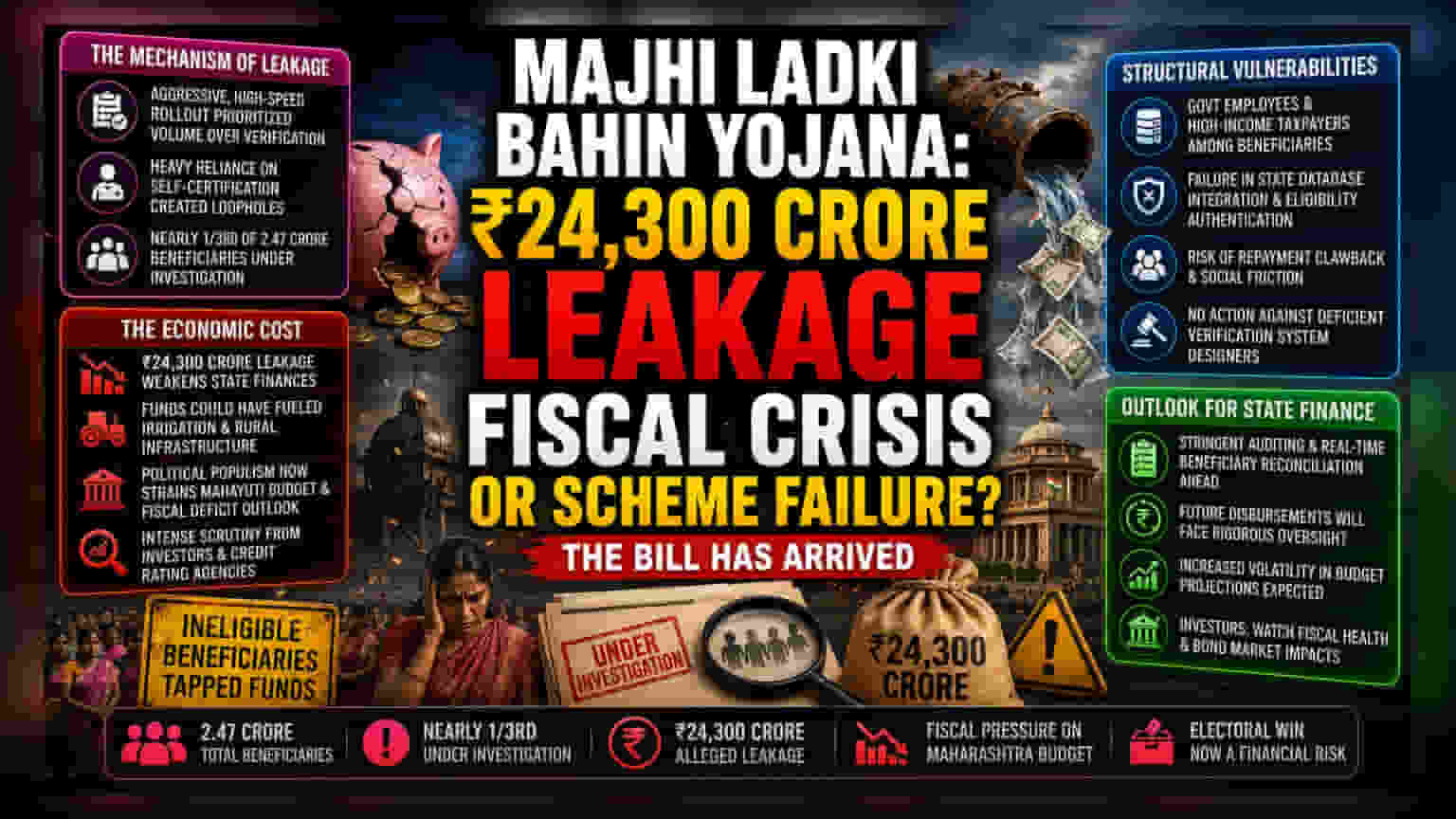


The Mechanism of Fiscal Leakage
Financial irregularities regarding the Mukhyamantri Majhi Ladki Bahin Yojana stem from an aggressive, high-speed rollout that prioritized volume over eligibility authentication. By relying heavily on self-certification, the administrative architecture created a loophole for rapid fund disbursement that ultimately bypassed standard income-verification protocols. With nearly one-third of the total 2.47 crore beneficiary pool now under investigation for ineligibility, the state government faces a structural crisis that could lead to significant clawback efforts or, conversely, a massive hole in the current fiscal year budget.
The Economic Cost of Political Populism
Beyond the raw figures, this situation underscores the inherent risks of aggressive cash transfer programs when detached from robust digital ID integration. Comparing this to other state-level welfare initiatives reveals a troubling pattern where urgency for electoral support often results in weakened oversight. The reported leakage of Rs 24,300 crore is particularly damaging when measured against the state's capital expenditure requirements. Had these funds been directed toward irrigation projects or rural infrastructure, the economic multiplier effect would likely have exceeded the static consumption benefits currently provided by the program. The reliance on this scheme as a pillar for the November 2024 election success now subjects the entire Mahayuti budget to intense scrutiny from institutional investors and credit rating agencies concerned with the state’s fiscal deficit trajectory.
Structural Vulnerabilities and Oversight Risks
From a risk perspective, the primary concern lies in the potential for future regulatory tightening. If the state is forced to recover these payments, the social friction could be considerable, further straining an already pressurized fiscal environment. Furthermore, the admission that significant numbers of government employees and high-income taxpayers successfully tapped into the program points to a deeper failure in state database integration. This administrative bottleneck suggests that while Maharashtra has pursued ambitious direct benefit goals, the back-end infrastructure is currently insufficient to manage such programs without incurring substantial leakage. The lack of proactive enforcement against the internal teams that designed these deficient verification pathways continues to be a central point of contention for opposition leaders and financial watchdogs alike.
Outlook for State Finance
Future fiscal planning for the state will likely require a pivot toward more stringent auditing and real-time reconciliation of beneficiary databases. While the government may attempt to frame the disbursement as an unavoidable cost of social inclusion, the sheer scale of the alleged ineligibility suggests that future iterations of the scheme will face far more rigorous oversight. Investors monitoring the state’s bond offerings and long-term fiscal health should anticipate increased volatility in budgetary projections as the administration navigates the political and economic fallout of this verification failure.