

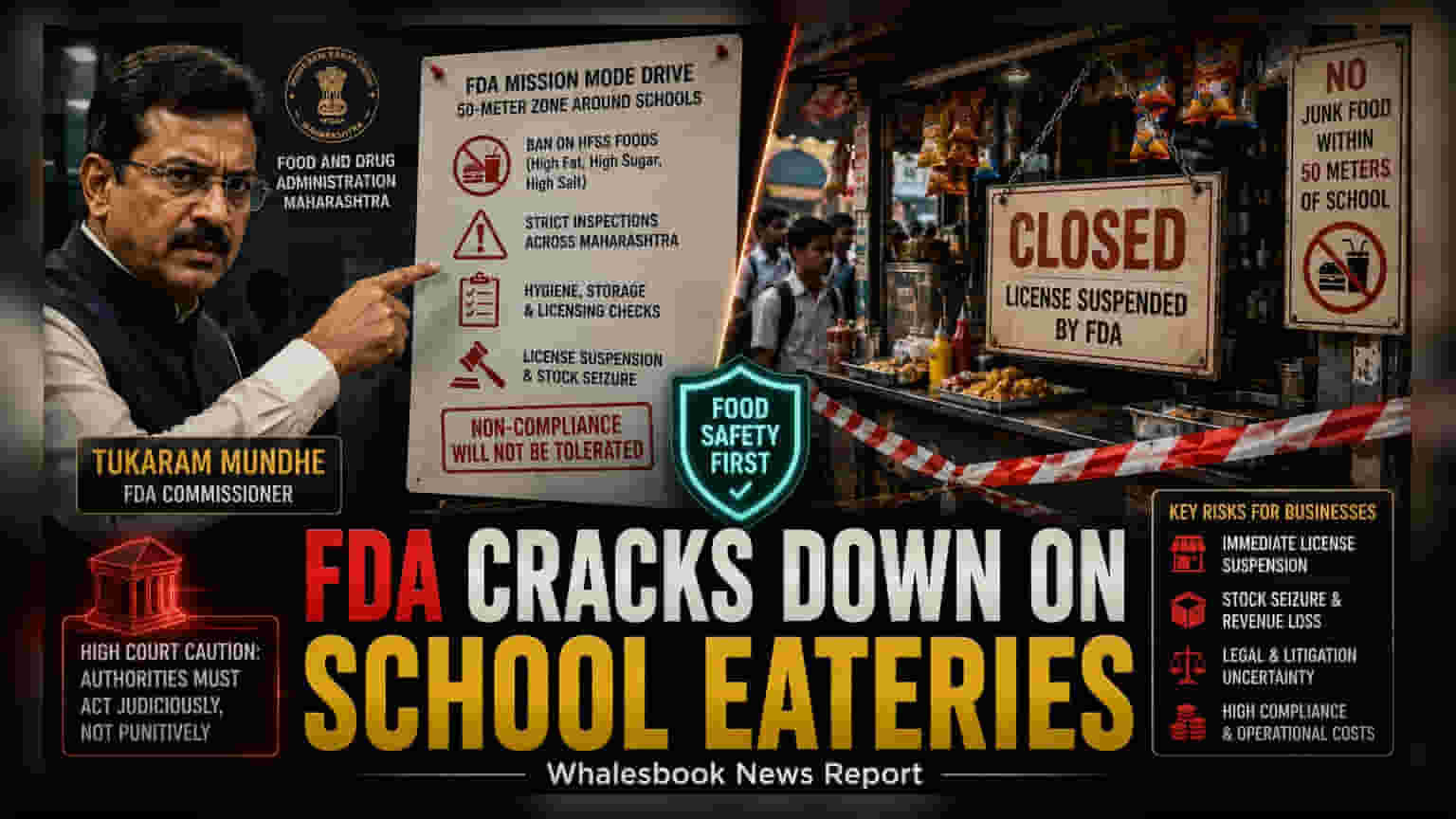
The Maharashtra FDA has launched a strict enforcement drive targeting food outlets near schools, including a ban on high-sugar, salt, and fat foods within a 50-meter radius. This crackdown poses operational and regulatory risks for food and beverage companies, as well as quick-commerce firms, as authorities enforce strict licensing compliance.
Maharashtra’s Food and Drug Administration (FDA) has intensified its enforcement measures, launching a mission-mode drive aimed at food establishments operating near educational institutions. Commissioner Tukaram Mundhe has directed state-wide inspections to ensure strict compliance with food safety regulations. This initiative specifically targets the sale, distribution, and advertisement of high-fat, high-sugar, and high-salt (HFSS) foods within a 50-meter radius of school premises.
Operational Risks for Food and Retail
The FDA’s crackdown is comprehensive, extending beyond traditional roadside vendors to include restaurants, bakeries, and even dark stores operated by quick-commerce platforms. The regulator is actively inspecting hygiene standards, storage conditions, and licensing compliance. For businesses in the food and beverage and retail sectors, this creates a high-pressure environment where a single inspection report can lead to the immediate suspension of a trade license or the seizure of inventory.
Investors and stakeholders should note that the regulatory pressure is not limited to product quality but also encompasses strict adherence to zoning and operational guidelines. Companies with a large network of small-format stores, cloud kitchens, or distribution centers located in urban, school-dense areas may face higher operational risks. The potential for sudden store closures or mandatory re-compliance can lead to localized revenue loss and increased operational costs due to the need for rapid audit and process adjustments.
Regulatory and Legal Friction
While the FDA's initiative is intended to safeguard student health, the aggressive implementation strategy has attracted judicial scrutiny. The Bombay High Court has recently cautioned the department against adopting a purely punitive approach. In recent observations, the court emphasized the need for authorities to exercise their powers judiciously, citing instances where business licenses were suspended for prolonged periods despite the businesses showing significant compliance.
This legal context suggests that the regulatory landscape is becoming increasingly binary for businesses. Companies operating in Maharashtra face the challenge of navigating stringent, fast-paced inspections while maintaining their legal rights. The risk of protracted litigation remains for businesses that feel regulatory actions are disproportionate, which can further impact management focus and financial resources.
Monitoring Regulatory Developments
The effectiveness and consistency of this enforcement drive will be a key factor for the retail and food service sectors in the coming months. Stakeholders should track how the FDA balances its mission-mode enforcement with the need for procedural fairness, as signaled by the judiciary. The primary monitorables for investors include any further expansion of the HFSS ban, the frequency and severity of license suspensions, and how organized retail and quick-commerce companies adjust their distribution networks to comply with zoning and product restrictions near schools.