

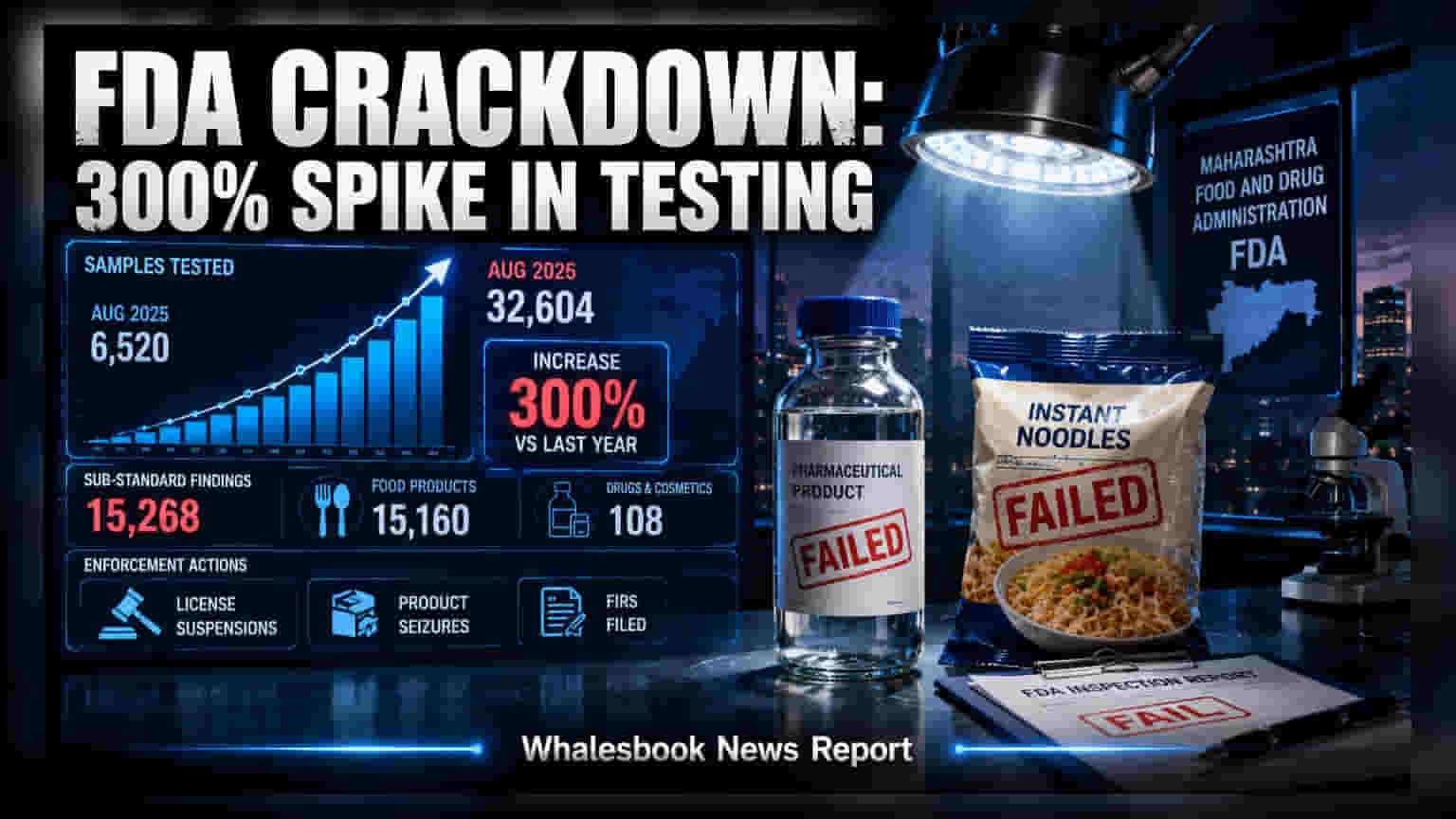
The Maharashtra FDA has ramped up testing, identifying 15,268 non-compliant samples between June and August 2026. This aggressive inspection drive creates heightened regulatory volatility for consumer goods and pharma companies. Investors should monitor potential operational disruptions and legal challenges, as courts have recently questioned the regulator's procedural approach.
The Maharashtra Food and Drug Administration (FDA) has significantly accelerated its enforcement efforts under Commissioner Tukaram Mundhe. In a three-month period ending in August 2026, the regulator processed 32,604 samples, resulting in 15,268 findings of sub-standard quality. The vast majority of these cases, 15,160, involved food products, while 108 cases related to drugs and cosmetics. This represents a major shift in the state's surveillance, with the department increasing its testing capacity by 400% compared to the previous year.
Impact on Business Operations
For companies operating in Maharashtra, this surge in testing activity presents a new layer of operational risk. The FDA’s crackdown has led to widespread license suspensions, product seizures, and the filing of First Information Reports (FIRs) against various entities. Beyond the immediate financial impact of product recalls or seized inventory, businesses are facing reputational challenges and the uncertainty of potential supply chain disruptions. Companies that rely on distribution networks within the state may need to increase their internal quality control spending to avoid being caught in this heightened surveillance cycle.
Regulatory Tension and Legal Oversight
While the FDA’s drive is aimed at cleaning up the local supply chain, it has faced notable pushback. The Bombay High Court has recently scrutinized the department’s methods, criticizing the regulator for what it termed as "undue haste" and potential procedural lapses during enforcement actions. Several companies have successfully challenged these actions in court, arguing that the FDA’s approach lacked procedural fairness. This judicial involvement creates a complex environment where regulatory orders are increasingly subject to legal review, leading to uncertainty regarding the long-term impact of these enforcement decisions.
What Investors Should Monitor
Investors should look beyond the headline statistics and focus on how these developments affect the operational stability of consumer and pharmaceutical companies. The primary monitorable is whether these regulatory challenges lead to prolonged litigation or permanent loss of operational licenses for key players. Furthermore, increased compliance costs to meet stricter standards may influence profit margins for smaller manufacturers in the sector. The ongoing legal friction between the regulator and the industry suggests that the environment will remain volatile, and market participants should watch for further judicial guidance or adjustments in the FDA’s enforcement strategy.