

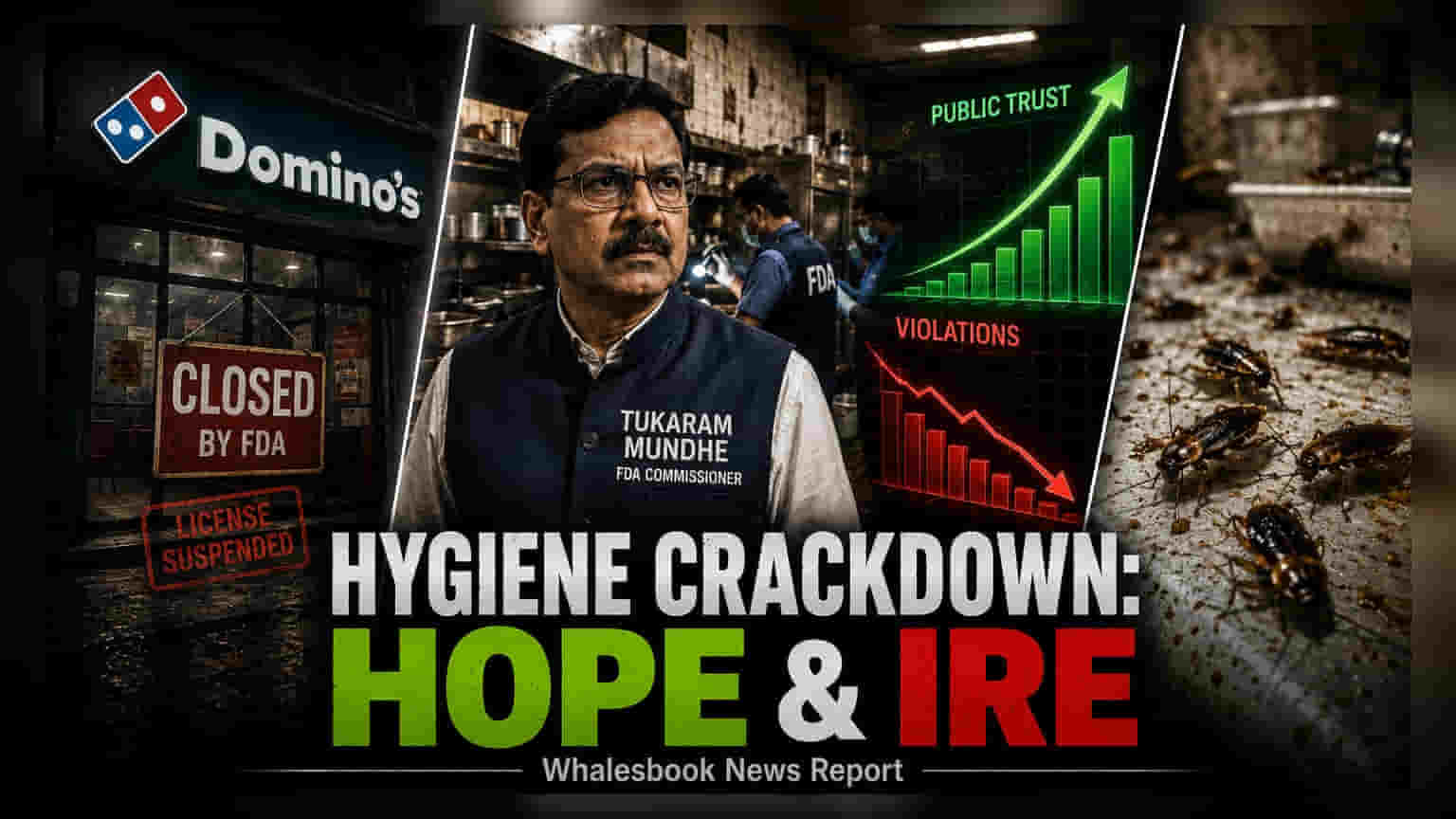
The Maharashtra Food and Drug Administration has suspended licenses for several major restaurant outlets, including Domino's and Pizza Hut, following a wave of hygiene raids. Investors should monitor how these regulatory actions impact operational costs and brand reputation across the QSR sector.
The restaurant and food retail industry in Maharashtra is facing heightened regulatory scrutiny as the Food and Drug Administration (FDA) intensifies its hygiene enforcement drive. Since May 2026, state authorities led by FDA Commissioner Tukaram Mundhe have conducted over 3,000 raids across Mumbai and other parts of the state. These inspections have resulted in temporary license suspensions for several major quick-service restaurant (QSR) outlets, including chains like Domino’s, managed by Jubilant FoodWorks, as well as McDonald's and Pizza Hut.
Operational and Compliance Impact
The regulatory crackdown centers on failures to meet standard health and hygiene protocols. Official reports and raid documentation have cited specific violations, including pest infestations, improper temperature monitoring for food storage, and a lack of required hygiene documentation. For large-scale restaurant operators, these issues present immediate operational challenges. When an outlet's license is suspended, the shop must cease operations, leading to an immediate loss of revenue for that specific location.
To mitigate these risks, many hospitality companies are now proactively hiring private consultants to conduct comprehensive mock audits. This ensures that individual store managers are strictly adhering to safety standards before official government inspectors arrive. While this move is intended to safeguard business continuity, it also introduces additional compliance costs. Investors should watch whether these increased expenses, alongside potential investments in infrastructure upgrades, put pressure on profit margins in the coming quarters.
Sector-Wide Risk and Market Sentiment
This enforcement drive is not targeting a single brand but is affecting the broader QSR and food service sector in Maharashtra. The primary risk for investors is the potential for brand damage. In the restaurant business, customer trust is paramount. Viral reports or official news regarding unsanitary conditions can negatively impact footfall and same-store sales growth. Even if the affected outlets rectify the issues quickly and resume operations, the long-term perception of the brand can be sensitive to such regulatory setbacks.
Furthermore, the current environment has created a sense of regulatory uncertainty. Businesses that were accustomed to a certain pace of enforcement are now adapting to a much stricter and more unpredictable regulatory regime. If this trend of aggressive inspections continues across other states or persists over a longer period, it may alter how companies plan their expansion strategies and facility management.
The most important monitorable for investors will be the frequency and scale of these suspensions in upcoming earnings reports. Investors should track management commentary regarding operational compliance, any mention of rising quality control costs, and whether these hygiene-related disruptions have had a material impact on revenue or same-store sales growth. The ability of these chains to maintain stringent standards without incurring excessive costs will be a key factor in navigating this challenging regulatory environment.