

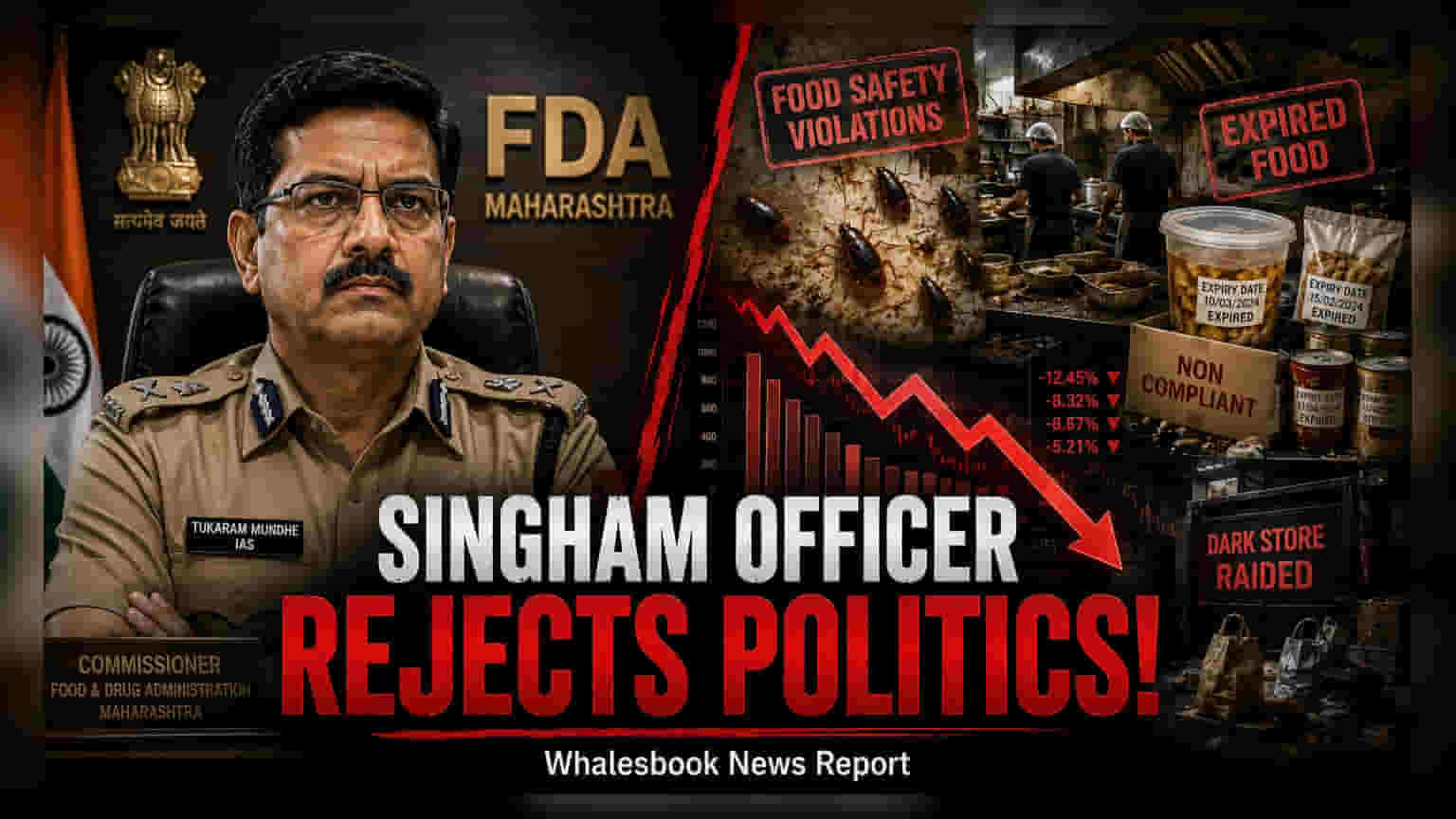
Maharashtra FDA Commissioner Tukaram Mundhe has officially denied plans to join politics, confirming he will remain in his bureaucratic role. For investors in the food retail and quick-commerce sectors, his continued presence signals that stringent regulatory enforcement and hygiene inspections across Maharashtra will persist.
Tukaram Mundhe, the Commissioner of the Maharashtra Food and Drug Administration (FDA), has explicitly rejected recent speculation regarding a potential move into electoral politics. The 2005-batch IAS officer dismissed such rumors, stating that his direct and outspoken nature is better suited for public administration rather than the political arena. He also cleared up misinformation regarding his career, confirming that he has not been transferred to Rajasthan.
For businesses and investors tracking the retail, quick-service restaurant (QSR), and quick-commerce sectors, this clarification is significant. Since taking charge of the state’s food safety department in May 2026, Mundhe has spearheaded an aggressive enforcement drive. His tenure has been marked by a focus on strict compliance with food safety and hygiene standards, which has directly impacted several high-profile food retailers and dark store operators in the state.
Under his administration, the FDA has conducted extensive inspections, leading to temporary license suspensions for various food outlets. Major brands in the QSR and quick-commerce space, including those operating dark stores in major urban centers like Mumbai and Pune, have faced scrutiny during these operations. Mundhe’s approach is characterized by high-frequency raids and a rigid adherence to safety norms, a style that has earned him a reputation for being an uncompromising administrator.
The regulatory environment in Maharashtra is currently seeing a period of heightened oversight. Companies operating in the food supply chain or those managing large-scale delivery warehouses should anticipate continued pressure to maintain high hygiene and storage standards. For investors, this creates a situation where operational compliance is not just a routine requirement but a critical factor that could disrupt business activity if standards are not strictly met.
Mundhe’s track record, which includes 25 transfers in his 21-year career, suggests that his enforcement style is consistent and likely to continue in his current assignment. While this does not imply a negative outlook on the sector, it highlights the importance of monitoring operational compliance as a key risk factor for retail companies with significant exposure to the Maharashtra market. The primary monitorable for stakeholders will be the ongoing trend of regulatory inspections and the ability of companies to maintain audit readiness to avoid sudden operational interruptions.