

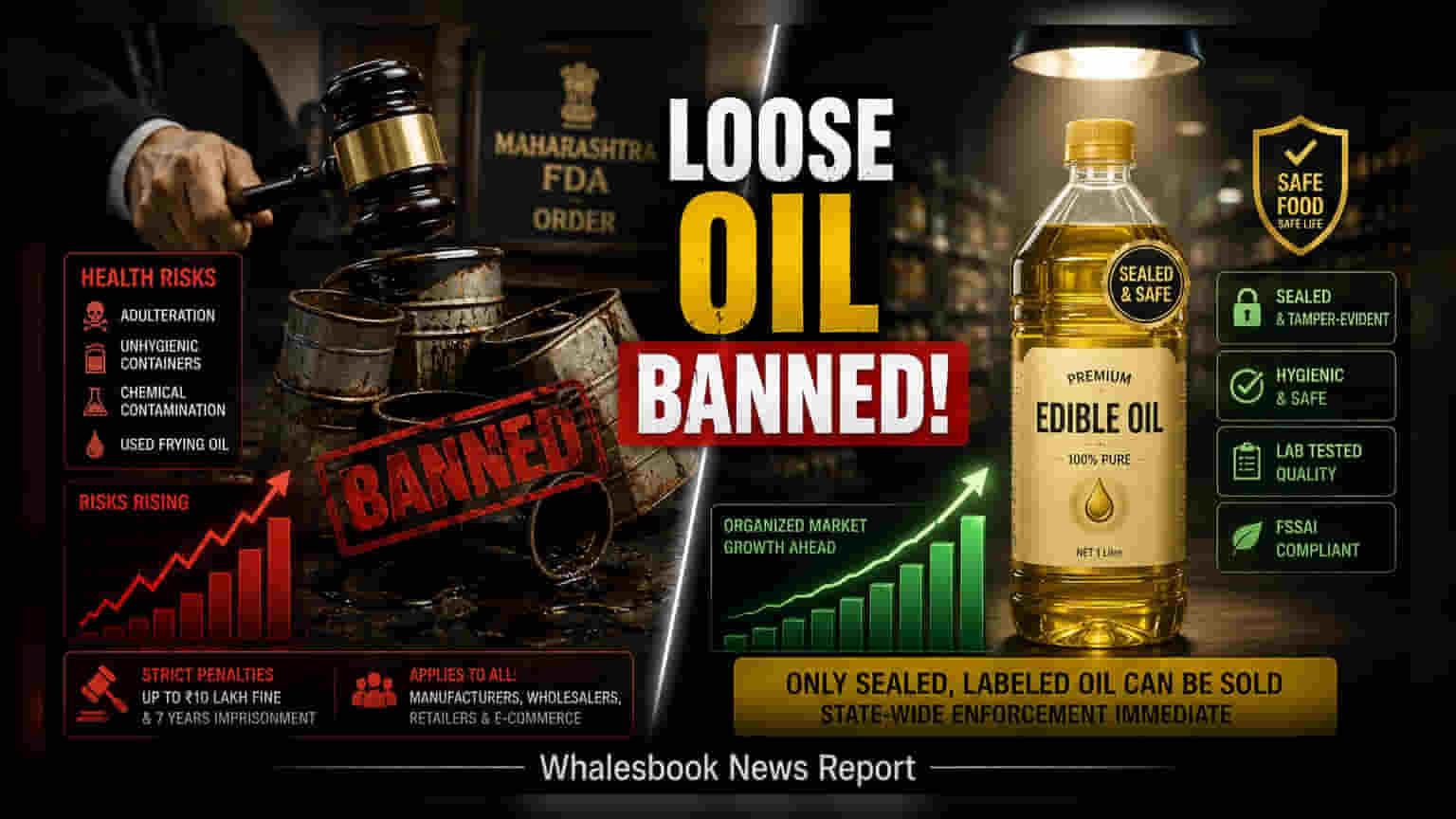
The Maharashtra FDA has banned the sale of loose edible oil across the state with immediate effect to curb adulteration. This regulation mandates that all edible oil must be sold in sealed, labeled packages. For investors, this shift toward the organized market could favor established, branded edible oil players by reducing competition from unorganized, loose-oil vendors, though strict supply chain compliance remains essential.
The Maharashtra Food and Drug Administration (FDA) has issued an immediate, state-wide ban on the sale of loose, unpacked edible oil. Commissioner Tukaram Mundhe announced the directive to address rising concerns over food adulteration, the reuse of unhygienic containers, and public health risks. The order applies to the entire supply chain, including manufacturers, wholesalers, retailers, and e-commerce platforms, requiring that all edible oil must now be sold in sealed, tamper-evident, and properly labeled packaging.
Impact on the Edible Oil Sector
This regulatory move marks a significant push to transition the edible oil market from an unorganized structure to an organized one. Historically, the availability of cheaper, loose oil has competed with branded, packaged products. With the enforcement of this ban, consumers are expected to shift toward sealed, packaged options, which could expand the addressable market for major, listed edible oil companies. These established brands typically operate with higher food safety standards and controlled packaging, positioning them to absorb the demand previously held by unorganized local vendors.
Risks and Compliance Pressures
While the shift toward organized retail is a potential positive for larger companies, the regulation brings heightened compliance requirements. The order mandates strict adherence to the Food Safety and Standards Act, 2006. Penalties for violations are severe, including fines of up to Rs 10 lakh and imprisonment of up to seven years. For companies, this means ensuring that every stage of the distribution network, including dealers and distributors, complies with the new packaging and safety mandates.
Any failure to ensure that products remain sealed throughout the supply chain could result in regulatory scrutiny. Furthermore, the FDA has specifically flagged the unsafe practice of reusing containers that previously held chemicals or lubricants, as well as the improper reuse of frying oil. Companies must ensure their systems are robust enough to prevent any contamination risks, as accountability will extend to directors, partners, and managers in cases of severe non-compliance.
Monitoring Market Dynamics
Investors may track how efficiently the market transitions toward 100% packaged oil. While the regulatory intent is to improve consumer health, the real-world impact on volume growth for branded players will depend on the speed of implementation and enforcement across the state. A successful crackdown on loose oil sales could reduce pricing pressure from unorganized players, potentially improving margins for organized companies over time if they can capture the diverted demand. The key monitorable will be the level of enforcement by local FDA authorities and the subsequent adaptation by smaller, regional players who currently rely on loose oil sales.